Guest

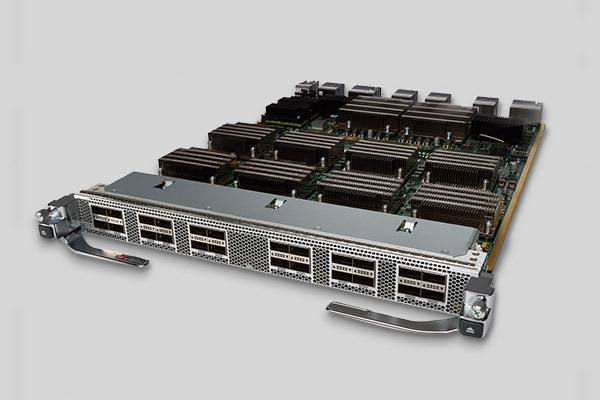
Cisco Broadband Processing Engines

Cisco uBR7225VXR Universal Broadband Router

System Overview

Q. What is the Cisco® uBR7225VXR Universal Broadband Router?
A. The Cisco uBR7225VXR Universal Broadband Router is the successor to the Cisco uBR7100 Series cable modem termination system (CMTS). The Cisco uBR7225VXR is the newest low-cost entry to mid-level CMTS in a 2-rack-unit (RU) modular chassis, with two RF cable line card slots. The Cisco uBR7225VXR is based on open standards and brings the power and proven reliability of the industry-leading Cisco uBR7246VXR Universal Broadband Router within reach of all cable operators.
Q. What is the target market for the Cisco uBR7225VXR Universal Broadband Router?
A. The Cisco uBR7225VXR is ideal for any cable operator requiring a higher-capacity platform, without the need for the additional capacity and form factor of the uBR10012 or uBR7246VXR. The Cisco uBR7225VXR is ideal for cable operators from emerging markets, including Tier 2 and Tier 3 cable operators migrating to an IP Next-Generation Network (NGN) infrastructure that supports the deployment of revenue-generating services.
Q. Is this product orderable today?
A. This product will be orderable in Q4 CY07 with first customer shipment (FCS) commencing in the late Q4 CY07 timeframe.
Q. What is the typical application of the Cisco uBR7225VXR Universal Broadband Router?
A. This router offers cable operators, multiunit businesses, and ISPs a superior and cost-effective platform for the delivery of their high-speed data, voice, and video services. This new CMTS platform requires exceptionally low capital investment and minimal setup time to provide these revenue-generating services.
Q. What is the difference between the Cisco uBR7225VXR, uBR7246VXR and uBR7100 Series?
A. The Cisco uBR7225VXR is an evolutionary, not revolutionary, design. This router is very similar to, and uses much of the same technology as, the award-winning Cisco uBR7246VXR. Unlike the fixed configuration of the Cisco uBR7100 Series, the modularity of the processor and line card slots in the Cisco uBR7225VXR offers four times the upstream port density and four times the downstream port density than the Cisco uBR7100 Series in the same form factor. It also provides 50 percent more upstream and downstream port capacity than the Cisco uBR7246VXR. The Cisco uBR7225VXR offers the lowest entry-level pricing in the industry, while maintaining modularity for capacity growth. Table 1 compares the three routers.

Table 1. Product Comparison

With 6 RU for CMTS Installation:

Maximum Chassis

Maximum Modem Cards

Maximum Downstream/Upstream Ports

Maximum Network Processing Engines (NPEs)

Cisco uBR7100 Series

3

3 (fixed)

3/12

3 (fixed, NPE-225)

Cisco uBR7246VXR

1

4 (modular)

8/32

1 (modular, up to NPE-G2)

Cisco uBR7225VXR

3

6 (modular)

12/48

3 (modular, NPE-G1 support at product introduction)

Q. How many subscribers can the Cisco uBR7225VXR support?
A. The platform supports up to 5000 subscribers.
Q. What is the configuration requirement for the Cisco uBR7225VXR?
A. The Cisco uBR7225VXR supports two RF cable line card slots, and at FCS, is compatible with one Cisco uBR7200-NPE-G1 processor with three GE ports (uBR-NPE-G1). The Cisco uBR7200-NPE-G1 must have at least 256 MB of DRAM. If the Cisco uBR7225VXR contains more than one broadband processing engine (BPE), Cisco recommends installing either 512 MB or 1 GB of DRAM on the Cisco uBR7200-NPE-G1 to ensure best performance. Cisco IOS® Software-the accepted standard networking software-provides end-to-end Internet connectivity and includes options to help ensure secure communications over the cable and IP network. The Cisco uBR7225VXR is supported in Cisco IOS Software Release 12.2SB, which includes PacketCable™ Multimedia, admission control, Advanced Mode DSG, and SII features.
Q. Does the Cisco uBR7225VXR have PA or I/O controller slots? For low-performance applications, can I use a Cisco uBR7200 Series NPE-400 Network Processing Engine, for example?
A. No, the Cisco uBR7225VXR does not support port adapters (PAs), I/O controllers, or an NPE lower than the uBR7200 Series NPE-G1. The Cisco uBR7225VXR offers the superior performance of the Cisco uBR7200 Series NPE-G1 at an attractive price and that NPE includes Gigabit Ethernet (GE) WAN connectivity on the NPE-making a PA slot unnecessary.
Q. What if my application requires backhaul other than GE, such at T1? If Cisco does not support a PA, what are my options?
A. Cisco recommends that you use a small integrated services router such as a Cisco 1800 Series router behind the Cisco uBR7225VXR to provide connectivity in this sort of backhaul scenario.
Q. Does the Cisco uBR7225VXR have redundant power supplies?
A. The Cisco uBR7225VXR configured with the Cisco uBR7200 Series NPE-G1 offers a redundant power supply system. In addition, unlike a fixed-configuration CMTS, the modularity of the processor and line card slots in this platform allows for future upgrades in capacity as technology evolves. Upgrades in capacity and processing engines may require both power supplies in the future.
Q. Can this platform be upgraded?
A. Unlike competitive fixed-configuration CMTS platforms, the modularity of the processor and line card slots in the Cisco uBR7225VXR allows for future upgrades in capacity as technology evolves.
Q. Will the Cisco uBR7225VXR support DOCSIS 3.0?
A. Cisco does not pre-announce unreleased products, and therefore, cannot commit support for DOCSIS 3.0 on the platform. Nevertheless, due to the modular architecture of the Cisco uBR7225VXR and the NPE-G1 level of performance in this 2-slot small CMTS, it is technically feasible to design a DOCSIS 3.0 line card for the Cisco uBR7225VXR. If developed, this would allow migration to DOCSIS 3.0 with a simple line card swap.

Line Cards Supported

Q. How many cable line cards does the Cisco uBR7225VXR support and what is the upstream and downstream port density of the platform?
A. The Cisco uBR7225VXR supports two cable line cards and touts industry-leading port density over any entry-level cable line card in the market to provide up to 4 downstreams and 16 upstreams in a 2RU form factor.
Q. Does the Cisco uBR7225VXR platform support new low-cost cable line cards? Are existing Cisco uBR7246VXR chassis line cards supported on the Cisco uBR7225VXR?
A. Cisco is introducing two new cable line cards for the Cisco uBR7225VXR-the Cisco uBR7225VXR E-16U and E-28U Broadband Processing Engines (BPEs) part numbers UBR-E-28U and UBR-E-16U. The new BPEs are hot-swappable and have no slot dependency. They are not compatible with the uBR7246VXR chassis. The compatibility function is enabled through both mechanical keying methodology and software locks on the Cisco uBR7225VXR E-28U and E-16U (part numbers UBR-E-28U and UBR-E-16U) that prevent insertion of these cards into any other chassis except the Cisco uBR7225VXR.
Q. Which line cards supported by the Cisco uBR7246VXR can be utilized in the new Cisco uBR7225VXR chassis? Can these line cards coexist with the Cisco uBR7225VXR E-28U and E-16U (part numbers UBR-E-28U and UBR-E-16U) in the new Cisco uBR7225VXR chassis?
A. The line cards from the Cisco uBR7246VXR that can be supported in the Cisco uBR7225VXR are the Cisco uBR7200 Series MC16U and MC28U Broadband Processing Engines. These cards can coexist with the Cisco uBR7225VXR E-28U and E-16U (part numbers UBR-E-28U and UBR-E-16U) in a Cisco uBR7225VXR. Operators that have Cisco uBR7246VXRs in their network today and that are planning on adding the Cisco uBR7225VXR will have the opportunity to standardize on line cards that work in both chassis.
Q. Why did Cisco design a new line card when the Cisco uBR7200 Series MC16U and MC28U work in the Cisco uBR7225VXR chassis?
A. Cisco has cost-optimized the Cisco uBR7225VXR MC16U and MC28U by removing memory and other components to scale these cards to smaller systems. This allows Cisco to reduce the price of the line card to meet the needs of emerging markets and smaller customers.
Q. What are the differences between the new line cards and current ones?
A. The key differences in the new line cards are reduced memory and other components.

Key Features

Q. What are the key features of the Cisco uBR7225VXR E-28U and E-16U (part numbers UBR-E-28U and UBR-E-16U) line cards?
A. With their flexible, all-inclusive product design, the Cisco uBR7225VXR E-28U and E-16U (part numbers UBR-E-28U and UBR-E-16U) line cards offer:

• An advanced physical layer (PHY) to provide ingress noise cancellation

• Advanced time-division multiple access (A-TDMA) capabilities

• Advanced spectrum management

• An onboard processor for improved performance to support additional subscribers and services

• Flexible software MAC domain configuration or virtual interfaces

• Reduced cable wiring through frequency stacking

• DOCSIS®, European DOCSIS (Euro-DOCSIS), and J-DOCSIS compliance on one line card

• Integrated upconverters-depending on the specific model, either one or two downstream modulators and eight or six upstream burst receivers are offered on a single line card

• The Cisco uBR7225VXR E-28U and E-16U (part numbers UBR-E-28U and UBR-E-16U) use technology patented by Cisco to determine carrier-to-noise ratio (CNR) values for selected upstream channels. This technique, not offered by any other CMTS vendor, is a Cisco differentiator. These BPEs meet and exceed DOCSIS specifications for downstream CNR of 35 dB and 25 dB for upstream operation.

Q. Does the Cisco uBR7225VXR support the transparent bridging mode?
A. No, the Cisco uBR7225VXR does not support the bridging functionality. The Cisco uBR7225VXR supports only the routing mode of operation. Routing operation is the typical default mode for Cisco CMTS routers. It provides a wide spectrum of Cisco IOS Software routing features, such as a DHCP server and control over which packets are sent over each interface. Bridging operation between the cable interface and port adapter interfaces is typically not used in DOCSIS CMTS installations because of potential performance and security problems.
Q. What is the competitive advantage and value proposition of this new CMTS platform?
A. A strong heritage of open systems and a product portfolio that addresses all market segments allow Cisco to bring its unmatched networking expertise and industry leadership to address the expanding service and operational needs of cable operators. Key benefits include:

• Cost efficiency with the lowest entry-level CMTS pricing in the industry, while maintaining modularity for capacity growth

• Industry-leading port density of any entry-level cable line card

• Standards compliance to help cable operators maximize their return on investment for converged services and accelerate their deployment of advanced IP services

• Operational savings and lower capital expenditures with DOCSIS, Euro-DOCSIS, and
J-DOCSIS support on one line card

Standards Support

Q. Does the Cisco uBR7225VXR support the CableLabs® OpenCable™ DOCSIS Set-Top Gateway (DSG) specification?
A. The Cisco uBR7225VXR supports the DSG specification. DSG enables cable operators to transport upstream and downstream video traffic directly through the CMTS instead of through a proprietary, standalone video infrastructure. Incorporating out-of-band (OOB) messaging in DOCSIS digitally modulated carriers, cable operators can consolidate cable modem and set-top box (STB) data traffic on a shared DOCSIS channel.
Q. Is the Cisco uBR7225VXR CableLabs-qualified?
A. The Cisco uBR7225VXR has not received CableLabs qualification yet. The Cisco uBR7225VXR is based on PacketCable 1.1, DOCSIS 1.1, Euro-DOCSIS 2.0, and PacketCable Multimedia (PCMM) standards to protect cable operator investment and help ensure compatibility with next-generation multiservice networks. The Cisco uBR7225VXR E-16U and E-28U (part numbers UBR-E-28U and UBR-E-16U) are designed to support DOCSIS, Euro-DOCSIS, and J-DOCSIS on one line card. Cisco intends to submit the uBR7225VXR for DOCSIS 2.0 qualification (excluding S-CDMA) and PacketCable 2.0, when first customer shipment of the product commences.
Q. Does the Cisco uBR7225VXR support S-CDMA?
A. Cisco supports the CableLabs process and has a long record of submitting its products for qualification including DOCSIS, PacketCable, DSG, and PCMM. However the feedback Cisco has received from the marketplace is that S-CDMA is not critical for the services being offered today. Because customers have urged Cisco to develop innovative technology such as channel bonding and IPv6 instead of S-CDMA, Cisco has chosen not to implement S-CDMA on its current generation of DOCSIS 2.0 line cards. Cisco supports the A-TDMA portion of DOCSIS 2.0 and has received tComLabs DOCSIS 2.0 A-TDMA qualification for Cisco CMTS products. In Europe, S-CDMA is optional in the EuroDOCSIS 2.0 specification. Cisco products are fully DOCSIS 2.0 compliant in all areas with the exception of S-CDMA support as demonstrated by Euro CableLabs qualification testing.
Q. Is the Cisco uBR7225VXR compliant with CableLabs and tComLabs?
A. The Cisco uBR7225VXR supports DOCSIS 1.1 and 1.0, Euro-DOCSIS 2.0, 1.1, and 1.0, and PacketCable 1.1. It addition, it supports PacketCable Multimedia (PCMM), enabling cable operators to deploy unique, next-generation multimedia services on their communications-grade CMTSs.
Q. What is the pricing of the Cisco uBR7225VXR and the new line cards?
A. Product pricing varies with product configuration. Assistance in the configuration and pricing of the Cisco uBR7225VXR is available from your Cisco account manager or channel partner.