


|
|
![]() |
|
|
Snapshot: As storage networking environments grow, several challenges are evident, most notably in the areas of scalability, availability, port densities, and troubleshooting and management capabilities. The new Cisco MDS 9000 Family of Multilayer Directors and Fabric Switches bring several new intelligent services and capabilities to storage networking in a platform that not only addresses these challenges head on but is tailored for high scalability, performance, and resilience.
Keywords: Cisco MDS Family Multilayer Directors and Fabric Switches, high availability, SAN, storage networking
Cisco storage networking home page
Storage networking white papers and technical documentation (requires Cisco.com login)
To address this imminent storage challenge, many information technology (IT) organizations are migrating from DAS to a networked storage model. By networking block storage devices together with application servers, they can realize several advantages. The storage-area network (SAN) brings capabilities to storage including a more granular provisioning and migration model that allows faster deployment and redeployment and overall more efficient storage utilization. The storage network also represents a centralized point at which consolidated storage resources, including disk and tape, can be managed more efficiently. According to a Merrill Lynch and McKinsey & Company report, the TCO of 1 megabyte of storage over three years decreases from US$0.84 using a DAS model to US$ 0.38 with a SAN. As evidence for these findings, Gartner predicts that by 2005 more than 70 percent of all storage will be networked.
ChallengesAs storage networking environments grow, several challenges are evident, most notably in the areas of scalability, availability, port densities, and troubleshooting and management capabilities. Scalability -- Building large SANs today requires heavy over-provisioning resulting from the need to interconnect many lower-port-density Fibre Channel switches to achieve the necessary fabric size. To avoid this complexity, many IT organizations resort to building multiple smaller SANS dedicated to specific applications. Availability -- SANs carry an organization's most critical asset: data. As storage needs grow, the high-availability characteristic of the SAN cannot be compromised. High availability in the SAN refers to the robustness of the switch platforms themselves as well as the resilience of the routing and switching fabric. A constant challenge for the SAN designer is how to scale fabrics in a highly available manner with the limited high-availability feature set in today's switch products. Gartner predicts that by 2005 more than 70 percent of all storage will be networked.Troubleshooting -- Numerous operating systems, computing platforms, I/O profiles, and applications, in addition to the fabric protocols themselves, keep the SAN administrator on duty around the clock. Because of the lack of intelligent troubleshooting capabilities in the fabric itself, administrators must resort to the time-consuming and often disruptive method of transporting an expensive analyzer to the problem location. Management -- Topping the list of growing concerns for the SAN administrator is the mounting complexity of managing the storage network. SAN switch products available today offer little in terms of embedded management capability and fall short of offering comprehensive and secure application programming interfaces (APIs) that customers can use to build automated management solutions. As SAN deployments continue to expand, a robust management interface, along with a detailed permissions structure and accounting facility, is needed to enable appropriate groups within an organization to design, provision, manage, and troubleshoot the storage network. The Multilayer Storage Network SolutionTo address the storage networking requirements of its customers, Cisco set out to evolve the storage network. On August 20, 2002, Cisco introduced the Cisco MDS 9000 Family of Multilayer Directors and Fabric Switches, designed to bring several new intelligent services and capabilities to storage networking in a platform tailored for high scalability, performance, and resilience.
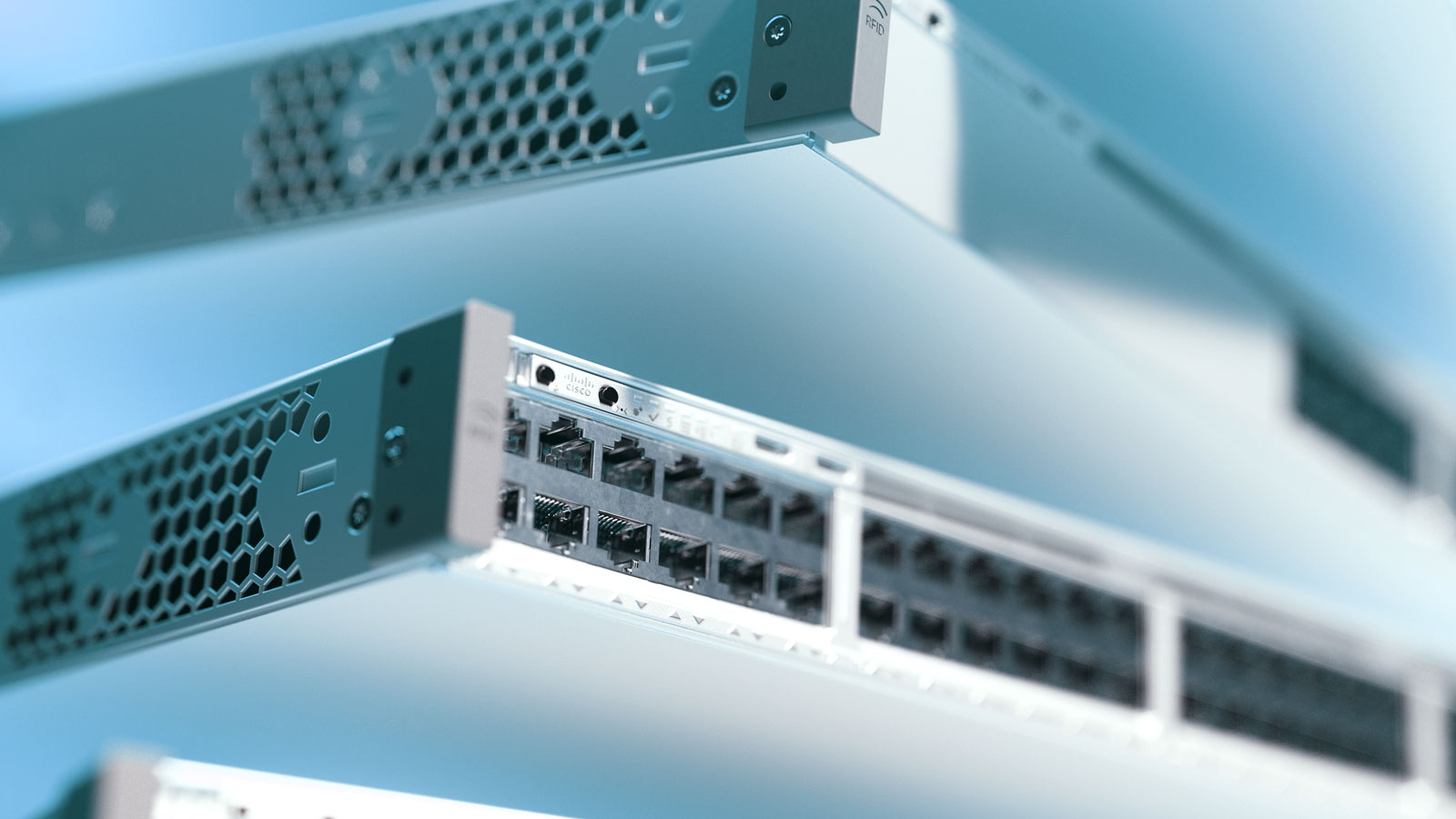
At the core of the new product line is the highly scalable Cisco MDS 9500 Series of Multilayer Directors. Consisting of a 6-, 9-, and 13-slot director-class offering, this modular product series yields industry-leading system bandwidth of 1.4 terabits per second and a single chassis port density of 256 1/2-Gbps autosensing Fibre Channel ports. "Being a director-class product series means the MDS 9500 Multilayer Directors deliver top resilience in both hardware and software," says Tom Nosella, senior manager of technical marketing in the Storage Technology Group at Cisco. "Cisco's customers can now eliminate unnecessary complexity and build larger, simpler, more easily managed storage networks that exceed performance and density requirements of today's storage networks and ensure smooth growth to meet tomorrow's requirements." Solutions for Midrange ApplicationsThe Cisco MDS 9216 Multilayer Fabric Switch provides the same set of intelligent features and capabilities as the Cisco MDS 9500 Series of directors but in a smaller form factor. The Cisco MDS 9216 represents the industry's first modular fabric switch offering 16 fixed 1/2-Gbps autosensing Fibre Channel ports and an expansion slot that can accept any of the Cisco MDS 9500 Series switching modules. Despite the declining cost of Fibre Channel, it is still cost prohibitive for many organizations with midrange applications servers. Although the ultimate goal of storage networking is to network all storage resources and storage consumers, many of these consumers cannot justify the expense for midrange application servers. Fibre Channel is available in 1-Gbps and 2-Gbps flavors; however, there is no value-oriented option for less demanding midrange applications as exists in the LAN world with 10/100-Mbps Ethernet. By embedding native iSCSI and Fibre Channel over IP (FCIP) into the entire MDS 9000 Family of products, Cisco gives its customers the option of taking advantage of less costly 10/100/1000 Mbps-Ethernet to seamlessly extend the SAN to midrange applications and computing platforms. Simpler, More Intelligent StorageWhether a SAN designer prefers a collapsed-core or a core-edge design, the higher port density and 32-Gbps port-bundling capability of the Cisco MDS 9000 Family yields a simpler solution with fewer switch devices and fewer ports consumed for Inter-Switch Links (ISLs). In addition, quality of service (QoS) gives the SAN administrator more control over how fabric resources are allocated and intelligent methods for avoiding congestion within the fabric itself. Virtual SAN CapabilitiesThe Cisco MDS 9000 Family also supports virtual SANs (VSANs), in which completely isolated virtual fabrics are built on top of a common, redundant physical infrastructure -- much like VLANs in an Ethernet environment. Each of the possible 1024 created VSANs results in a new and independent set of Fibre Channel services (zone server, name server, for example) further isolating the virtual fabrics. Using VSANs allows administrators to meet multiple individual fabric sizing and availability objectives with a single cost- and density-optimized, redundant physical SAN infrastructure. Embedded Troubleshooting and Management ToolsTo address the lack of available embedded troubleshooting tools, the Cisco MDS 9000 Family introduces several capabilities to help SAN, storage, and application administrators conveniently and remotely diagnose problems within the fabric in a non-disruptive manner:
The Cisco MDS 9000 Family provides a modular operating system along with a user-friendly CLI modeled after Cisco IOS® Software. An extensive roles-based architecture along with Syslog and RADIUS support enable a tight granular access control for multiple administrator groups with management responsibility along with full user- activity accounting support. Cisco also embeds the Cisco Fabric Manager, a powerful fabric and element GUI-based discovery and management system built upon Sun Microsystems' Web-Start environment. Using VSANS allows administrators to meet multiple individual fabric sizing and availability objectives with a single cost- and density-optimized, redundant physical SAN infrastructure.The Cisco MDS 9000 Family provides an extensive API for integration into third-party management applications and home-grown tools based on the industry's oldest and most developed management protocol -- Simple Network Management Protocol (SNMP). Using SNMP, users have access to more than 80 percent of the CLI functionality through read-only and read-write SNMP MIBs. Cisco has also included SNMPv3, which adds the capability for secure authenticated and encrypted access to SNMP information along with partitioned views thereby extending roles capability into SNMP. Cisco has also begun integration of the Storage Networking Industry Association (SNIA) Bluefin CIM and XML-based common API to be released in the second half of 2003. * * * The Cisco MDS 9000 Family represents a breakthrough in storage networking technology that solves the scalability and management challenges of large-scale and midrange storage networking deployments now and in the future.
Reader Feedback: Tell us what you think. Return to the Fourth Quarter 2002 Table of Contents
Download a PDF of this article. (Or download a PDF of this issue of Packet.) |
All contents are Copyright © 1992--2002 Cisco Systems Inc. All rights reserved. Important Notices and Privacy Statement.