


Balancing Act
Enhancing Application Servers with Cisco Content Switching Technology
BY GAIL MEREDITH
|
Snapshot: Central to a successful data center is load-balancing technology, which monitors the health of data-center Web and application servers and intelligently switches sessions to keep transactions flowing smoothly. Learn how Layer 4 to 7 load-balancing technology available in Cisco content switching products and cluster technology from BEA Systems, Inc. are enhancing application servers in the data center.
Keywords: Cisco content switching, content networking, load balancing
|
E-business happens in the data
center -- with the array of firewalls, switches, servers, databases, and load-balancing devices that deliver valuable e-business applications to users. Every data center manager understands the complexity of creating a productive user experience. It's a balancing act of redundant components, specialized servers, and optimally tuned applications. Central to a successful data center is load-balancing technology, which monitors the health of data-center Web and application servers and intelligently switches sessions to keep transactions flowing smoothly.
To help its customers attain optimal performance in their data centers, BEA Systems, Inc. (bea.com) recently tested its application servers with content switching products from Cisco to validate the synergy of BEA's cluster technology with the latest Layer 4 to 7 load-balancing technology available in the Cisco content switching products.
BEA WebLogic Servers
BEA Systems is a market-leading provider of enterprise application infrastructure software. Its WebLogic Platform 7.0 provides a standards-based foundation for building integrated, enterprise-class applications that share information, deliver services, and automate collaboration between networked organizations. The WebLogic Platform uses BEA WebLogic Server 7.0, which delivers the framework required for developing and deploying high-performance, scalable, mission-critical, business-driven applications. Its Java 2 Enterprise Edition 1.3 (J2EE 1.3)-compliant tiered architecture supports rich tool sets that facilitate separation of presentation, business logic, and data.
WebLogic servers can be clustered into a single virtual server for business resilience and load balancing. There are several ways that clustering can be done, and the solution BEA provides is unique. According to BEA, session objects can either be persisted (to a database or file) or replicated from one server instance to a backup. In-memory session replication, the fastest option, is a BEA-patented architecture. In addition, the BEA WebLogic Server 7.0 provides load balancing and failover for Enterprise Java Beans (stateless session, stateful session, and entity Enterprise Java Beans). There is also support for clustering of Java Message Service destinations, to enable message load balancing and to prevent messages from being lost.
The BEA WebLogic Server 7.0 includes software-based load balancing for clusters. Yet offloading the load-balancing function to one of the Cisco content services switches, which perform load balancing in optimized switching hardware, increases the scalability and optimizes the performance of the WebLogic servers within a single data center or across distributed data centers where dozens, even hundreds, of servers may reside.
"By using a hardware-based load-balancing device such as a Cisco content switch, BEA WebLogic
customers gain additional high-availability load-balancing features and greater server scalability."
-- John Yen, Senior Technology Marketing Manager, Cisco
"Customer satisfaction is paramount for Cisco and BEA," says John Yen, senior technology marketing manager in the Technology Marketing Organization at Cisco. "By using a hardware-based load-balancing device such as a Cisco content switch, BEA WebLogic customers gain additional high-availability load-balancing features and greater server scalability."
Cisco Content Switches
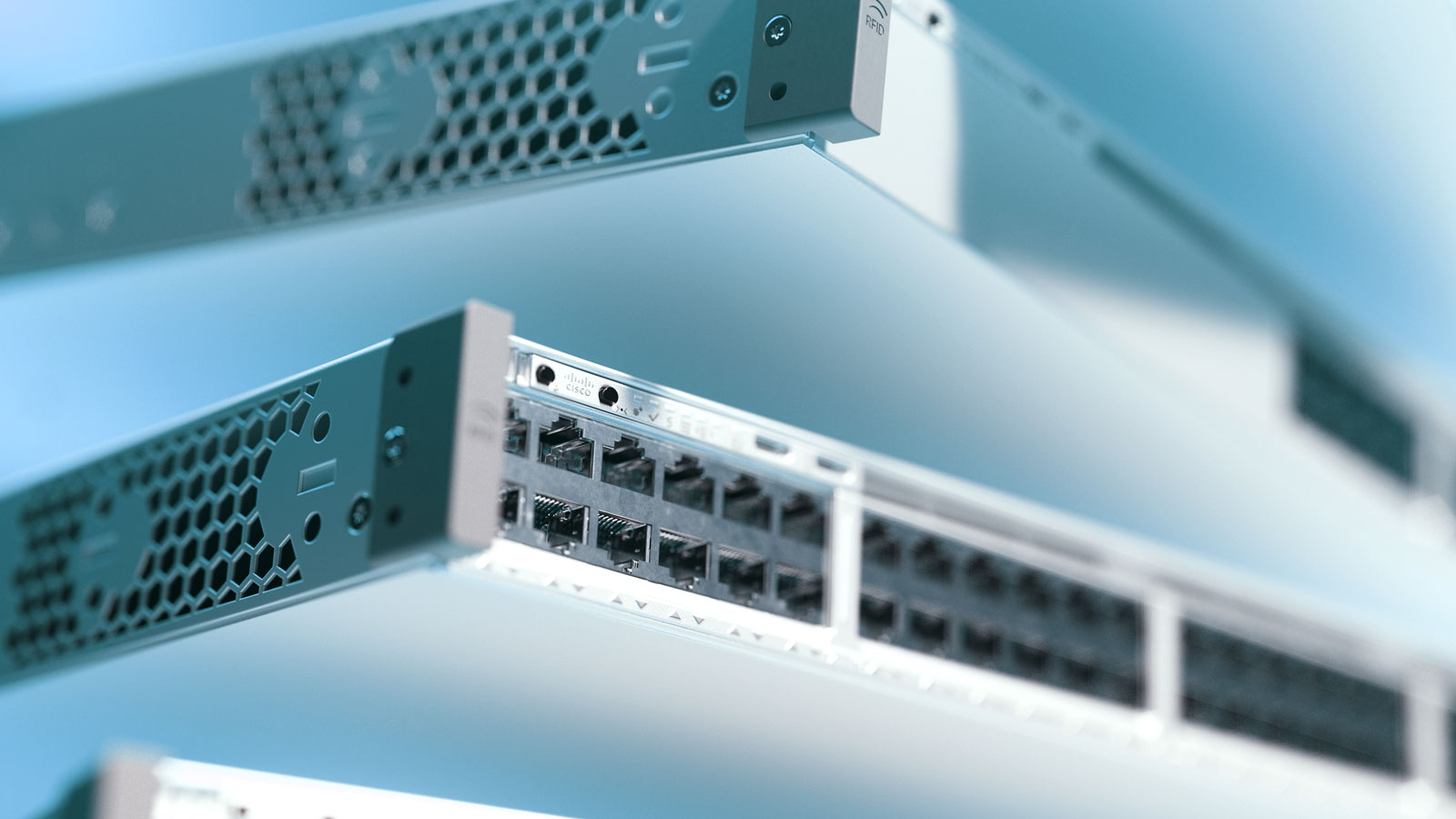
The market-leading Cisco content switching product family includes the Cisco CSS 11500 Series Content Services Switch and the Cisco Content Switching Module (CSM), an integrated services module for the Cisco Catalyst® 6500 Series switches and Cisco 7600 Series Internet Router.
|
|
A DELICATE BALANCE: Placing a Cisco CSS 11500 Series device near the BEA WebLogic Server 7.0 cluster provides optimal load-balancing performance and rapid failover. Alternatively, a Cisco CSM may be installed inside the Catalyst 6500 Series switches.
PowerPoint version
General networking icons
|
The Cisco CSS 11500 Series includes modular content switching platforms for small to midsized data centers. The modular design places distributed processing on line cards, enabling linear performance increases with additional modules. Other modules add greater service functionality without impacting system performance.
The most powerful load-balancing solution is the Cisco CSM, designed for high-end data centers that require tight integration between switching, load balancing, and firewall functionality. It scales to 150,000 HTTP requests per second.
The Cisco content switching architecture provides dedicated processing resources to control functions, connection management, and packet forwarding. Health checking is an example of a control function, and connection management examples include server selection and session establishment. Key forwarding functions include Network Address Translation (NAT), time-to-live (TTL) decrementing, and MAC address replacement. This separation allows Cisco content switching products to balance superior features and performance.
Cisco content switching products bring advanced Layer 4 through 7 intelligence to enterprise data centers, as well as maximize the availability, scalability, and security of enterprise data centers.
High availability. Powerful high-availability technologies in the Cisco content switches include Adaptive Session Redundancy (ASR) and scripted keepalives. ASR enables session-level stateful failover from one Cisco content switch to another. It allows network administrators to specify a set of rules that define "important" sessions, usually large downloads, to protect their integrity in case of content switch failure. With ASR, the Cisco content switch does not waste its processor cycles on supporting session-level failover for unimportant sessions. Scripted keepalives allow advanced health checking to enable rapid server failover.
In addition, Layer 4 through 7 intelligence enables session persistence by examining HTTP cookies to determine the appropriate server affinity. Session persistence offers options for using cookies to associate specific sessions with individual servers and to classify sessions for special handling or priority. With active cookie insert, for example, the content switch inserts a unique cookie for each server when it detects a new session.
Scalability. Scalability makes optimal use of data center resources. Advanced load-balancing features include server farm partitioning and HTTP 1.1 connection remapping. Server farm partitioning is useful when components of a single Web application reside in several cluster members -- for example, a graphics server, a static text server, and a transaction server. HTTP 1.1 connection remapping works in conjunction with partitioned servers to reduce the overhead of TCP connection maintenance. It leverages the ability of HTTP 1.1 to remap a single front-end client session into multiple backend TCP sessions, each going to a partitioned server.
Security. Cisco content switching products use several familiar security features such as access control lists (ACLs), NAT, and denial-of-service protection. A newer capability is Secure Sockets Layer (SSL) optimization, available via integrated modules in the Cisco CSS 11500 Series, Cisco Catalyst 6500 Series Switch, and Cisco 7600 Series Internet Router (see "Intelligent Switching"). SSL optimization modules support digital certificates and offload the high CPU load of SSL setup to maintain high system performance. SSL optimization allows the content switch to view decrypted Layer 4 to 7 header information, such as cookies, to maintain session persistence, ensuring the reliability and integrity of e-transactions.
Testing Methodology
BEA tested its WebLogic Server 7.0 with the full line of Cisco content switching platforms. More than 45 tests were performed in a BEA laboratory, aimed at establishing compatibility. Cisco configured its CSS products for each test using off-the-shelf code. When the content switch-server solution passed all 45 tests at BEA, Cisco duplicated the environment for testing in its own laboratory. At the time this issue of Packet® went to press, Cisco was running BEA tests for the CSM.
Andy Franklin, technical marketing engineer in the Internet Systems Business Unit at Cisco, assisted BEA in conducting the tests. "We tested an application environment, not specific applications," he says. "Customers need to have their applications working before they look at load balancing, which will increase the efficiency and performance of those applications."
Configuring content switches for WebLogic servers is straightforward. Franklin recommends that data center managers pay attention to two details when configuring a similar solution. When configuring a CSS product, managers should use the advanced-balance "sticky" method of CSS cookies to maintain session persistence. This approach ensures that traffic for particular sessions passes through the same firewall to the same server for each transaction. Second, data center managers must use scripted keepalives to check server health, and the script must include a "fin" command for a graceful disconnection.
Configuring the BEA WebLogic Server 7.0 to interoperate with Cisco content switches depends on specific application requirements. There are many variables that affect server performance. Users can consult product documentation or work directly with a BEA representative to tune server configurations.
Data Center Design
Data center architecture has a dramatic impact on the effectiveness of load-balancing systems. "Seemingly mundane issues such as firewall placement, virtual LAN layout, routing design, spanning tree design, IP addressing, and redundancy are actually significant components of robust system design," says Brian Walck, director of product management in the Internet Systems Business Unit at Cisco. "Understanding the interaction between the components and how they behave as a system under various failure conditions is critical to delivering high availability and high performance. You should place the load-balancing system where it does not have to forward all IP traffic in the data center, just the traffic that needs to be load balanced."
Knowledge Transfer
Cisco is working with several leading application server vendors to document how Cisco content switching products effectively load balance application servers, including IBM Websphere Application Server, iPlanet Application Server, Microsoft Windows .NET Application Server, and Oracle 9i Application Server.
Reader Feedback: Tell us what you think.
Return to the Fourth Quarter 2002 Table of Contents
Download a PDF of this article.
(Or download a PDF of this issue of Packet.)