



|
|
![]() |
|
|
SERVICE PROVIDER SOLUTIONS
BY JANET KREILING Snapshot: Frame Relay is typically where service providers are now. IP is where the want to be. Finding that sweet spot, for both the present and future, requires a balancing act among new applications, protection of existing investments, and network availability. Several large providers have already found that sweet spot-by adding Cisco Advanced ATM Multiservice Portfolio (AAMP) switches to enable their Frame Relay and ATM networks to run IP and Multiprotocol Label Switching (MPLS) services. Read all about it here.
Keywords: ATM, Cisco AAMP, Cisco MGX® 8830, Cisco MGX 8950, Frame Relay, IP VPN, MPLS
Finding that sweet spot, for both the present and future, requires a balancing act among new applications, protection of existing investments, and network availability. For a service provider's customers, application density is foremost. They are demanding more quality-of-service (QoS) choices, including express lanes for certain classes of traffic; more types of service; varying access speeds; greater flexibility in virtual private network (VPN) provisioning; lower costs; stringent security -- and the list will only grow in years to come. Of course, network availability is crucial. Customers lose money when their service is down, particularly with mission-critical applications. While delivering what customers want, service providers must protect their investments in an extremely competitive market where pennies saved make no small contribution to a healthy bottom line. The solution several large providers are using profitably? Adding Cisco Advanced ATM Multiservice Portfolio (AAMP) switches to enable their Frame Relay and ATM networks to run IP and Multiprotocol Label Switching (MPLS) services. As Suraj Shetty, senior manager of product marketing at Cisco, explains, "The Cisco AAMP systems permit these providers to offer all of IP's flexibility of services while building on investments they've already made and providing for growth." First MSF-Compliant SwitchesThe newest members of Cisco AAMP, announced in May 2002, are the entry-level Cisco MGX® 8830 switch, the high-capacity MGX 8950 switch, and the high-performance Route Processor Module-XF for the MGX 8850. The MGX 8830 and MGX 8950 build on the success of the already widely deployed MGX 8850 and BPX® 8620 switches. These switches are the first certified by the Multiservice Switching Forum (MSF) as complying with the architecture the forum has specified to promote open, multiservice networks. A global association of service providers and vendors, the forum was founded in 1998. Its standard calls for multiservice switches to perform basic functions on different planes -- separating application control from switching, for example, thus enabling the switch to accommodate various services regardless of the switching or transport technology. The Cisco AAMP multiservice, multiplane switches are the first compliant products to be commercially available.
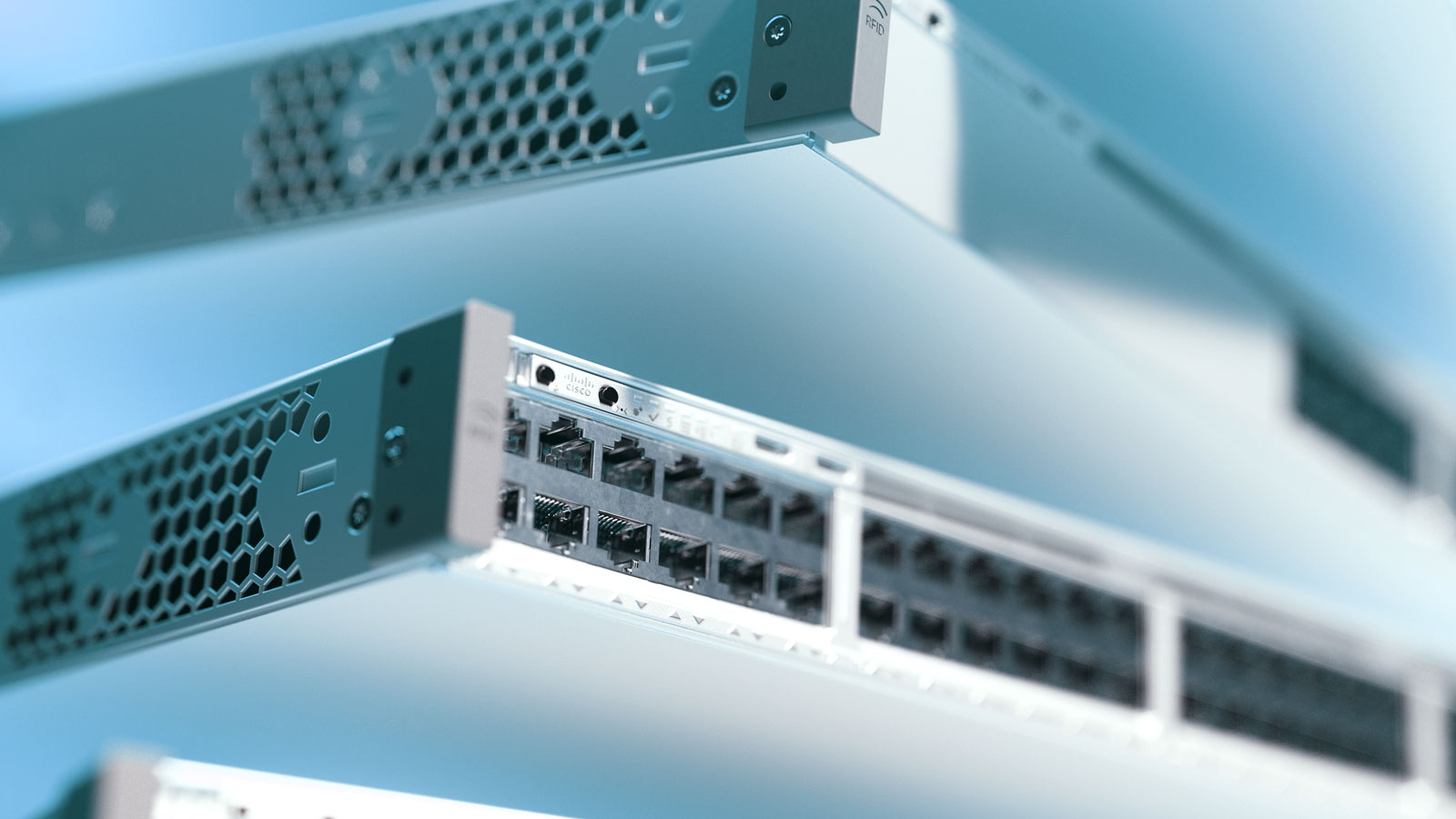
The CVSA architecture allows Cisco AAMP switches to offer high application density. By setting up a separate control plane for each, network operators can mix and match services governed by protocols including Private Network-to-Network Interface (PNNI), MPLS, and Multimedia Gateway Control Protocol (MGCP). Partitioning within the switch gives each control plane full control over its switch resources, enabling QoS and other capabilities to be optimized for that specific plane. Partitioning also permits the provider to start small and convert more of the network as IP demand and revenues grow. The possibilities are legion. IP VPNs, voice over IP (VoIP), voice over ATM (VoATM), and wireless are some of the new services that can be offered -- while the provider continues to deliver ATM, Frame Relay, circuit emulation, LANs, DSL aggregation, and other current services. Shetty calls this "true application density, the result of a converged network that allows providers to introduce new services while maintaining the revenue streams from traditional ones." High Capacity, High Reliability, Leadership InnovationThe new Cisco AAMP products are designed to allow service providers to enhance service to any location covered by their networks, with any level of demand, and to protect new as well as older investments going forward. The Cisco MGX 8950 switching fabric can process 240 Gbps, 180 Gbps if configured to be fully redundant. The I/O slots can accept traffic at rates ranging from T3/E3 to OC-192/STM-64. Built on the innovative and patented Cisco Europa chipset, which ensures that the full 10 gigabits is always available, these ATM interfaces offer unmatched scaling range and capabilities. The Europa is the only 10-Gbps chipset to reach trial status. The capacity of the switch and the interface slots add up to carrier-class, industry-leading broadband density. The Cisco MGX 8950 is now commercially available. The Cisco MGX 8830 is designed for locations that require less capacity. It can be deployed as an entry-level system, to extend services to low-density areas, or when power and space are constrained. Packing the versatility and features of its larger sibling, the MGX 8830 combines a 1.2-Gbps switching fabric with eight interface slots when configured for redundancy. The system can interface with ATM, Frame Relay, circuit emulation, IP, and packet voice service modules, operating at speeds ranging from DS0 to OC-12/STM-4 in the future. Like the Cisco MGX 8950, the MGX 8830 is commercially available. The third new Cisco AAMP product is the Route Processor Module-XF (RPM-XF). Designed around Cisco's patented Parallel Express Forwarding (PXF) technology, the RPM-XF offers IP services at the Gigabit Ethernet line rate. The interfaces it supports permit the connection of MPLS transport networks seamlessly to Gigabit Ethernet and packet-over-SONET (POS) access networks. Equipped with the RPM-XF, the Cisco MGX 8850 can deliver QoS, IP/MPLS-based VPNs, and access control lists (ACLs) that are optimized for high throughput over every connection, even when the switch is handling multiple services simultaneously. The RPM-XF is also commercially available now. All Cisco AAMP products deliver very high availability. They incorporate redundancy and hitless upgrades, for example, and they are rigorously tested before design and after development. "The individual systems exceed five nines of reliability," Shetty says, "and our customers have exceeded five nines reliability in the Frame and ATM network." "We are continuing to grow our national and European network, while expanding our service offerings," says Stefano Pileri, vice president of networking at Telecom Italia. "The MGX family gives us the ability to seamlessly add IP and packet voice services, while at the same time, allowing us to scale our broadband networks based on DSL and fiber access." IP-Enabled Frame Relay: New Service, New RevenueToo often, service providers have ended up adding an IP overlay network or carrying IP over Frame with technologies that do justice to neither. IP-enabled Frame Relay (or ATM) is a different animal. It delivers essentially native IP/MPLS VPN -- efficient, fast-moving, reliable, and ready to support all kinds of services. For instance, take the experience of one large international service provider that installed Cisco MGX switches across its network to offer both the variety of services available with IP and the QoS capabilities of Frame/ATM. The first benefit the provider's customers saw, according to Shetty, was vastly simplified VPNs, as IP-enabled Frame Relay eliminates the need for point-to-point private virtual circuits (PVCs). Instead, it requires just one PVC per customer router into the provider's Frame Relay cloud.
Traffic is routed using the Layer 3 IP address, and that leads to the next and crucial benefit: QoS according to the IP packet header, which means that customers as well as service providers can designate priorities of service for specific types of services to or from specific ports. Differentiated Services (DiffServ) software built into the MGX switches derives the priority from the type-of-service (ToS) field in the header so that a customer can rank e-mail over file transfers or specify any other unique set of priorities. In addition, the MGX switches allow this service provider to offer such classes of service as high, low, best effort, and real-time that depend on the core network as well. Other service providers use IP-enabled Frame Relay networks to deliver service-level agreements and services such as video, e-mail, and voice. "Most network operators want to migrate to an MPLS network," Shetty says. "Cisco AAMP gives them that network. Incremental investment gives them a large advantage -- a single infrastructure over which they can now provide IP-based services and VPN capabilities as value-added, revenue-generating offerings."
Reader Feedback: Tell us what you think. Return to the Fourth Quarter 2002 Table of Contents
Download a PDF of this article. (Or download a PDF of this issue of Packet.) |
All contents are Copyright © 1992--2002 Cisco Systems Inc. All rights reserved. Important Notices and Privacy Statement.