PDF(341.0 KB) View with Adobe Reader on a variety of devices
Updated:March 13, 2015
Document ID:1518934771128575
Bias-Free Language
The documentation set for this product strives to use bias-free language. For the purposes of this documentation set, bias-free is defined as language that does not imply discrimination based on age, disability, gender, racial identity, ethnic identity, sexual orientation, socioeconomic status, and intersectionality. Exceptions may be present in the documentation due to language that is hardcoded in the user interfaces of the product software, language used based on RFP documentation, or language that is used by a referenced third-party product. Learn more about how Cisco is using Inclusive Language.
Product Overview
The Cisco
® MDS 9000 18/4-Port Multiservice Module (MSM) is optimized for deployment of high-performance SAN extension solutions, distributed intelligent fabric services, and cost-effective IP storage and mainframe connectivity in enterprise storage networks.
The Cisco MDS 9000 18/4-Port Multiservice Module is supported in the Cisco MDS 9200 Series Multilayer Switches and MDS 9500 Series Multilayer Directors and offers 18 1-, 2-, and 4-Gbps Fibre Channel ports and 4 1-Gigabit Ethernet IP storage services ports. It provides multiprotocol capabilities, integrating, in a single-form-factor, Fibre Channel, Fibre Channel over IP (FCIP), Cisco Storage Media Encryption (SME), Cisco MDS 9000 I/O Accelerator (IOA), Cisco Storage Services Enabler (SSE), Small Computer System Interface over IP (iSCSI), IBM Fibre Connection (FICON), FICON Control Unit Port (CUP) management, Cisco MDS 9000 Extended Remote Copy (XRC) Acceleration, and switch cascading.
The Cisco MDS 9000 18/4-Port Multiservice Module uses Cisco expertise and knowledge of IP networks to deliver outstanding SAN extension performance, reducing latency for disk and tape with FCIP acceleration features, including FCIP write acceleration and FCIP tape write and read acceleration. Comparable features are available for the IBM System z FICON over FCIP environment: XRC Acceleration for z/OS Global Mirror and FICON tape write and read acceleration. Hardware-based encryption helps secure sensitive traffic with IP Security (IPsec), and hardware-based compression dramatically enhances performance for both high- and low-speed links, enabling immediate cost savings in expensive WAN infrastructure.
Natively integrating support for intelligent fabric applications, the Cisco MDS 9000 18/4-Port Multiservice Module provides a platform for distributed fabric services such as:
• Cisco SME, which encrypts data at rest on heterogeneous disk arrays, tape drives, and virtual tape libraries (VTLs)
• Cisco Data Mobility Manager (DMM), which enables data migration between heterogeneous targets
• Cisco IOA feature, which provides SCSI acceleration to dramatically increase the number of SCSI I/O operations per second over long distances spanned by Fibre Channel and FCIP links by reducing the effect of transport latency on the processing of each operation
The Cisco MDS 9000 18/4-Port Multiservice Module transparently offers such advanced functions to any device connected to the fabric, facilitating ease of deployment, scalability, and high availability through clustering.
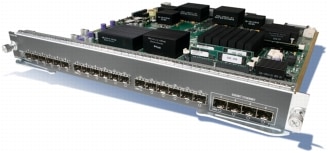
Figure 1 shows the Cisco MDS 9000 18/4-Port Multiservice Module.
The Cisco MDS 9000 18/4-Port Multiservice Module is designed for mission-critical enterprise storage networks that require secure, robust, cost-effective business continuance services. Using Fibre Channel and IP in a single module, the Cisco MDS 9000 18/4-Port Multiservice Module offers the following main features:
• Integrated Fibre Channel and IP storage services in an optimized form factor: The module supports 18 4-Gbps Fibre Channel interfaces for high-performance SAN and mainframe connectivity, and 4 Gigabit Ethernet ports for FCIP and iSCSI storage services. Individual ports can be configured with hot-swappable shortwave, longwave, extended-reach, coarse wavelength-division multiplexing (CWDM), or dense wavelength-division multiplexing (DWDM) Small Form-Factor Pluggables (SFPs) for connectivity of up to 125 miles (200 kilometers).
• Integrated hardware-based virtual SANs (VSANs) and Inter-VSAN Routing (IVR): The module enables deployment of large-scale multisite and heterogeneous SAN topologies. Integration into port-level hardware allows any port within a system or fabric to be partitioned into any VSAN. Integrated hardware-based IVR provides line-rate routing between any ports within a system or fabric without the need for external routing appliances.
• FCIP for remote SAN extension:
– Simplifies data protection and business continuance strategies by enabling backup, remote replication, and other disaster-recovery services over WAN distances using open-standards FCIP tunneling
– Optimizes utilization of WAN resources for backup and replication by enabling hardware-based compression and encryption, FCIP write acceleration, and FCIP tape read and write acceleration; up to 16 virtual Inter-Switch Link (ISL) connections are provided on the 4 Gigabit Ethernet ports through tunneling
– Preserves Cisco MDS 9000 Family enhanced capabilities, including VSANs, advanced traffic management, and security, across remote connections
• I/O acceleration:
– Provides SCSI acceleration to dramatically increase the number of SCSI I/O operations per second over long distances in a Fibre Channel or FCIP SAN by reducing the effect of transport latency on the processing of each operation
– Through transport- and speed-independent implementation, provides a unified solution for 1-, 2-, 4-, 8-, and 10-Gbps links over metropolitan area networks (MANs) and WANs
– Optimizes the utilization of MAN resources for backup and replication by enabling hardware-based compression
– With transparent insertion of the Cisco IOA service, requires no fabric reconfiguration or rewiring
– Provides a high availability, resilient, and scalable environment with PortChannels, service clustering, and Lightweight Resilient Transport Protocol (LRTP).
• iSCSI for extension of the SAN to Ethernet attached servers:
– Extends the benefits of Fibre Channel SAN-based storage to Ethernet attached servers at a lower cost than is possible using Fibre Channel interconnect alone
– Increases storage utilization and availability through consolidation of IP and Fibre Channel block storage
– Through transparent operation, preserves the capability of existing management storage applications
• Advanced FICON services: The module supports FICON environments, including cascaded FICON fabrics, VSAN-enabled intermix of mainframe and open systems environments, N-port ID virtualization for mainframe Linux partitions, FICON tape write and read acceleration over IP, and the Cisco XRC Acceleration feature for improved performance and bandwidth utilization over WAN links for IBM z/OS Global Mirror dynamic updates.
• Integrated Cisco SME: The module protects data at rest on heterogeneous disk arrays, tape drives, and VTLs in a SAN environment using secure IEEE-standard Advanced Encryption Standard (AES) algorithms. Supported natively on the Cisco MDS 9000 18/4-Port Multiservice Module, Cisco SME capabilities are provided as a fabric service so that traffic between any host and storage device on the fabric can use the Cisco SME services. Furthermore, these encryption and compression capabilities are transparent to the hosts and storage devices and are available for devices in all VSANs in the fabric without the need for reconfiguration or rewiring, eliminating downtime for deployment. Cisco SME provisioning and key management are both integrated into Cisco Fabric Manager; no additional software is required.
• Integrated Cisco DMM: The Cisco DMM is a SAN fabric-based software application that enables movement of blocks of data from a source device to a destination device. This data center-class solution helps address the challenges of data migration, such as downtime, the need to add data migration software to servers, and the potential for data loss and corruption. By simply enabling the Cisco DMM feature on the Cisco MDS 9000 18/4-Port Multiservice Module located anywhere in the SAN, IT administrators can configure data migration without host agents, without rewiring, with little effect on performance, and without downtime.
• Intelligent network services: The module uses VSAN technology for hardware-enforced, isolated environments within a single physical fabric, access control lists (ACLs) for hardware-based intelligent frame processing, and advanced traffic management features such as Fibre Channel congestion control and fabric-wide quality of service (QoS) to facilitate migration from SAN islands to enterprise-wide storage networks.
• Network-hosted storage applications: The Cisco MDS 9222i Multiservice Modular Switch (MMS), MDS 9000 18/4-Port Multiservice Module, and MDS 9000 Storage Service Module (SSM) enable network-hosted storage applications on Cisco MDS 9500 Series Multilayer Directors and Cisco MDS 9200 Series Multilayer Switches. The Cisco MDS 9000 SSE Package enables these devices to host network-hosted storage applications by enabling the Intelligent Storage API (ISAPI).
• Network-assisted storage applications (SANTap): The Cisco MDS 9000 SSE Package enables the Cisco MDS 9000 18/4-Port Multiservice Module to run storage applications through the SANTap interface. The Cisco MDS 9000 SANTap service enables customers to deploy EMC RecoverPoint using SANTap services to replicate heterogeneous storage without compromising the integrity, availability, and performance of the I/O operations between the host and primary storage target. Cisco SANTap provides a reliable copy of storage write operations, which enables continuous data protection (CDP) and continuous remote replication (CRR) for mission-critical applications without the drawbacks associated with deployment of in-band data-path-based or out-of-band host-based devices. SANTap integrates with EMC RecoverPoint, requiring the corresponding Cisco MDS 9000 SSE Package to be installed on the Cisco MDS 9000 18/4-Port Multiservice Module.
• High-performance ISLs: The module supports up to 16 Fibre Channel links in a single PortChannel. Links can span any port on any module in the chassis for added scalability and resilience. Up to 4095 buffer-to-buffer credits can be assigned to a single Fibre Channel port to extend storage networks over large distances.
• Sophisticated diagnostics: The module provides intelligent diagnostics, protocol decoding, and network analysis tools as well as integrated Call Home capability for added reliability, faster problem resolution, and reduced service costs.
• Comprehensive network security framework: The module supports RADIUS and TACACS+, Fibre Channel Security Protocol (FC-SP), Secure File Transfer Protocol (SFTP), Secure Shell (SSH) Protocol, and Simple Network Management Protocol Version 3 (SNMPv3) implementing AES, VSANs, hardware-enforced zoning, ACLs, and per-VSAN role-based access control (RBAC). RBAC provides separate control over management functions and access on a per-VSAN basis, enabling separation of duties among administrators on the same physical switch. Gigabit Ethernet ports support IPsec authentication, data integrity, and hardware-assisted data encryption.
• IP Version 6 (IPv6) support: The module supports IPv6 as mandated by the U.S. Department of Defense (DoD), Japan, and China. IPv6 support is provided for FCIP, iSCSI, and management traffic routed in-band and out-of-band.
Integrated FCIP for Remote SAN Extension
Data distribution, data protection, and business continuance services are significant components of today's information-centered businesses. The capability to efficiently replicate critical data on a global scale helps ensure a higher level of data protection for valuable corporate information, and also increases utilization of backup resources and lowers total cost of storage ownership. The Cisco MDS 9000 18/4-Port Multiservice Module uses the open-standards FCIP protocol to extend the distance of current Fibre Channel solutions, enabling interconnection of SAN islands over extended distances.
Advanced SAN Extension Features
The Cisco MDS 9000 18/4-Port Multiservice Module supports hardware-based FCIP compression to increase the effective WAN bandwidth of SAN extension solutions.
The Cisco MDS 9000 18/4-Port Multiservice Module supports IPsec encryption for secure transmission of sensitive data over extended distances. Hardware enablement of IPsec helps ensure line-rate throughput. Together, hardware-based compression and encryption provide a high-performance, highly secure SAN extension capability.
Additionally, the Cisco MDS 9000 18/4-Port Multiservice Module supports FCIP write acceleration, a feature that can significantly improve application performance when storage traffic is extended across long distances. When FCIP write acceleration is enabled, WAN throughput is optimized by reducing the latency of command acknowledgments. Similarly, the module supports FCIP tape acceleration, which significantly improves throughput over WAN links for remote tape backup and restore operations. Further, the Cisco IOA feature allows deployment of write acceleration and tape acceleration over PortChannels to achieve higher availability and resiliency.
Cisco I/O Accelerator
The Cisco MDS 9000 IOA Package provides SCSI acceleration to dramatically increase the number of SCSI I/O operations per second over long distances spanned by Fibre Channel and FCIP links by reducing the effect of transport latency on the processing of each operation. The Cisco IOA feature, through a transport- and speed-independent implementation, provides a unified solution for 1-, 2-, 4-, 8-, and 10-Gbps links over MANs and WANs. The Cisco IOA feature optimizes the utilization of MAN resources for backup and replication by enabling hardware-based compression.
Cisco IOA services can be inserted transparently into the fabric, and no fabric reconfiguration or rewiring is required. Cisco's clustering technology enables transparent provisioning, high availability, and failover capabilities.
Cisco Storage Media Encryption
Cisco SME services offer solutions that enable companies to address Payment Card Industry (PCI) Data Security Standard (DSS) 2.0 compliance and other legislative regulations such as the Health Insurance Portability and Accountability Act (HIPAA that require companies to store and protect data at rest for a specified number of years while publicly disclosing security breaches. Cisco has services such as IP Security (IPsec) and the Cisco TrustSec
® solution to address data security while data is in motion. Cisco SME addresses data security for data at rest. Cisco SME is a fabric-based service so is scalable and nonintrusive and addresses heterogeneous environments.
• Cisco SME enables data on tapes and VTLs to be compressed, encrypted, and authenticated for centralized security management and data management and recovery.
• Cisco SME enables encryption of data for disk arrays.
• Cisco SME services employ clustering technology to create a highly available solution. The cryptographic cluster formed enhances reliability and availability, provides automated load balancing and failover capabilities, and simplifies provisioning as a single SAN fabric service rather than as individual switches or modules.
• The Cisco Key Management Center (KMC) provides comprehensive key management for Cisco SME, with support for single- and multiple-site deployments. Cisco KMC provides essential features such as key archival, secure export and import and translation for distribution, and key shredding. It can also work in conjunction with the RSA RKM Appliance.
• The Cisco SME license can be used to enable encryption of either tapes or disks. Cisco recommends that separate service engines be used for Cisco SME tape and disk services.
Cisco Data Mobility Manager
The Cisco DMM is a fabric-based data migration solution that transfers block data nondisruptively across heterogeneous storage volumes and across distances, whether the host is online or offline. This data center-class solution helps address the challenges of data migration, such as downtime, the need to add data migration software to servers, and the potential for data loss and corruption. By simply enabling the DMM feature on the Cisco MDS 9000 18/4-Port Multiservice Module located anywhere in the SAN, IT administrators can configure data migration without host agents, without rewiring, with little effect on performance, and without downtime.
VSANs
Ideal for efficient, secure SAN consolidation, ANSI T11-standard VSANs enable more efficient storage network utilization by creating hardware-based isolated environments with a single physical SAN fabric or switch. Each VSAN can be zoned as a typical SAN and maintained with its own fabric services for added scalability and resilience. VSANs allow the cost of SAN infrastructure to be shared among more users, while helping ensure segregation of traffic and retaining independent control of configuration on a VSAN-by-VSAN basis.
Integrated SAN Routing
In another step toward deployment of efficient, cost-effective, consolidated storage networks, the Cisco MDS 9000 18/4-Port Multiservice Module supports IVR, the industry's first routing function for Fibre Channel. IVR allows selective transfer of data between specific initiators and targets on different VSANs while maintaining isolation of control traffic within each VSAN. With IVR, data can transit VSAN boundaries while maintaining control plane isolation, thereby maintaining fabric stability and availability. IVR eliminates the need for external routing appliances, greatly increasing routing scalability while delivering line-rate routing performance, simplifying management, and eliminating the challenges associated with maintaining separate systems. IVR means lower total cost of SAN ownership.
Integrated Mainframe Support and Channel Extension
The Cisco MDS 9000 18/4-Port Multiservice Module is mainframe ready, with full support for IBM zSeries FICON and Linux environments.
Certified by IBM for attachment to all FICON-enabled devices in an IBM zSeries operating environment, the Cisco MDS 9000 18/4-Port Multiservice Module supports transport of the FICON protocol in both cascaded and non-cascaded fabrics, as well as an intermix of FICON and open systems Fibre Channel Protocol traffic on the same switch.
Virtual SANs simplify intermixing of SAN resources among IBM z/OS, mainframe Linux, and open systems environments, enabling increased SAN utilization and simplified SAN management. VSAN-based intermix mode eliminates the uncertainty and instability often associated with zoning-based intermixing techniques. The use of VSANs also greatly reduces the likelihood that misconfiguration or component failure in one VSAN will affect operation in other VSANs.
VSAN-based management access control simplifies partitioning of SAN management responsibilities between mainframe and open systems environments, enhancing security. FICON VSANs can be managed using the integrated Cisco Fabric Manager, Cisco command-line interface (CLI), or IBM CUP-enabled management tools including the IBM SA/390 Resource Measurement Facility (RMF) and dynamic channel path management (DCM).
The combination of the SAN Extension over IP license and the Mainframe license enables FICON tape write and read acceleration, often referred to as tape pipelining. The further addition of the Cisco XRC Acceleration feature improves performance and bandwidth utilization over WAN links for IBM z/OS Global Mirror dynamic updates.
Advanced Traffic Management
The advanced traffic management capabilities integrated into the Cisco MDS 9000 18/4-Port Multiservice Module simplify deployment and optimization of large-scale fabrics.
• Virtual output queuing: Helps ensure line-rate performance on each port, independent of traffic pattern, by eliminating head-of-line blocking
• Up to 4095 buffer-to-buffer credits: Can be assigned to an individual port for increased bandwidth utilization across long distances
• PortChannels: Allow users to aggregate up to 16 physical ISLs into a single logical bundle, providing optimized bandwidth utilization across all links; the bundle can consist of any speed-matched ports from any module in the chassis, helping ensure that the bundle can remain active even in the event of a module failure
• Fabric Shortest Path First (FSPF)-based multipathing: Provides the intelligence to load-balance across up to 16 equal-cost paths and, in the event of a switch failure, dynamically reroute traffic
• QoS: Can be used to manage bandwidth and control latency and to prioritize critical traffic
• Fibre Channel congestion control: Provides end-to-end, feedback-based congestion control that augments the Fibre Channel buffer-to-buffer credit mechanism, enabling enhanced traffic management
Advanced Diagnostics and Troubleshooting Tools
Management of large-scale storage networks requires proactive diagnostics, tools to verify connectivity and route latency, and mechanisms for capturing and analyzing traffic. The Cisco MDS 9000 Family integrates the industry's most advanced analysis and diagnostic tools. Power-on self test (POST) and online diagnostics provide proactive health monitoring. The Cisco MDS 9000 18/4-Port Multiservice Module implements diagnostic capabilities such as Fibre Channel Traceroute to detail the exact path and timing of flows and Switched Port Analyzer (SPAN) to intelligently capture network traffic. After traffic has been captured, it can be analyzed with the Cisco Fabric Analyzer, an embedded Fibre Channel analyzer. Comprehensive port-based and flow-based statistics facilitate sophisticated performance analysis and service-level agreement (SLA) accounting. With the Cisco MDS 9000 family, Cisco delivers a comprehensive toolset for troubleshooting and analysis of storage networks.
Comprehensive Solution for Robust Network Security
Addressing the need for fail-proof security in storage networks, the Cisco MDS 9000 18/4-Port Multiservice Module offers an extensive security framework to protect highly sensitive data moving in today's enterprise networks. The module employs intelligent frame inspection at the port level, including the application of ACLs for hardware enforcement of zones, VSANs, and advanced port security features.
• Extended zoning capabilities are enabled to help ensure that LUNs can be accessed by only specific hosts (LUN zoning), to limit SCSI read commands for a certain zone (read-only zoning), and to restrict broadcasts to only the selected zones (broadcast zones).
• VSANs are used to achieve higher security and greater stability by providing complete isolation among devices that are connected to the same physical SAN.
• FC-SP provides switch-switch and host-switch Diffie-Hellman Challenge Handshake Authentication Protocol (DH-CHAP) authentication supporting RADIUS and TACACS+, helping ensure that only authorized devices can access protected storage networks.
• For both FCIP and iSCSI deployments, the comprehensive IPsec protocol suite delivers secure authentication, data integrity, and hardware-based encryption.
Advanced Software Packages
The Cisco MDS 9000 18/4-Port Multiservice Module can be further enhanced through additional software packages that offer advanced intelligence and functions. Currently available software packages include:
• Cisco MDS 9000 SME Package: Cisco SME secures data stored on heterogeneous disk arrays, tape drives, and VTLs using the Cisco MDS 9000 18/4-Port Multiservice Module.
• Cisco SAN Extension over IP Package: The Cisco SAN Extension over IP Package provides an integrated, cost-effective, and reliable business continuance solution that uses IP infrastructure by offering FCIP for remote SAN extension, along with a variety of advanced features to optimize the performance and manageability of FCIP links. When the Mainframe Package license is installed on the switch or director containing the Cisco MDS 9000 18/4-Port Multiservice Module, FICON channel extension features are enabled as well.
• Cisco MDS 9000 IOA Package: The Cisco IOA feature provides SCSI acceleration to dramatically increase the number of SCSI I/O operations per second over long distances spanned by Fibre Channel and FCIP links by reducing the effect of transport latency on the processing of each operation.
• Cisco MDS 9000 SSE Package: Cisco SSE provides the underlying infrastructure and programmatic interface to enable intelligent fabric applications. The Cisco MDS 9000 SSE Package enables network-hosted storage applications and network-assisted storage applications such as SANTap for EMC RecoverPoint on the Cisco MDS 9000 18/4-Port Multiservice Module.
• Cisco MDS 9000 XRC Acceleration Package: The Cisco XRC Acceleration feature provides acceleration of z/OS Global Mirror (often referred to by its former name of XRC) dynamic updates across WAN links between primary FICON disk storage (direct-access storage device [DASD]) and the remote IBM System Data Mover (SDM) System z.
Product Specifications
Table 1 lists the product specifications for the Cisco MDS 9000 18/4-Port Multiservice Module.
Table 1. Product Specifications
Feature
Description
Product compatibility
Cisco MDS 9000 Family
Software compatibility
Cisco MDS SAN-OS Software Release 3.2.(1) and NX-OS 4.1(1c) or later
• RFC 2461 and 2462 IPv6 neighbor discovery and stateless autoconfiguration
• RFC 2464 IPv6/Ethernet
• RFC 3270 iSCSI
• RFC 3643 and 3821 FCIP
Protocols (continued)
• Ethernet standards
• IEEE 802.3z Gigabit Ethernet
• IEEE 802.1Q VLAN
• IPsec
• RFC 2401 Security Architecture for IP
• RFC 2403 and 2404 Hash Message Authentication Code (HMAC)
• RFC 2405, 2406, and 2451 IP Encapsulating Security Payload (ESP)
• RFC 2407 and 2408 Internet Security Association and Key Management Protocol (ISAKMP)
• RFC 2412 OAKLEY Key Determination Protocol
• RFC 3566, 3602, and 3686 AES
• Internet Key Exchange (IKE)
• RFC 2409 IKEv1
• IKEv2, draft
Cards, ports, and slots
18 fixed autosensing 1-, 2-, and 4-Gbps Fibre Channel ports and 4 fixed 1-Gbps Ethernet ports
Features and Functions
Fabric services
• Name server
• Registered State Change Notification (RSCN)
• Login services
• Fabric Configuration Server (FCS)
• iSCSI Network Boot (iNBP)
• Private loop
• Public loop
• Translative loop
• Broadcast
• In-order delivery
Advanced functions
• VSAN
• IVR
• PortChannel with multipath load balancing
• Flow-based and zone-based QoS
• Fibre Channel congestion control
• Extended buffer-to-buffer credits
• Hardware-based FCIP compression
• Hardware-based encryption
• Hardware-based data integrity
• FCIP disk write acceleration
• FCIP tape read and write acceleration
• Cisco SME
• Cisco DMM
• Cisco IOA feature
• Cisco XRC Acceleration feature
Diagnostics and troubleshooting tools
• POST diagnostics
• Online diagnostics
• Internal port loopbacks
• SPAN and remote SPAN
• Fibre Channel Traceroute
• Fibre Channel Ping
• Fibre Channel Debug
• Cisco Fabric Analyzer
• Syslog
• Online system health
• Port-level statistics
• Real-Time Protocol (RTP) debug
Network security
• VSANs
• ACLs
• Per-VSAN RBAC
• Fibre Channel zoning
• N-port worldwide name (WWN)
• N-port FC-ID
• Fx-port WWN
• Fx-port WWN and interface index
• Fx-port domain ID and interface index
• Fx-port domain ID and port number
• LUN
• Read-only
• Broadcast
• iSCSI zoning
• iSCSI name
• IP address
• FC-SP
• DH-CHAP switch-switch authentication
• DH-CHAP host-switch authentication
• Port security and fabric binding
• IPsec for FCIP and iSCSI
• IKEv1 and IKEv2
• Management access
• SSHv2 implementing AES
• SNMPv3 implementing AES
• SFTP
FICON
• FC-SB-3 compliant
• Cascaded and noncascaded FICON fabrics
• Intermix of FICON and Fibre Channel FCP traffic
• IBM CUP management interface
• FICON XRC acceleration (extension)
• FICON tape write and read acceleration (channel extension)
Serviceability
• Configuration file management
• Nondisruptive software upgrades for Fibre Channel interfaces
• Call Home
• Power-management LEDs
• Port beaconing
• System LED
• SNMP traps for alerts
• Network boot
Performance
• Port speed: 1-, 2-, and 4-Gbps autosensing, optionally configurable
• Buffer credits: 16 per port on shared-mode ports, up to 250 per port on dedicated-mode ports, and up to 4095 per individual port on dedicated-mode ports with optional Enterprise Package license activated
• PortChannel: Up to 16 physical links
• FCIP tunnels: Up to 3 per port
Optics
Speed
Media
Distance
Supported Cisco optics, media, and transmission distances
1 Gbps-SW, LC SFP
1 Gbps-SW, LC SFP
1 Gbps-SW, LC SFP
1 Gbps-LW, LC SFP
2 Gbps-SW, LC SFP
2 Gbps-SW, LC SFP
2 Gbps-SW, LC SFP
2 Gbps-LW, LC SFP
4 Gbps-SW, LC SFP
4 Gbps-SW, LC SFP
4 Gbps-SW, LC SFP
4 Gbps-MR, LC SFP
4 Gbps-LW, LC SFP
4 Gbps-CWDM, LC SFP
1-Gbps-SX, LC SFP
1-Gbps-SX, LC SFP
1-Gbps-LX/LH, LC SFP
1 Gbps-CWDM, LC SFP
2 Gbps-CWDM, LC SFP
1 Gbps-DWDM, LC SFP
2 Gbps-DWDM, LC SFP
50/125-micron multimode (OM3)
50/125-micron multimode
62.5/125-micron multimode
9/125-micron single-mode
50/125-micron multimode (OM3)
50/125-micron multimode
62.5/125-micron multimode
9/125-micron single-mode
50/125-micron multimode (OM3)
50/125-micron multimode
62.5/125-micron multimode
9/125-micron single-mode
9/125-micron single-mode
9/125-micron single-mode
50/125-micron multimode
62.5/125 micron multimode
9/125 or 10/125 micron single-mode
9/125-micron single-mode
9/125-micron single-mode
9/125-micron single-mode
9/125-micron single-mode
860m
500m
300m
10 km
500m
300m
150m
10 km
380m
150m
70m
4 km
10 km
Up to 25 km (40 km in point-to-point application)
550m
275m
10 km
Up to 100 km
Up to 100 km
Up to 200 km
Up to 200 km
Reliability and availability
• Hot-swappable module
• Hot-swappable SFP optics
• Online diagnostics
• Stateful process restart
• Nondisruptive supervisor failover
• Any module, any port configuration for PortChannels
• Fabric-based multipathing
• Per-VSAN fabric services
• Port tracking
• VRRP for management and FCIP or iSCSI connections
Network management
• Access methods through Cisco MDS 9500 Series Supervisor Module
• Out-of-band 10/100 Ethernet port (Supervisor-1 Module)
• Out-of-band 10/100/1000 Ethernet port (Supervisor-2 Module)
• RS-232 serial console port
• In-band IP-over-Fibre Channel
• DB-9 COM port
• Access protocols
• CLI through console and Ethernet ports
• SNMPv3 through Ethernet port and in-band IP-over-Fibre Channel access
• Storage Networking Industry Association (SNIA) Storage Management Initiative Specification (SMI-S)
• Distributed Device Alias service
• Network security
• Per-VSAN RBAC using RADIUS- and TACACS+-based authentication, authorization, and accounting (AAA) functions
Cisco offers a wide range of services programs to accelerate customer success. These innovative services programs are delivered through a unique combination of people, processes, tools, and partners, resulting in high levels of customer satisfaction. Cisco services help you protect your network investment, optimize network operations, and prepare the network for new applications to extend network intelligence and the power of your business. For more information about Cisco services, see
Cisco Technical Support Services or
Cisco Advanced Services.
For More Information
For more information about the Cisco MDS 9000 18/4-Port Multiservice Module, visit
http://www.cisco.com/go/storage or contact your local account representative.
 Feedback