


 9 / 60

5
Cybersecurity in ASEAN: An Urgent Call to Action
1.1 ASEANcountries have emerged as launchpads for
cyberattacks
ASEAN countries are being used as launchpads for cyberattacks—either as vulnerable hotbeds
of unsecured infrastructure where numerous computers can be infected easily for large-scale
attacks or as hubs for a single point of attack to gain access to the hubs’ global connections.
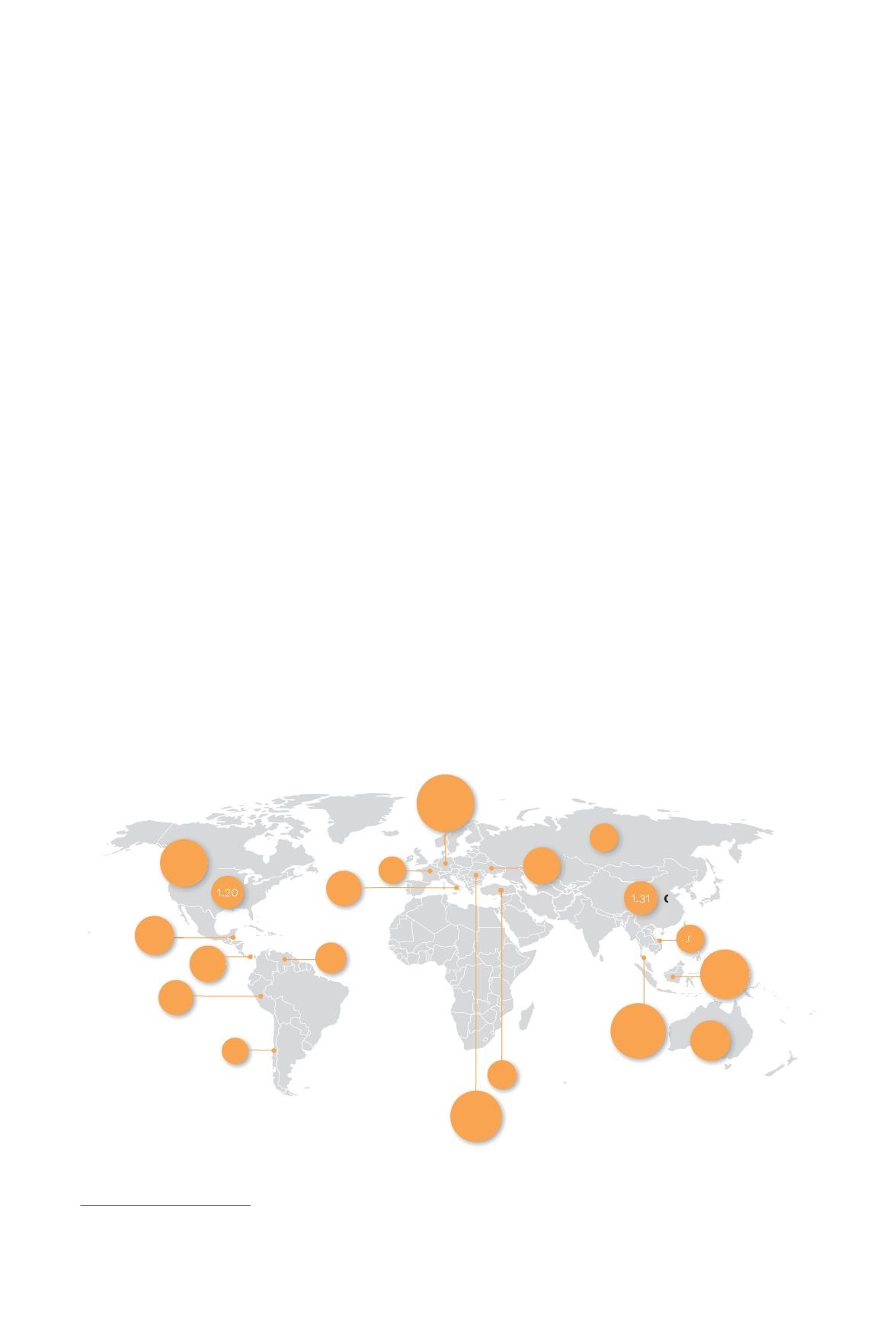
Malaysia, Indonesia, and Vietnam are global hotspots for major blocked suspicious Web activ-
ities—up to 3.5 times the standard ratio, indicating that these countries are being used to launch
malware attacks (see figure 3). Spam botnets are also finding ASEAN countries to be attractive
hosts for their attacks. For example, Vietnam registered 1.68 million IP blocks from December
2015 to November 2016, and the country is number five in the world’s top countries fromwhich
attacks against IoT devices originated in 2016.
7, 8
“In our country, there are still many weaknesses in
information security, including lack of awareness and
action plans at leadership levels, lack of policies to
promote human resource development and nurture talent
in information security, and a lack of cohesiveness
amongst information security stakeholders in general.”
—ASEANnational CERT
Sources: Cisco; A.T. Kearney analysis
Figure
Blocked suspicious Web activity, by country of origin (expected ratio = . )
.
.
.
.
.
.
.
.
.
Germany
France
Italy
Canada
United States
Belize
Panama
Peru
Chile
Malaysia
Australia
Indonesia
Vietnam
China
Russia
Ukraine
.
.
.
.
Venezuela
.
Turkey
.
Romania
.
.
.
.
7
IP blocks are spammessages that are blocked immediately by spam-detecting technology because the sender has a bad reputation
score. Examples include messages that originate from known spam-sending botnets or compromised networks.
8
Internet Security Threat Report Volume 22 ,Symantec, April 2017