نشر Cisco Secure Endpoint Secure Client باستخدام Microsoft Intune

المحتويات
المقدمة
يوضح هذا المستند بإيجاز عملية نشر Cisco Secure Endpoint أو Secure Client باستخدام Microsoft Intune.
الخلفية
يتخطى هذا المستند الخطوات التي تم إتخاذها لإنشاء التطبيقات المدعومة ل Microsoft Intune من مثبت Secure Endpoint/Secure Client ثم إستخدامه للنشر باستخدام مركز إدارة Microsoft Intune. وعلى وجه الخصوص، تتضمن العملية حزم مثبت نقطة النهاية الآمنة من Cisco كتطبيق Win32 من خلال أداة إعداد محتوى Win32 من Intune، ومن خلال تكوين التطبيق ونشره من خلال Intune.
التكوين
نشر آمن لنقطة النهاية
الخطوة 1. تنزيل Cisco Secure Endpoint Installer
-
قم بتسجيل الدخول إلى بوابة نقطة النهاية الآمنة الخاصة بك، وفقا للمنطقة.
2. انتقل إلى علامة تبويب الإدارة وحدد تنزيل الموصل.
3. حدد مجموعة نقاط النهاية الآمنة التي تريد أن يقوم الموصل بالتسجيل إليها.
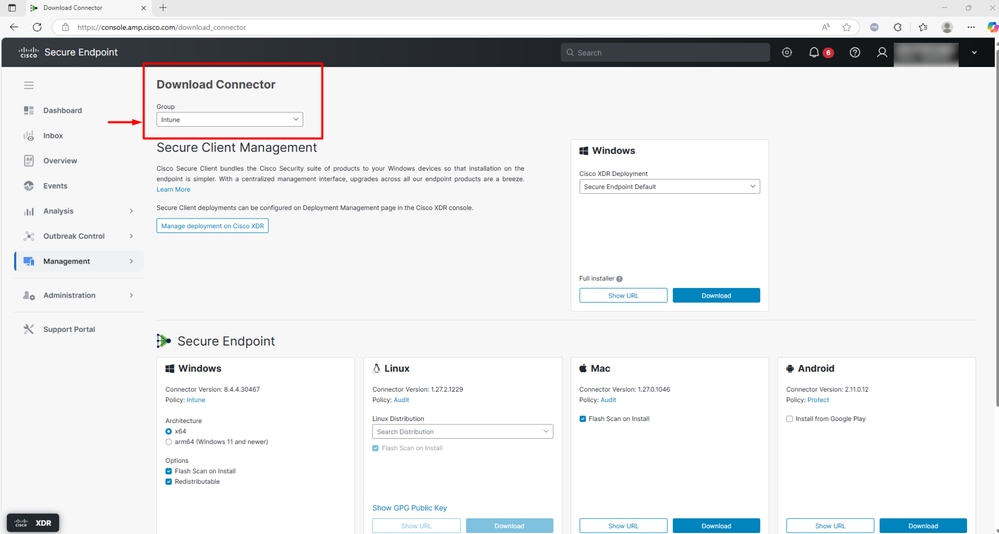
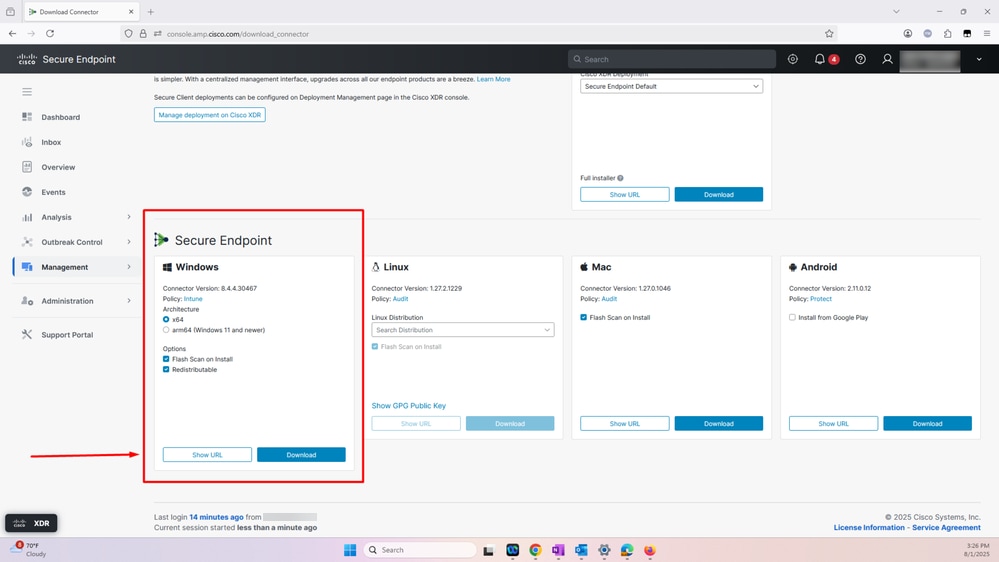
4. حدد التنزيل وتم تنزيل مثبت EXE محليا:
الخطوة 2. تجهيز ملف Intune باستخدام أداة إعداد محتوى Win32
تعد أداة إعداد محتوى Win32 أداة مساعدة مقدمة من Microsoft Intune لمساعدة مسؤولي تقنية المعلومات على إعداد تطبيقات Win32 (لتطبيقات سطح المكتب التقليدية في Windows) للنشر من خلال Microsoft Intune. تقوم الأداة بتحويل مثبتات تطبيقات Win32 (مثل .exe و.msi والملفات ذات الصلة) إلى تنسيق ملف .intunewin، والذي هو مطلوب لنشر هذه التطبيقات عبر Intune.
لتحضير ملف Intune:
- قم بتنزيل أداة إعداد محتوى Win32 من Github.
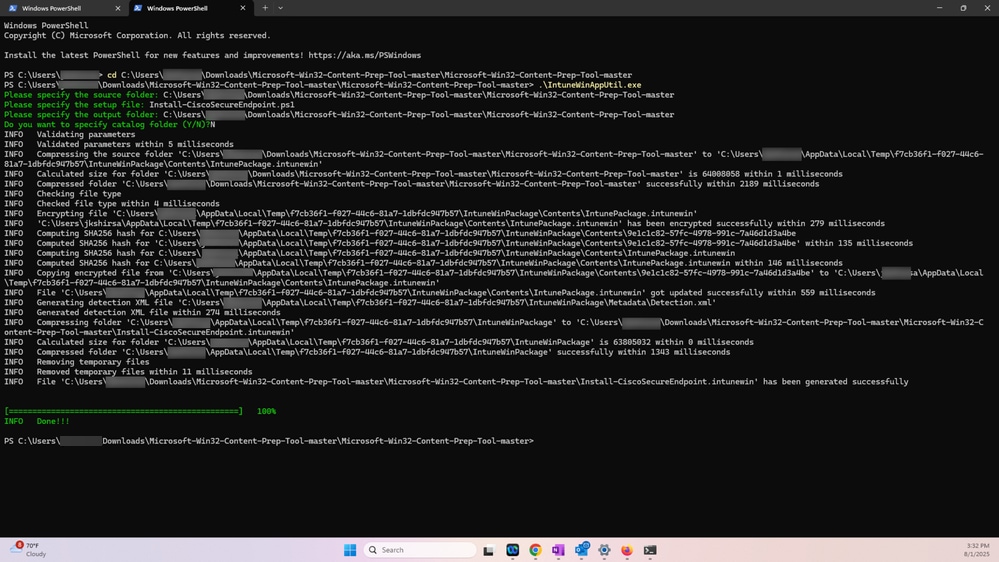
2. قم بتنفيذ IntuneWinAppUtil.exe.
3. في الخطوة التالية، قم بتغيير الدليل إلى المجلد الذي يحتوي على الملف التنفيذي لنقطة النهاية الآمنة من Cisco الذي تم تنزيله في الخطوة 1 وبرنامج نصي التثبيت powershell (Install-CiscoSecureEndpoint.ps1.)
4. حدد اسم ملف البرنامج النصي لملف الإعداد، Install-CiscoSecureEndpoint.ps1.
5. في الخطوة التالية، حدد المجلد حيث يجب إنشاء ملف InTunewin.
6. أدخل N، عند المطالبة بتحديد الكتالوج.
7. يتم إنشاء ملف Intunewin كما هو موضح في لقطة الشاشة:
الخطوة 3. تحميل ملف IntuneWin لنقطة النهاية الآمنة إلى مركز إدارة Microsoft Intune
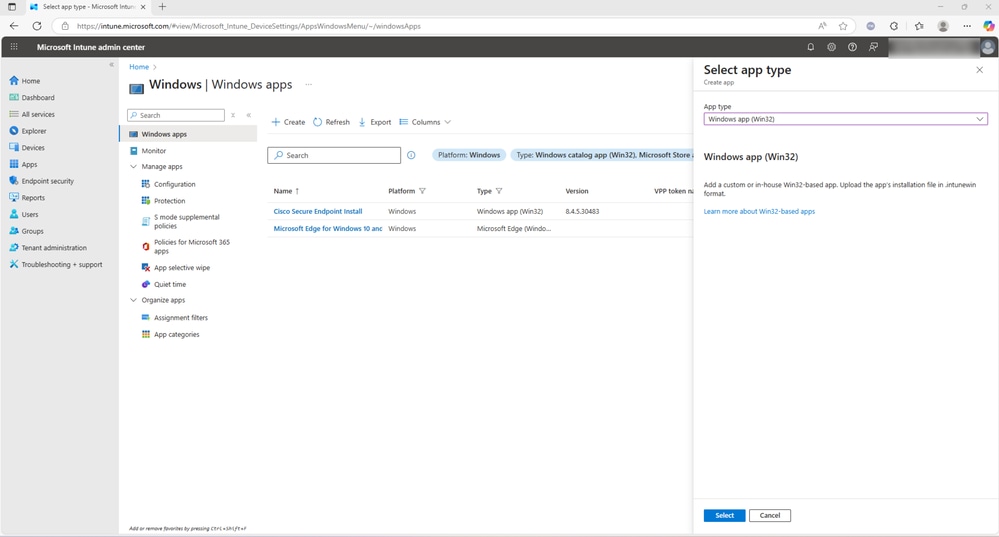
- قم بتسجيل الدخول إلى مركز إدارة Microsoft Intune.
2. انتقل إلى تطبيقات Windows في مركز إدارة Microsoft Intune وحدد نوع التطبيق - Win32 وحدد الإجرائن الموضح في لقطة الشاشة:
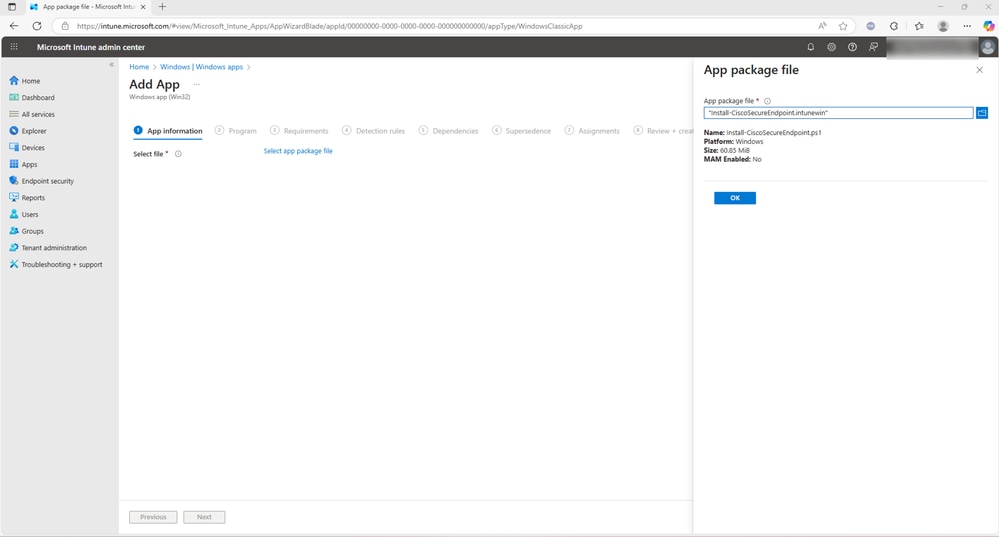
3. في الخطوة التالية، قم بتحميل ملف InTunewin الآمن لنقطة النهاية الذي تم إنشاؤه في الخطوة 2 وحدد OK.
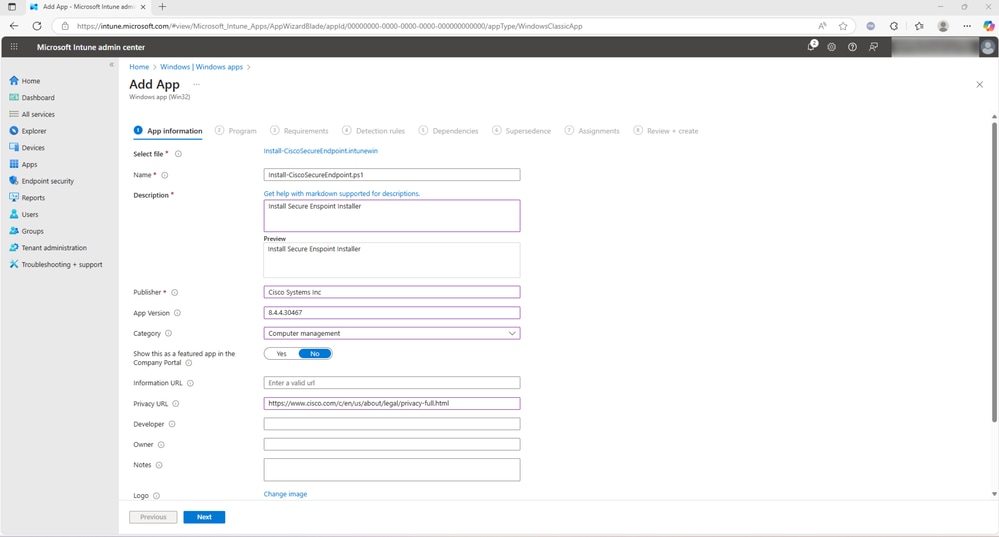
4. بعد تحديد موافق، أدخل المعلومات كما هي معروضة في لقطة الشاشة. يمكن ترك الحقول الاختيارية فارغة في كل علامة تبويب، ثم انقر فوق التالي.
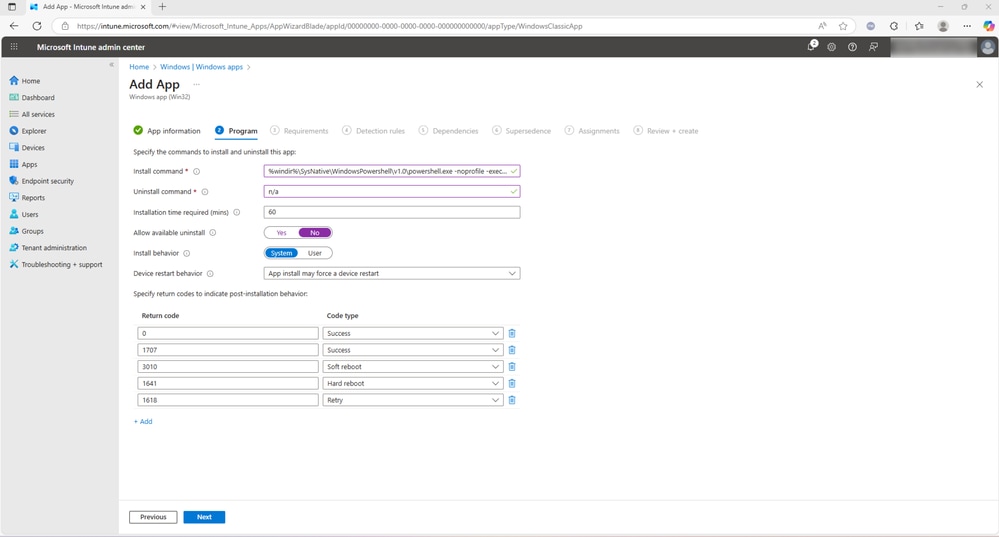
5. قم بتشغيل الأمر install:
%windir%\SysNative\WindowsPowershell\v1.0\powershell.exe -noprofile -executionpolicy Bypass -file .\Install-CiscoSecureEndpoint.ps1
ملاحظة: الرمز المقدم هو مثال ويمكن إستخدام أي رمز كأمر تثبيت لهذا المثبت.
6. أدخل إزالة التثبيت ك N/a ووقت التثبيت المطلوب ك 60 (إختياري.) قم بتعيين السماح بإزالة التثبيت المتوفرة ك لا، وحدد سلوك التثبيت ك System. قم بإضافة أي تفاصيل إضافية إختيارية قبل تحديد التالي.
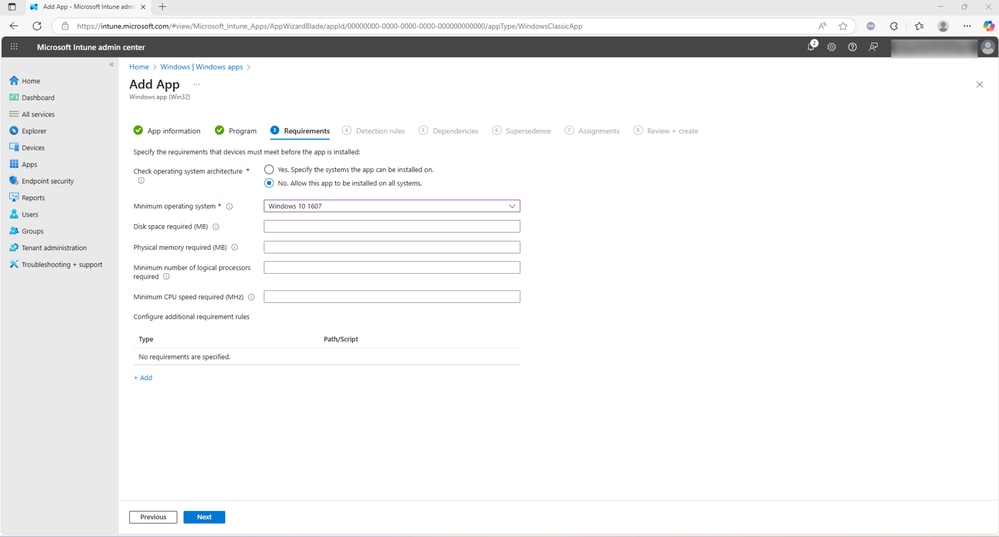
7. في علامة التبويب المتطلبات، تحقق من رقم. السماح بتثبيت هذا التطبيق على كافة الأنظمة وحدد الحد الأدنى لنظام التشغيل. قم بتعبئة الحقول الاختيارية إذا رغبت وحدد التالي.
8. في علامة التبويب قواعد الكشف، توفر القائمة المنسدلة تنسيق القواعد خيارين؛ قم بتكوين قواعد الكشف يدويا وأستخدم برنامج نصي مخصص للكشف. يمكن تحديد أي من الخيارين استنادا إلى متطلبات النشر.
9. عند إختيار تكوين قواعد الكشف يدويا، يمكنك تحديد نوع قاعدة مثل MSI أو File أو Register لاكتشاف وجود التطبيق. في هذا المستند، تم تحديد الخيار البديل، إستخدام برنامج نصي مخصص للكشف.
10. يتم إستخدام برنامج نصي من PowerShell باسم Confirm-CSEInstall.ps1 للتحقق من التثبيت الناجح لنقطة النهاية الآمنة من Cisco (يتم سردها في أسفل هذا المستند.)
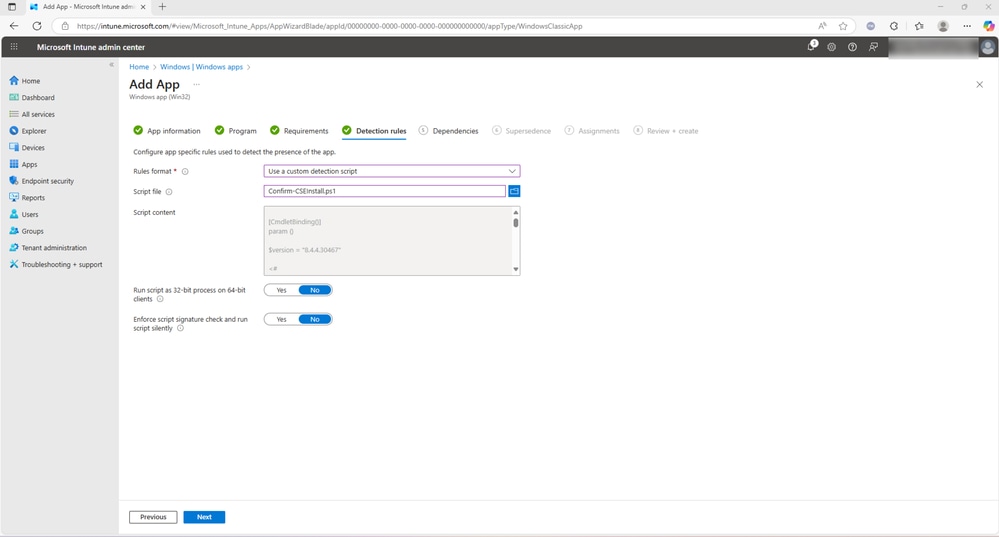
11. حدد التالي للمتابعة.
ملاحظة: يمكن إنشاء برنامج نصي مخصص للكشف من أجل عملية النشر هذه خصيصا لتناسب بيئتك ومعايير الكشف لديك.
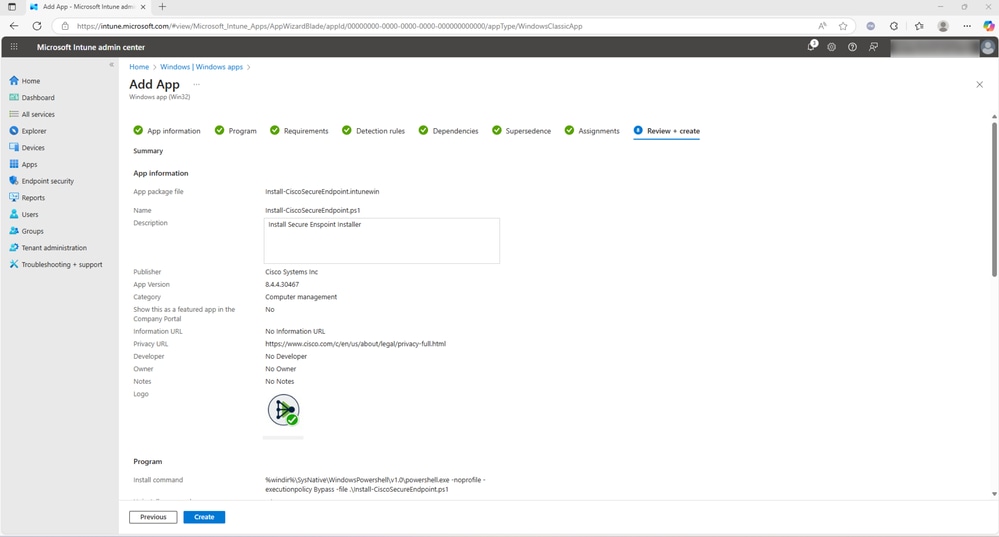
12. (علامات التبويب القليلة التالية إختيارية) لا يجب تكوين تبعيات؛ قم بتعيين التطبيق إلى المجموعة المطلوبة وحدد مراجعة + إنشاء.
نشر آمن للعملاء
الخطوة 1. تنزيل النشر الكامل لبرنامج Cisco Secure Client
- قم بتسجيل الدخول إلى وحدة تحكم XDR أو إدارة سحابة العميل الآمنة، حسب المنطقة.
2. قم بإنشاء عملية نشر جديدة وحدد أداة التثبيت الكامل أو مثبت الشبكة وفقا لنوع النشر الخاص بك.
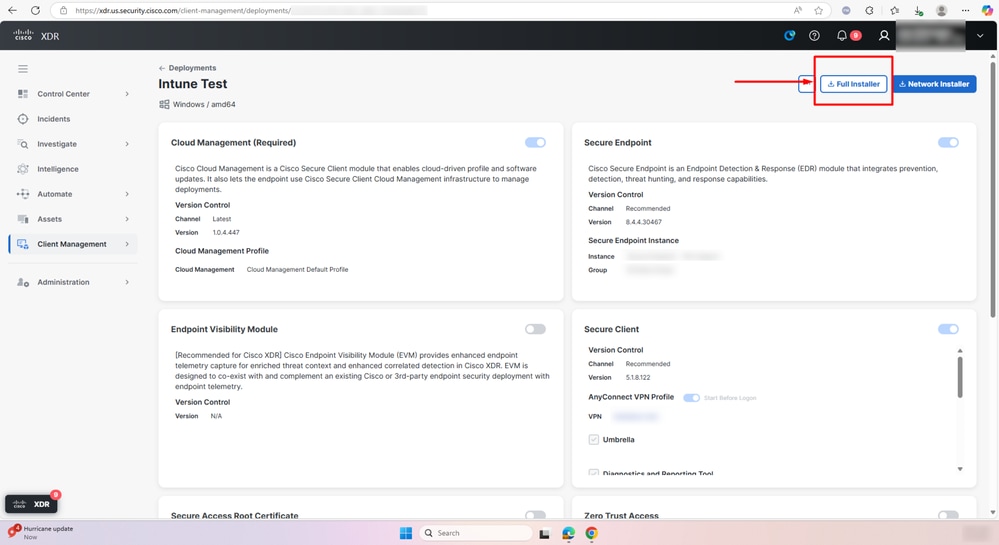
3. يتم تنزيل CSC-deploy-intune Test.exe كما هو موضح في لقطة الشاشة:
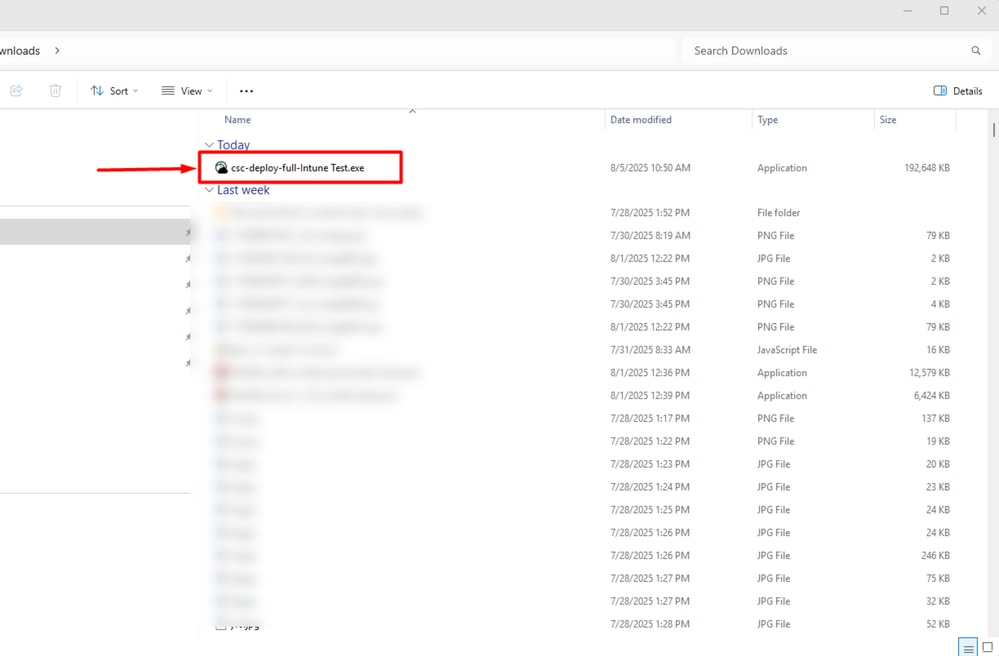
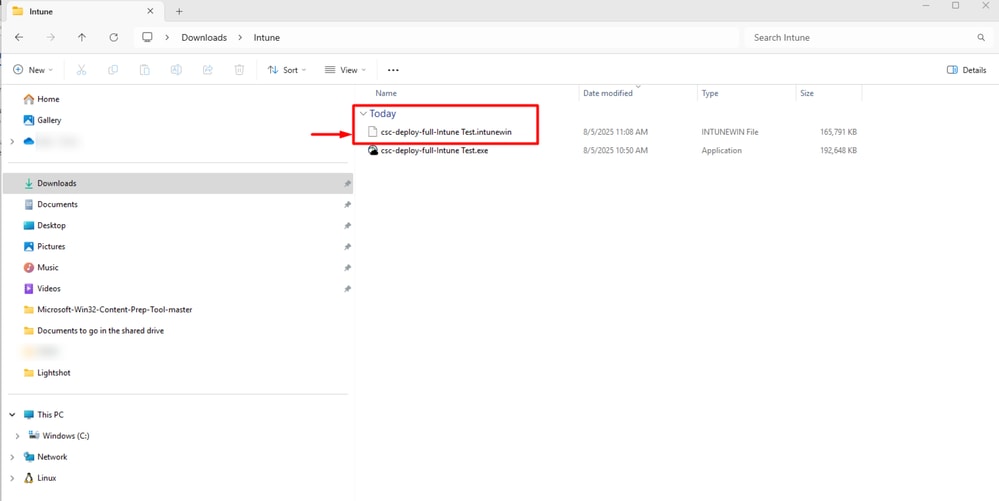
الخطوة 2. تحضير ملف Intune، نفس الإجراء للخطوة 2: هذا ينشئ ملف csc-deploy-full-intune Test.intunewin
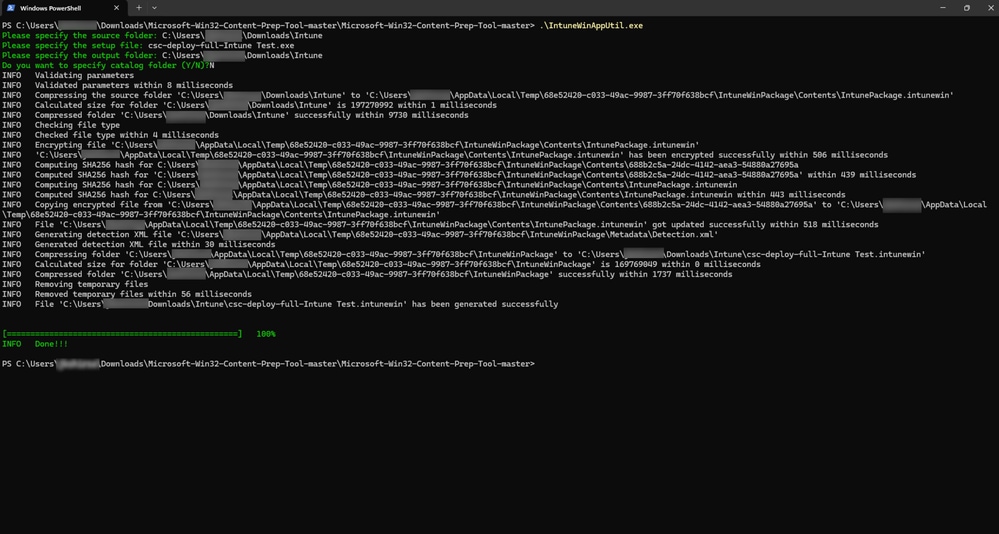
- ينتج عن خطوات لقطة الشاشة السابقة إنشاء ملف csc-deploy-full-intune Test.intunewin.
الخطوة 3. قم بتحميل ملف csc-deploy-full-intune Test.intunewin من Stept 1 إلى مركز إدارة Microsoft Intune
يؤدي هذا إلى اكتمال عملية نشر نقطة نهاية Cisco الآمنة باستخدام Intune.

تحذير: يجب دمج برنامج التثبيت النصي هذا مع المثبت باستخدام محول Intune والاسم الدقيق للبرنامج النصي ل PS المشار إليه في سطر الأوامر المذكور تحت الخطوة 3 في هذا الدليل والموضع في Intune أسفل:
أمر إضافة تطبيق > برنامج > تثبيت.
ملاحظة: تعمل النصوص التنفيذية في القسم التالي على نماذج للمظاهرات المستخدمة في بيئات المختبرات لإنشاء هذا الدليل. يمكنك إستخدامها كما هي بعد الاختبار المناسب أو التعديل كما تريد.
Install-Cisco SecureEndpoint.ps1 Script
[CmdletBinding()]
param ()

$cse_exe =
$version =

if ($PSCommandPath -eq $null) {
    function GetPSCommandPath() {
        return $MyInvocation.PSCommandPath;
    }
    $PSCommandPath = GetPSCommandPath
}

$script = [pscustomobject]@{
    "Path" = Split-Path $PSCommandPath -Parent
    "Name" = Split-Path $PSCommandPath -Leaf
}

Set-Location -Path $script.Path

$cse_installer = [IO.Path]::Combine($script.Path, $cse_exe)
$csc_installer_args = "/R /S"

<#
    Cannot use -wait for 'Cisco Secure Endpoint' and therefore cannot get the exit code to return.
    Using -wait, returns varied results, instead use Get-Process and while loop to wait for installation to complete.
#>
$install = Start-Process -WorkingDirectory "$($script.Path)" -FilePath "${cse_installer}" -ArgumentList "${csc_installer_args}" -PassThru -NoNewWindow

while (Get-Process "$($cse_exe -replace '.exe', '')" -ErrorAction SilentlyContinue)
{
    Start-Sleep -Seconds 10
}
Install-Cisco XDRDeployment.ps1 Script
$exeName =
$exePath = Join-Path -Path $PSScriptRoot -ChildPath $exeName

if (-not (Test-Path $exePath)) {
    Write-Error "Executable not found: $exePath"
    exit 1
}

# Use silent mode – the most commonly documented switch for Cisco XDR / Secure Client installers
$arguments = "-q"   # or try "--quiet" if -q fails in your specific build

try {
    $process = Start-Process -FilePath $exePath -ArgumentList $arguments -NoNewWindow -Wait -PassThru

    if ($process.ExitCode -eq 0) {
        Write-Output "Cisco XDR installation completed successfully (exit code 0)."
        exit 0
    } else {
        Write-Error "Installation failed with exit code: $($process.ExitCode)"
        exit $process.ExitCode
    }
}
catch {
    Write-Error "Exception during installation: $_"
    exit 1
}
النص البرمجي Confirm-CSEInstall.ps1

تلميح: اختياري: يمكنك إستخدام قواعد الكشف التي تم تكوينها يدويا في مدخل إدارة Intune.
[CmdletBinding()]
param ()

$version =

<#
    https://learn.microsoft.com/en-us/intune/intune-service/apps/apps-win32-add#step-4-detection-rules
    The app gets detected when the script both returns a 0 value exit code and writes a string value to STDOUT

    The Intune agent checks the results from the script. It reads the values written by the script to the STDOUT stream,
    the standard error (STDERR) stream, and the exit code. If the script exits with a nonzero value, the script fails and
    the application detection status isn't installed. If the exit code is zero and STDOUT has data, the application
    detection status is installed.
#>

$cse = Get-ItemProperty HKLM:\Software\Microsoft\Windows\CurrentVersion\Uninstall\*, HKLM:\SOFTWARE\Wow6432Node\Microsoft\Windows\CurrentVersion\Uninstall\* -ErrorAction SilentlyContinue | Where-Object { $_ -like "*Immunet Protect*" } | Where-Object { $_.DisplayName -like "*Cisco Secure Endpoint*" }
if ($cse | Where-Object { [System.Version] $_.DisplayVersion -ge [System.Version] "${version}" })
{
    Write-Host "Installed"
    exit 0
}

exit 1
ملاحظة: النصوص التنفيذية السابقة فقط لأغراض تعليمية ولا تدعمها Cisco TAC. يمكن أن تختلف كل بيئة باختلاف القواعد أو السياسات ومن الضروري إجراء الاختبار المناسب. يتم التعامل مع أدوات النشر الخاصة باستكشاف الأخطاء وإصلاحها الخاصة بجهة خارجية على أنها أفضل جهد ويجب أن تبدأ بمراجعة سجلات Intune في المدخل أو في المحطة المدارة.
محفوظات المراجعة
| المراجعة | تاريخ النشر | التعليقات |
|---|---|---|
2.0 |
25-Aug-2026
|
العنوان المحدث، التدقيق الإملائي، النحوي، الأسطر الأفقية المدرجة للفصل بين الأقسام من أجل إمكانية القراءة، و Alt tex المحدث، وتنبيهات CCW. |
1.0 |
12-Aug-2025
|
الإصدار الأولي |
 التعليقات