|
|
Table Of Contents
Product Regulatory Compliance
Environmental ConditionsElectromagnetic Emissions Certification
Network Equipment Building Systems
Data Sheet
Cisco 10000 Series Four-Port
OC-3/STM-1c ATM Line Card
The Cisco 10000 Series Four-Port OC-3c/STM-1c Asynchronous Transfer Mode (ATM) line card provides both the performance and the density to scale networks efficiently and reliably. It features a high-performance segmentation and reassembly (SAR), adapted for various applications including advanced traffic management, cell scheduling, and integrated buffer management. By mapping IP class of service (CoS) to ATM quality of service (QoS) on the Cisco 10000 Series ATM line cards, the flow of mission-critical data can be effectively managed across heterogeneous IP and ATM networks.
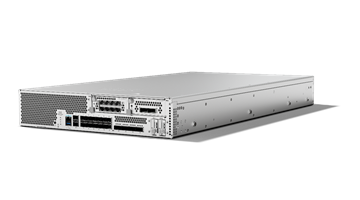
Figure 1
Cisco 10000 Series Four-Port OC-3/STM-1c ATM Line Card
Key Benefits
•
Line-rate OC-3c/STM-1c performance—The OC-3c/STM-1c ATM module is a standards-based ATM solution supporting line-rate (155-Mbps) performance at 64-byte packets that allows Internet service providers (ISPs) to offer line-rate Internet access via ATM virtual circuits.
•
Per-virtual circuit and per-virtual path traffic shaping—The Cisco 10000 Series OC-3c/STM-1c ATM Module supports both per-virtual circuit and per-virtual path traffic shaping, providing flexibility and control over every virtual circuit and virtual path configured. Per-virtual circuit and per-virtual path traffic shaping allows bursts of traffic to conform to a predetermined contract, ensuring that excessive traffic from one virtual circuit does not incur data loss on other virtual circuits. This function is very important when connecting to an ATM WAN or public ATM network, where ATM switches may discard excessive traffic at the point of ingress.
•
Standards-based ATM implementation for interoperability—The OC-3c/STM-1c ATM module is a standards-based ATM interface, allowing customers to integrate the Cisco 10000 Series into existing ATM networks. By implementing a standards-based version of ATM, Cisco ensures that customers will be able to easily and quickly integrate the Cisco 10000 Series into their current ATM network. Further, by using standard Operations, Administration, and Management (OA&M) F4 and F5, customers will enjoy lower management and administrative expenses and improved overall manageability.
ATM Features
•
Supports ATM Forum traffic management service categories: non-real time variable bit rate (nrt-VBR) and universal bit rate (UBR)
•
Supports User-Network Interface (UNI) Versions 3.0 and 3.1
•
Supports Integrated Local Management Interface (ILMI) permanent virtual circuit (PVC) autodiscovery feature
•
Supports up to 32,000 PVCs per module; up to 61,500 PVCs per platform; up to 32,000 UBR PVCs; up to 2000 nrt-VBR PVCs on the leased-line Cisco IOS® trains, beginning with Version 12.0(20)ST; up to 61,500 virtual circuits per platform; up to 8000 virtual circuits per port on the broadband aggregation Cisco IOS trains, beginning with Version 12.2(15)BX
•
Offers full support for virtual path identifier (VPI) and virtual circuit identifier (VCI) address width (16-bit VCI, 8-bit VPI)
•
Supports PVCs and permanent virtual path (PVPs)
•
Supports per-virtual circuit queuing and shaping for nrt-VBR
•
Supports Class-Based Weighted Fair Queuing (CBWFQ) and Priority Queuing for nrt-VBR virtual circuits
•
Offers RFC 1483 support for routed protocols
•
Offers RFC 2684 support for ATM adaption layer 5 (AAL5) Logical Link Control (LLC)/subnetwork attachment point Subnet Access Protocol (SNAP) encapsulations and AAL5 Mux IP Version 4 encapsulation
•
Supports PVCs over AAL5
•
Supports call admission control (does not allow configuration of nrt-VBR PVCs if requested bandwidth is not available on the port)
•
Supports OA&M F4/F5 segment and end-to-end loopback
•
Supports OA&M management (allows management of PVCs using this feature via OA&M)
•
Supports SONET/SDH OC-3 STS-3c/STM-1c framing format
Packet Layer Features
•
Supports all IP routing protocols
•
Supports application of QoS (Priority Queuing/CBWFQ, Weighted Random Early Detection [WRED], committed access rate [CAR]) to each nrt-VBR PVC, and to all UBR PVCs as a group using Cisco modular command-line interface (CLI)
–
Supports ATM cell loss priority (CLP) bit
•
Supports multicast
•
Supports access control lists (ACLs)
•
Supports Multiprotocol Label Switching (MPLS)
–
Frame mode MPLS over ATM
–
MPLS Cell mode with LC-ATM support. This value-added feature allows service providers with existing ATM backbone to upgrade their switches with label switch controller to support the MPLS control plane. It is a great value proposition, enabling new services to be provisioned over the infrastructure while protecting the investment.
•
Supports turbo QoS classification, NetFlow accounting, 802.1Q VLAN, policy-based routing, per-packet load balancing, and generic routing encapsulation (GRE) tunneling
High-Availability Features
•
Supports 1+1 redundancy per port line card using automatic protection switching (APS)
•
Supports 1+1 line-card redundancy for card failover
•
Supports online insertion and removal (OIR)
•
Supports Cisco IOS Software Route Processor Redundancy Plus (RPR+)
•
Supports alarms (SONET-based alarms)
Hardware Features
•
Occupies a single slot in the Cisco 10000 Series chassis; full-height line card
•
LC connector
•
Interface: single mode, intermediate reach
•
Hot-swappable, no slot dependency
•
Network Equipment Building Systems (NEBS) Level 3 compliant
Physical Specifications
•
Weight: 4.75 lb (2.16 kg)
•
Dimensions (H x W x D): 16.0 x 1.12 x 9.97 in. (40.64 x 2.83 x 25.32 cm)
LEDs
•
Carrier status (green, one per card)
•
Loopback (yellow, one per card)
•
Alarm (yellow, one per card)
•
Enable (green, one per card)
•
Fail (yellow, one per card)
Product Regulatory Compliance
Environmental Conditions•
Storage temperature: -38 to 150°F (-40 to 70°C)
•
Operating temperature, nominal: 41 to 104°F (5 to 40°C)
•
Operating temperature, short term: 23 to 131°F (-5 to 55°C)
•
Storage relative humidity: 5 to 95% relative humidity (RH)
•
Operating humidity, nominal: 5 to 85% RH
•
Operating humidity, short term: 5 to 90% RH
•
Operating altitude: -60 to 4000m
Product Regulatory Approvals
•
UL60950/CAN/CSA-C22.2 No. 60950-00, third edition, dated December 1, 2000, with no deviation considered to be less stringent than IEC 60950
•
EN60950 with Amendments 1-4, for CE Marking to the LVD directive
•
IEC 60950 third edition with Amendments 1-4, including all national/group deviations
•
AS/NZS 60950:2000
•
AS/NZS 3260-1993 with Amendments 1-4
•
ACA TS001-1997
Laser Safety
•
21 CRF 1040, Subchapter J
–
EN60825-1
–
EN60825-2
Electromagnetic Emissions Certification
•
AS/NZ 3548:1995 (including Amd I + II) Class B
•
EN55022:1998 Class B
•
CISPR 22:1997
•
EN55022:1994 (including Amd I+ II)
•
47 CFR Part 15:2000 (FCC) Class B
•
VCCI V-3/01.4 Class 2
•
CNS-13438:1997 Class B
•
GR1089:1997 (including Rev1: 1999)
Immunity
•
EN300386:2000—TNE EMC requirements; product family standard; high priority of service; central office and non-central office locations
•
EN50082-1:1992/1997
•
EN50082-2:1995—Generic Immunity Standard, Heavy Industrial
•
CISPR24:1997
•
EN55024:1998—Generic ITE Immunity Standard
•
EN61000-4-2:1995+AMD I + II—ESD, Level 4, 8-kV contact,15-kV air
•
IEC-1000-4-3:1995+AMD 1—Radiated Immunity, 10 V/m
•
IEC-1000-4-4:1995-Electrical Fast Transients, Level 4, 4 kV/B
•
IEC-1000-4-5:1995+AMD 1—DC Surge Class 3; AC surge Class 4
•
EN61000-4-6:1996+AMD 1—RF Conducted Immunity, 10V rms
•
EN61000-4-11:1995—Voltage Dips and Sags
•
ETS300 132-2:1996+corregendum, Dec. 1996
•
GR1089:1997 (including Rev1: 1999)
Network Equipment Building Systems
•
Level 3 compliant
•
Telcordia SR-3580 Criteria Levels, issued November 1995
•
GR1089-Core: Electromagnetic Compatibility & Electrical Safety, issued February 1999
•
GR63-Core: Physical Protection Requirements, issued April 2002
•
SBC equipment requirements: TP76200 MP and TP76400 MP
•
Verizon equipment requirements: SIT.NEBS.TE.NPI.2002.010
ATM Standards
•
ATM Forum Traffic Management Specification Version 4.0
•
ATM Forum 155-Mbps Physical Layer Specification
•
UNI Versions 3.1 and 3.0
•
UNI 4.0 Traffic Management Specification
•
ILMI Specification Version 4.0
Network Management
•
Network Management via
–
Telnet (CLI)
–
Console port (CLI)
–
Simple Network Management Protocol (SNMP)
•
SONET MIB
•
ILMI MIB
•
RFC 1695
•
RFC 1213
Power Budget
•
Unit power: 30W
Optical Power Budget
Each transceiver provides a full-duplex, 155.52-Mbps, 1300-nm laser. The transmitter section uses a laser with full IEC 825 and CDRH Class 1 eye safety.
Table 1 shows the power budgets for the intermediate reach optical data link (ODL). Table 2 shows the power budgets for the long reach optical data link (ODL).
Table 1 - Intermediate Reach Optics
Table 2 - Long Reach Optics
Hardware Requirements
•
Chassis—The 4-port OC3 ATM line card is supported on all Cisco 10000 Series chassis
•
Performance routing engines (PREs)—The 4-port OC3 ATM line card is supported on all PREs available on the Cisco 10000 Series
Software Requirements
Initial IOS Releases: The 4-port OC3 ATM line card with intermediate optics is supported in 12.0(20)ST, 12.0(22)S, 12.2(8)BZ and later Cisco IOS releases for PRE1s and in 12.2(15)BX and later Cisco IOS releases for PRE2s. The 4-port OC3 ATM line card with long reach optics is supported in 12.2(28)SB and later Cisco IOS releases for PRE2s. For the latest IOS release information, refer to:
http://www.cisco.com/pcgi-bin/front.x/Support/HWSWmatrix/hwswmatrix.cgi.
Ordering Information
Service and Support
Cisco Systems offers a wide range of service and support options for its customers. More information on Cisco service and support programs and benefits can be found at:
http://www.cisco.com/en/US/support/
Posted: Thu Apr 27 15:44:34 PDT 2006
All contents are Copyright © 1992--2006 Cisco Systems, Inc. All rights reserved.
Important Notices and Privacy Statement.