|
|
Table Of Contents
Interface Modules Supported on Cisco 10000 Series
Electromagnetic Emissions Certification
Network Equipment Building Standards
European Telecommunication Standards Institute
Data Sheet
Cisco 10000 Series Internet Router
The Cisco 10000 Series Internet Router delivers nonstop performance for the full-service Internet edge. Combining Cisco's patented Parallel Express Forwarding (PXF) adaptive network processor with its industry-leading, high-availability software and hardware design, the Cisco 10000 is a high-density integrated edge router that can reliably and efficiently deliver multiple, simultaneous, high-performance, value-added services for enhanced service margins.
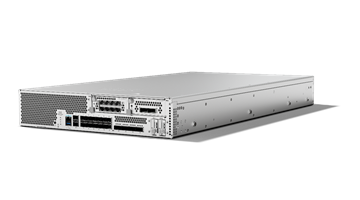
The Cisco 10000 Series is designed and developed for the application of high-performance IP services at edge of the service provider network. The Cisco 10000 Series includes two models, the Cisco 10008 and the Cisco 10005 (refer to Figure 1).
Figure 1
The Cisco 10000 Series: Cisco 10005 and the Cisco 10008 Internet Routers
Features and Benefits
The Cisco 10000 Series delivers the following benefits to service providers:
•
Industry-leading high availability—The Cisco 10000 Series is the first Internet router designed for nonstop performance, with a complete set of reliability features for high availability beyond "five 9's" (99.999 percent). Full hardware redundancy, hot-swappable elements, and seamless route processor cutover are combined to provide session maintenance and continuous traffic forwarding, even in the case of mechanical, electrical, or software failure.
•
Lowest total cost of ownership—The Cisco 10000 Series offers the highest leased-line and broadband session densities on a single platform for reduced capital expenditures, and its high reliability reduces network downtime, customer churn, and other operational expenses. The innovative and feature-rich Cisco IOS® Software provides seamless integration with the complete Cisco portfolio of Internet routers and customer premise equipment (CPE).
•
Broad portfolio of line-rate IP services—The PXF design guarantees consistent line-rate throughput with multiple IP services enabled. Value-added services, such as quality of service (QoS), Multiprotocol Label Switching (MPLS), Multilink PPP (MLP), and access control lists (ACLs) have been performance optimized to deliver exceptional throughput for every IP leased-line and broadband subscriber.
•
Wide range of high-density interface options—The Cisco 10000 Series provides high-density DS0, DS/E1, or clear-channel DS3 connections. With the highest port density of T3-and-below interfaces, the Cisco 10000 lets service providers serve a rapidly growing number of broadband customers and business customers needing ATM, Frame Relay, or leased line up to
DS3/E3 speeds.Software Specifications
Consult the software release notes for a complete list of supported features.
IP Services
•
IP routing protocols, such as Border Gateway Protocol (BGP), Routing Information Protocol (RIP), Interior Gateway Routing Protocol (IGRP), Enhanced IGRP (EIGRP), Intermediate System-to-Intermediate System (IS-IS), Open Shortest Path First (OSPF), and more
•
Datalink encapsulations, including High-Level Data Link Control (HDLC), Point-to-Point Protocol (PPP), ATM, Frame Relay, and Ethernet 802.1Q
•
Multicast support, including Protocol Independent Multicast (PIM), Internet Group Management Protocol (IGMP), Cisco Group Management Protocol (GMP), Distance Vector Multicast Routing Protocol (DVMRP), Multicast Source Discovery Protocol (MSDP), multicast forwarding, tunnel support, and DVMRP tunnels
•
Comprehensive MPLS support, including edge label switch router (LSR), virtual private networks (VPNs), and traffic engineering
•
Load-sharing capabilities at Layer 2 (MLP) and Layer 3 equal cost routing, with support for per-packet load balancing (PPLB) and per-session load balancing (PSLB)
•
QoS, including Class-Based Weighted Fair Queuing (CBWFQ), Random Early Detection (RED) (IP Precedence/Differentiated Services [Diff-Serv]), policing, traffic shaping (including Frame Relay traffic shaping), and full support for Cisco modular QoS command-line interface (CLI)
•
Advanced forward features, such as policy-based routing (PBR) and generic routing encapsulation (GRE) tunneling
•
Security, including ACLs, Reverse Path Forwarding (RPF) check, Internet Control Message Protocol (ICMP) throttling, authentication, authorization, and accounting (AAA) support, TACACS+, and Secure Shell Protocol (SSH) support
•
Accounting—Cisco NetFlow accounting, and an extensive set of Management Information Bases (MIBs) covering interfaces, environmental, and protocols
Broadband Services
•
32,000 PPP over ATM (PPPoA), PPP over Ethernet (PPPoE), and routed bridge encapsulation (RBE) sessions
•
Support for PPP termination aggregation (PTA)
•
32,000 ATM virtual circuits
•
3200 Layer 2 Tunneling Protocol (L2TP) tunnels as L2TP network server
•
RFC 1483/2684 routed IP packets
•
PPP and RBE autosense for encapsulation
•
Input and output access list (ACL) support for PPP and RBE sessions, and for L2TP tunneled PPP sessions
•
Unicast RPF check
Management and Administration
•
Cisco IOS CLI and Simple Network Management Protocol (SNMP), Cisco NetFlow accounting
•
Configuration and administration features, including Telnet, Cisco Discovery Protocol, and response time reporter (RTR)
•
Serial and console ports for local and remote administration
•
TACACS+ and Remote Access Dial-In User Service (RADIUS)
•
Remote software download via Trivial File Transfer Protocol (TFTP), remote copy protocol (rcp), and Hypertext Transfer Protocol (HTTP)
•
32-MB Flash per performance routing engine (PRE) for storing software and configuration files
•
PC Card interface per PRE for software load via external Flash card
Hardware Specifications
Chassis Specifications
Table 1 gives specifications for the Cisco 10008 and 10005 Internet routers.
Performance Routing Engine
•
Occupies a single processor slot
•
Two dedicated slots (one active, one redundant)
•
Includes separate control path, Route Processor, (RP) and data path (PXF)
•
Two PXF network processors containing a total of 32 individual processors
•
Four sets of four processors per PXF network processor
•
Two independent 32-MB control memories per processor set
•
512-MB DRAM
•
32-MB Flash single in-line memory module (SIMM)
•
two PC Card slots
•
Full Error-Correcting Code (ECC) memory protection
•
Routing table depth: up to 450,000 global routes
•
Forwarding rate up to 2.8 Mpps with multiple IP services enabled
•
Physical interfaces on PRE module
–
Ethernet 10/100-Mbps network management interface with an RJ-45 connector
–
Serial console port
–
Auxiliary (modem) port
–
PC Card
Interface Modules Supported on Cisco 10000 Series
•
Six-port Channelized T3 module channelizes to DS0 or DS1
•
Channelized OC-12/STM-4 channelizes to DS0, DS1, E1, DS3, VT1.5 or VT2.0
•
Four-port Channelized OC-3/STM-1 channelizes to DS0, DS1, E1, DS3, VT1.5 or VT2.0
•
OC-12/STM-4c Packet over SONET/Synchronous Digital Hierarchy (POS/SDH)
•
Gigabit Ethernet
•
OC-12c/STM-4c ATM
•
Six-port OC-3/STM-1 POS
•
Eight-port DS3/E3
•
Four-port OC-3/STM-1 ATM
•
Twenty-four-port Channelized copper E1/T1
•
Half-height modules: eight-port Fast Ethernet and one-port Gigabit Ethernet
High-Availability Design
•
Redundant AC or DC power supplies
•
Redundant cooling
•
Redundant point-to-point backplane connections to each chassis (payload) slot
•
Full hot-swapping for all system elements
•
Automatic protection switching (APS) for all Synchronous Optical Network (SONET) modules
•
Redundant PRE with advanced failover capabilities
•
ECC support on all PRE memory
•
Designed and engineered for 99.999-percent availability
Environmental Specifications
•
Storage temperature: -38° to 15°F (-40° to 70°C)
•
Operating temperature, nominal: 41° to 104°F (5° to 40°C)
•
Operating temperature, short term: 23° to 131°F (-5° to 55°C)
•
Storage relative humidity: 5% to 95% relative humidity
•
Operating humidity, nominal: 5% to 85% relative humidity
•
Operating humidity, short term: 5% to 90% relative humidity
•
Operating altitude: -60 to 4000m
Regulatory Compliance
Safety
•
UL 1950, Third Edition (Safety of Information Technology Equipment, Including Electrical Business Equipment), with no D3 Deviations
•
CSA 22.2 No. 950-95 Third Edition (Safety of Information Equipment Technology, Including Electrical Business Equipment)
•
EN 60950 (Safety of Information Equipment Technology, Including Electrical Business Equipment) incorporating Amendments 1, 2, 3, and 4, with all National Deviations
•
IEC 950 incorporating Amendments 1, 2, 3, and 4, with all National Deviations
•
ACA TS001 1997 Test Report and Statement of Compliance
AS/NZS3260 incorporating Amendments 1, 2, 3, and 4•
NOM-019-SCFI-1998, Safety of Data Processing Equipment
Electromagnetic Emissions Certification
•
EN61000-3-2: Power-line harmonics (AC input)
•
EN61000-3-3: Voltage fluctuations and flicker (AC input)
•
FCC Part 15 Class B
•
CFR 47 Part 15 Class B: 1997
•
EN55022: 1998 Class B
•
CISPR 22: 1997 Class B
•
CFR 47 Part 15 Class A
•
ICES -003, Issue 2, Class B, April 1995
•
VCCI V-3/97.04 Class II
•
AS/NZS 3548: 1992, Class B
•
CNS-13438 Class B—BSMI (BCIQ) in Taiwan
Immunity
•
EN61000-4-2: ESD immunity
•
EN61000-4-3: Radiated RF field immunity
•
EN61000-4-4: Immunity to electrical fast transients
•
EN61000-4-5: Surge immunity
•
EN61000-4-6: RF conducted immunity
•
EN61000-4-11: Dips and sags (AC input)
Network Equipment Building Standards
•
Network Equipment Building Standards (NEBS): Criteria levels (level 3 compliant)
•
NEBS: Physical protection
•
NEBS: EMC and safety
•
GR-1089-Core
•
GR-63-Core
•
SR-3580
European Telecommunication Standards Institute
•
ETSI 300 386-1—Levels for equipment with a "high priority of service" that is installed in "locations other than telecommunication centers"
•
ETSI 300 386-2:1997—Levels for equipment with a "high priority of service" that is installed in "locations other than telecommunication centers"
•
ETSI 300 132-2: December 1994—Power supply interfaces at the input to telecommunications equipment, Sections 4.8 and 4.9
Power Requirements
•
DC input voltage: -48 VDC/-60 VDC
•
AC input voltage: 100-240 VAC, 50/60 Hz, single phase
•
Maximum power consumption: 1200W
Ordering Information
Table 2 gives ordering information for the Cisco 10008 and 10005 Internet routers.
Table 2 Ordering Information for Cisco 10008 and 10005 Internet Routers
Part Number DescriptionCisco 10008 and Cisco 10005 pricing bundles
ESR10008-1P1DC
Cisco 10000 8-slot chassis, 1 PRE, 1 DC PEM1
ESR10008-1P1AC
Cisco 10000 8-slot chassis, 1 PRE, 1 AC PEM
ESR10008-2P2DC
Cisco 10000 8-slot chassis, 2 PREs, 2 DC PEMs
ESR10008-2P2AC
Cisco 10000 8-slot chassis, 2 PREs, 2 AC PEMs
ESR10005-1P1DC
Cisco 10000 5-slot chassis, 1 PRE, 1 DC PEM
ESR10005-1P1AC
Cisco 10000 5-slot chassis, 1 PRE, 1 AC PEM
ESR10005-2P2DC
C10000 5-slot chassis, 2 PREs, 2 DC PEMs
ESR10005-2P2AC
C10000 5-slot chassis, 2 PREs, 2 AC PEMs
Interface modules
ESR-6T3
6-port Channelized T3 line card
ESR-1COC12-SMI
1-port Channelized OC-12 (STS-12) line card, single mode, intermediate reach
ESR-1GE
1-port Gigabit Ethernet card (requires gigabit interface converter [GBIC])
ESR-GBIC-LHLX
1000BASE-LH GBIC, single mode, standardized for ESR2
ESR-GBIC-SX
1000BASE-SX GBIC, multimode, standardized for ESR
ESR-GBIC-ZX
1000BASE-ZX GBIC, single mode, standardized for ESR
ESR-1OC12/P-SMI
1-port OC-12/STS-12C/STM-4 POS, single mode, intermediate reach
ESR-1OC12ATM-SM
1-port OC-12/STM-4 ATM line card, single mode
ESR-4OC3-ChSTM-1
4-port Channelized STM-1 SDH single-mode line card
ESR-8E3T3
8-port E3/T3 line card
ESR-6OC3/P-SMI
6-port OC-3/STM-1 POS, single mode, intermediate reach
ESR-4OC3ATM-SM
4-port OC-3/STM-1 ATM line card, single mode
ESR-24CT1/E1
24-port Channelized E1/T1 line card
1 Power entry module2 Edge switch router
Posted: Thu Feb 7 12:26:30 PST 2008
All contents are Copyright © 1992--2008 Cisco Systems, Inc. All rights reserved.
Important Notices and Privacy Statement.