Guest

LTE EPC

LTE/EPC: Addressing the Mobile Broadband Tidal Wave

The mobile Internet has changed the way people communicate, stay informed, and are entertained. With more compelling services and mobile multimedia computing devices, users are increasingly entering the network and creating an enormous surge in mobile traffic.

This requires operators to deploy a core network that combines performance with intelligence. An intelligent core network allows them to create a robust multimedia environment, enhance and manage the subscriber experience, and monetize network traffic.
Long Term Evolution (LTE) is the next-generation mobile wireless technology designed to deliver ultra high-speed mobile broadband. The primary goals of LTE are increasing bandwidth, improving spectral efficiency, reducing latency, lowering the cost per byte, and enabling improved mobility. This combination aims to enhance a subscriber's interaction with the network and further drive the adoption of mobile multimedia services, such as online television, streaming video, video on demand (VoD), social networking, and interactive gaming.
Radio access solutions are a primary consideration of the LTE deployment strategy, as LTE impacts the mobile operators' most valued asset, spectrum. However, equally important is the multimedia core network.

The Evolved Packet Core - The Next-Generation Packet Core for All Networks

LTE calls for a transition to a "flat," all-IP core network with open interfaces, called the Evolved Packet Core or EPC. The goal of the EPC is higher throughput, lower latency, simplified mobility between 3rd Generation Partnership Project (3GPP) and non-3GPP networks, enhanced service control and provisioning, and efficient use of network resources. While the EPC has been defined in conjunction with LTE, it is an open next-generation packet core for all networks, including 2.5G, 3G, 4G, non-3GPP, and even fixed networks. In addition, while the EPC represents one of the smallest percentages of overall wireless infrastructure spending, it provides the greatest potential impact on overall network profitability through enablement of new services combined with cost savings from operational efficiencies.
As a result, mobile operators are looking for the best multimedia core solutions to deliver an optimum user experience and migrate to an efficient, intelligent EPC.
Key considerations for the multimedia core network include:

• Support for multiple access network types, including 2.5G, 3G, and 4G; deployment flexibility and network optimization including backhaul

• Seamless and flexible evolution from 2.5G/3G to 4G

• Massive increase in signaling

• Increased user-plane performance

• Session-state and subscriber management

• Integration of intelligence and policy control at the mobility anchor point

• Security

• Voice-grade reliability

• Reporting, monitoring, accounting, and charging

• Roaming

• Support for multimedia services over the packet switched infrastructure

Cisco is exceptionally well positioned to address these challenges and assist in the migration to an LTE EPC, bringing the products and expertise needed for this evolution.

Cisco ASR 5000 Platform

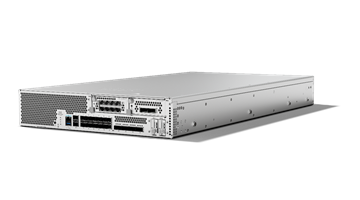
The Cisco® ASR 5000 combines high capacity, high availability, and powerful performance with unparalleled subscriber and network intelligence. Designed for the evolution from 3G to 4G, the Cisco ASR 5000 platform is the benchmark for today and tomorrow's multimedia-enabled core network. The platform utilizes a simple, flexible distributed architecture that supports multiple access technologies, subscriber mobility management, and call control capabilities, as well as inline services (Figure 1). With its leading-edge throughput, signaling, and capacity, the Cisco ASR 5000 can readily support all EPC network functions.

Figure 1. The Cisco ASR 5000 in a Multi-Access Multiservice Environment

Figure01

BTS: Base Transceiver Station

GERAN: GSM EDGE Radio Access Network

UTRAN: UMTS Terrestrial Radio Access Network

E-UTRAN: Evolved UTRAN

SGSN: Serving GPRS Support Node

MME: Mobility Management Entity

SGW: Serving Gateway

ePDG: Evolved Packet Data Gateway

AAA: Authentication, Authorization, and Accounting

HSS: Home Subscriber Server

PGW: Packet Data Network Gateway

GGSN: Gateway GPRS Support Node

EPC Network Functions

The LTE EPC performs a series of network functions that flatten the architecture by minimizing the number of nodes in the network. This reduces capital and operational expenditures, thereby trimming the overall cost per megabyte of traffic, while improving network performance. Cisco provides the functions defined for the LTE EPC, including the following:

• The Mobility Management Entity (MME) resides in the control plane and manages states (attach, detach, idle, RAN mobility), authentication, paging, mobility with 3GPP 2.5G/3G nodes (SGSN), roaming, and other bearer management functions.

• The Serving Gateway (SGW) sits in the user plane where it forwards and routes packets to and from the eNodeB and Packet Data Network Gateway (PGW). It also serves as the local mobility anchor for inter-eNodeB handover and roaming between 3GPP systems, including 2.5G/3G networks.

• The Packet Data Network Gateway (PGW) acts as the interface between the LTE network and packet data networks, such as the Internet or IMS networks. It is the mobility anchor point for intra-3GPP and non-3GPP access systems. Also acts as the Policy and Charging Enforcement Function (PCEF) that manages quality of service (QoS), online/offline flow-based charging data generation, deep packet inspection, and lawful intercept.

• The Evolved Packet Data Gateway (ePDG) is the element responsible for interworking between the EPC and untrusted non-3GPP networks, such as a wireless LAN.

Release 8 Serving GPRS Support Node (SGSN), also known as the S4 SGSN, provides control, mobility, and user-plane support between the existing 2.5G/3G core and the EPC. Provides the S4 interface that is equivalent to the Gn interface used between the SGSN and GGSN.

The Cisco Difference

Cisco's multimedia core platforms are built to address the needs of the mobile multimedia core market.
Cisco brings a history of innovative solutions that already meet many of the requirements of the EPC, such as integrated intelligence, simplified network architecture, high-bandwidth performance capabilities, and enhanced mobility.
This means Cisco's solutions are capable of supporting 2.5G/3G today, and through in-service software upgrades, will support mobile broadband functionality as LTE networks are deployed. These platforms are capable of supporting multiple functions in a single node, allowing a single platform to concurrently act as an MME, Release 8 SGSN and SGW, SGW and PGW, or even as a 2.5G/3G and LTE EPC node. Mobile operators who want a smooth network migration can maximize the return on their investments and offer an exceptional experience to their customers.
Specific key features include:

Network Flexibility

• Common platform for all network functions

• Integration and colocation of multiple core functions

• Software architecture that enables service reconfiguration and online upgrades

• Evolution from 3G to LTE

• Single operations, administration, and management (OA&M), policy, and charging integration

Superior Overall Performance

• High performance across all parameters - signaling, throughput, density, and latency

• Linear scaling of network functions and services

• Allows 2.5G/3G/LTE service on any card running anywhere in the system

• Resources distributed across the entire system

Integrated Intelligence with Policy Enforcement

• Integrated deep packet inspection, service control and steering

• Value-added inline services

• Integrated policy enforcement with tightly coupled policy and charging

• Support for integrated SIP and/or IMS functions

• Consolidated accounting and billing

Outstanding Reliability

• No sessions lost due to any single hardware or software failure

• Automatic recovery of fully established subscriber sessions

• Inter-chassis session recovery or geographic redundancy

• NEBS Level 3 certification

Conclusion

While the deployment of LTE Radio Access Networks receives considerable attention, the Evolved Packet Core or EPC has emerged as critical for delivering next-generation mobile broadband services. As such, mobile operators must look for solutions that can address today's requirements while positioning them for future technologies.
Cisco is focused on the multimedia core network and the challenges it presents to the mobile operator. Cisco has led the industry with intelligent, high-performance solutions that have changed the packet core environment to a true multimedia core network. Cisco will continue to harness this proven experience and expertise to become your trusted advisor and deliver best-in-class solutions that evolve the mobile operator's network and help deliver on the promise of true mobile broadband.
For more information, please visit www.cisco.com/go/mobile.