


Data Sheet
Cisco 3640-DC Multiservice
Access Platform for Service Provider
Network Operations Connectivity
The Cisco 3640-DC is a robust National Equipment Building Systems (NEBS) Level 3/European Telecommunication Standards Institute (ETSI)-compliant networking platform, specifically designed to optimize the network-management operations of service provider networks; DCN is also known as Data Communication Networks.
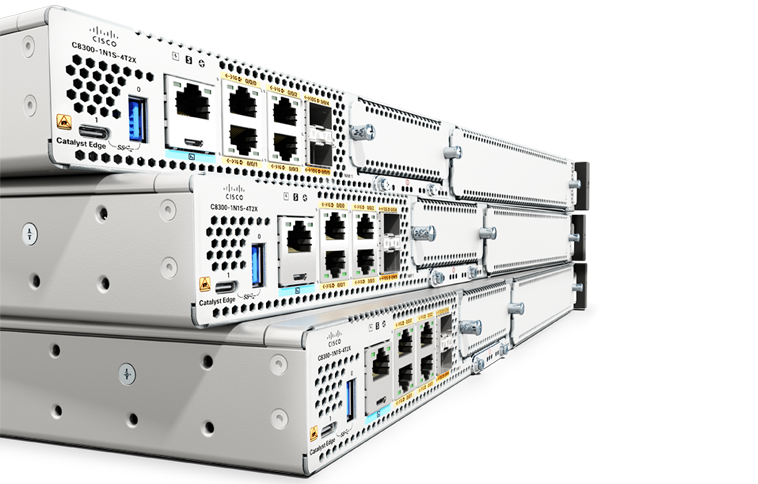
As part of the scalable Cisco DCN solution, which includes the Cisco Catalyst® 1924-DC Switch, Catalyst 2924M-XL Switch, Catalyst 4003-DC Switch, Cisco 3662-DC-CO, Cisco 2600-DC Series Multiservice Access platform, and the telco DCN feature set of Cisco IOS® Software, the Cisco 3640-DC supports central-office (CO) Synchronous Optical Network/Synchronous Digital Hierarchy (SONET/SDH) operations management interfaces, as well as async and X.25 interfaces on the same platform. The DCN provides connectivity for network elements (NEs) in service-provider, inter-exchange carriers (IXCs), and Post, Telephone, and Telegraph (PTT) networks for alarm monitoring, remote provisioning and diagnostics, configuration backup, and software downloads. Other operations systems network applications include local number portability and billing data collection. In addition, competitive local exchange carriers (CLECs) can use the Cisco 3640-DC in their numerous points of presence (POPs) or CO colocations for digital-subscriber-line access multiplexers (DSLAMs), voice switches, and transmission operations networking. (See Figure 1.)
Figure 1: Cisco 3640-DC

The Cisco 3640-DC is a versatile multiservice access platform designed for medium-density CO configurations, significantly reducing the complexity and costs of managing DCN operations. By integrating multiple NEs onto one DCN infrastructure, the Cisco 3640-DC allows service providers to streamline their operations. The Cisco 3640-DC provides flexible connectivity to legacy X.25 and async devices as well as Ethernet devices, facilitating a graceful migration from proprietary- to standards-based network elements.
The Cisco 3640-DC is two rack units (RUs) high and less than 16 inches deep. It can also be ordered for AC environments with either an AC power supply option, or a redundant AC power supply module for high availability. Rear access cabling allows easy connectivity, and a modular design allows fast servicing of field-replaceable units (FRUs). Common language equipment identification (CLEI) coding is provided for easy identification and tracking of CO equipment. Robust network-management capability for the Cisco DCN solution is achieved using the CiscoWorks, CiscoView, and CiscoView Stack Management Interface applications. These same applications are used to manage a large number of Cisco products that have already been deployed in existing networks, presenting network support personnel a familiar look and feel. The Cisco 3640-DC is equipped with four modular expansion slots. Currently there are more then 70 different modular interfaces that can be used in these slots, providing unmatched versatility. For example, service providers can populate three of the four slots with 32-port asynchronous modules and achieve a density of up to 96 async ports in a compact form factor.
Key Features and Benefits
Optimized for Service-Provider Networks
- Significantly reduces complexity by consolidating DCNs into a cost-effective network solution
- Provides a graceful migration path from proprietary- to standards-based network elements
- Reduces life-cycle costs of DCN operations
- Offers remote monitoring and control of network elements
Customized Operating Software
Cisco IOS Software is a key differentiator in the Cisco DCN solution. Not only is it deployed in most IP networks around the world, but it is now packaged for service providers in a telco image specific to DCN applications. The telco image for the Cisco 3640-DC is supported in Cisco IOS 12.2 (2)T. The Cisco IOS telco images support the following network-management requirements:
- Full IP/Open System Interconnection (OSI) routing services, including Open Shortest Path First (OSPF), Enhanced Interior Gateway Routing Protocol (EIGRP), IGRP, Routing Information Protocol (RIP), multiprotocol Border Gateway Protocol (BGP), multi-area integrated Intermediate System-to-Intermediate System (IS-IS), and Domain Name System (DNS)
- Transaction Language One (TL-1) support, including transport via IP, X.25, TCP, or OSI. TID Address Resolution Protocol (TARP) support and TARP Storm Avoidance support
- Point-to-Point Protocol (PPP) services and WAN interface support for ISDN, Frame Relay, ATM, and X.25
- X.25 support services, including X.25 switching, X.3 asynchronous packet assembler/disassembler (PAD), DNS for X.25 address resolution, hunt groups, and switched/permanent-virtual-circuit (SVC/PVC) conversion
- IP-to-X.25 protocol translation
- BX.25 transport over X.25 or TCP (XOT)
- Multi-area OSI support, seven OSI areas per chassis, essentially providing the same capabilities as seven separate OSI routers
Feature Richness
The Cisco 3640-DC is not limited to providing support for just the DCN features listed above. It supports a large variety of other capabilities as well, including voice over IP (VoIP) or Frame Relay, dial support for analog and digital modems, DSL aggregation, and virtual private networking to name a few. Customers who want to take advantage of these additional capabilities along with the DCN features should purchase an Enterprise Plus feature set.
Platform Manageability
- Support for CiscoWorks, CiscoWorks2000, and CiscoView allows simplified management of all integrated and stackable components.
- CLEI codes enable easy identification and tracking of CO equipment.
- An enhanced setup feature provides context-sensitive questions that guide the user through the router configuration process, allowing faster deployment.
- AutoInstall configures remote routers automatically across a WAN connection to save the cost of sending technical staff to remote sites.
- Support for the Cisco Discovery Protocol (CDP) enables a CiscoWorks network-management station to automatically discover the Cisco 3640-DC in a network topology.
Versatility
- A modular architecture offers a huge selection of LAN and WAN interfaces and provides easy customization for individual needs and the flexibility for network modules to be added on a "pay-as-you-grow" basis.
- The Cisco 3640-DC is a key component of Cisco's DCN solution.
- The Cisco 3640-DC consolidates high density of low-speed serial links and high densities of IP ports at a cost-effective price point. For example, 24 synchronous ports or 96 asynchronous ports can be supported on the platform.
- All parts are field-upgradable, allowing quick, easy, and low-cost maintenance.
- An analog phone can be connected to the Cisco 3640-DC using the voice network module, allowing ease of communication between a service technician and the operations center. This provides great savings by eliminating the need to run a phone line to the rack, and for controlled equipment vaults where recurring phone line charges can add up.
- WAN interface cards and network modules are shared with the Cisco 2600-DC and the Cisco 3662-DC-CO Series Multiservice Access platforms, allowing reduced cost of maintaining inventory of modular components and requiring lower training costs for support personnel.
Performance
The Cisco 3640 provides the right density to meet the requirements of NE connectivity in a medium-sized CO. From a price performance and density perspective, the Cisco 3640 provides a chassis design that fills the gap between a smaller Cisco 2600-DC and a larger Cisco 3662-DC-CO. Table 1 provides a feeds-and-speeds comparison of the Cisco 3640 and Cisco 3662-DC-CO products.
Table 1: Cisco 3660 and Cisco 3640 Comparison for Telco Environment Feature
| Cisco 3640 | Cisco 3660 | |
|---|---|---|
| Performance |
50-70 kpps |
100-120 kpps |
| LAN Ports (integrated) |
None |
One or two 10/100 Ethernet |
| Network Module Slots |
Four |
Six |
| Advanced Integration Modules |
None |
Two |
| Async Ports |
96 |
192 |
| Sync Ports |
48 |
96 |
| Ethernet Ports |
16 |
26 |
| Field Serviceable |
Power supply only |
All components |
| Hot-Swap Capability |
Not available |
Like-to-like network modules Power supplies |
| Power-Supply Redundancy |
External redundant power supply unit (AC only) |
Redundancy integrated in chassis (AC or DC) |
| Dimension (W x H x D) |
3.44 x 17.5 x 15.75 (in.) 87.4 x 445 x 400 (mm) |
Meets 12-in. (300-mm) depth requirement 8.7 x 17.5 x 11.8 (in.) 221 x 445 x 300 (mm) |
- The Cisco 3640 uses a high-performance RISC architecture to provide up to 70,000 packets per second of fast-switching capability. Support for ATM OC-3 or four/eight-port T1/E1 inverse multiplexing over ATM (IMA) interfaces provides higher bandwidth for remote software downloads, statistics collection, and billing-records collection.
- The Cisco 3640 offers support for four network module slots, which can be used today to provide a variety of connectivity options for different applications.
- Security features, such as data encryption, tunneling, Remote Access Dial-In User Service (RADIUS), TACACS+, and Authentication, Authorization, and Accounting (AAA), are enabled to protect data assets.
Connectivity Options
- Cisco IOS Software support provides connectivity to legacy X.25 and async devices; it also supports full-featured IP and OSI routing on a single platform.
- A large variety of interfaces with a full selection of feeds and speeds provide connectivity to IP, ATM, Frame Relay, and time-division multiplexing (TDM) networks and will support the needs of any CO environment. A full description of these interfaces is provided in Table 2.
Reliability
- Full diagnostics and error reporting on all major components of the chassis, including power supply, main board, back plane, and fans, is provided.
- Dual-bank Flash memory allows a backup copy of Cisco IOS Software to be stored in Flash memory for reduced downtime.
- LED status indicators provide at-a-glance activity status.
Investment Protection
- With the ability of the Cisco 3640 to support field-upgradable modular components, customers can easily change network interfaces without a "forklift upgrade" of the entire DCN solution.
Lower Cost of Ownership
- Integrating the functions of channel/data service units (CSU/DSUs), ISDN Network Termination 1 (NTI) devices, and other equipment found in DCN networks in a single, compact unit provides a space-saving solution that can be managed remotely using network-management applications such as CiscoWorks and CiscoView.
Serviceable Design
All network interfaces are located on the rear of the unit for simplified installation and cable management.
Easy-to-open chassis design allows fast and easy access for installation or upgrading of a variety of system components (field-replaceable component design).
The NEBS Level 3/ETSI platform is two RUs high, and can fit right into 19- or 23-inch-wide relay racks alongside other CO equipment.
Summary
As New World computing capabilities change the landscape of the CO operations network, support for a variety of network interfaces and greater requirements for bandwidth are straining current DCN capabilities. The Cisco 3640-DC system provides a very good medium-sized platform for the Cisco DCN solution, by enabling telco service providers to consolidate both legacy as well as standards-based network-management traffic over a single infrastructure for connectivity to their operational support systems. The Cisco 3640-DC enables a service provider to deploy an ultra-reliable, scalable, and versatile platform, which allows graceful migration from current proprietary-based to New World, standards-based infrastructure in an extremely cost-effective manner.
Adding the capabilities of Cisco IOS Software, which runs most of the Internet traffic around the world today, Cisco not only provides a full-featured DCN solution, but also enables a variety of additional features on the Cisco 3640-DC. Features such as virtual private networks (VPNs) and voice can enhance a telco operations network. These capabilities make the Cisco DCN solution the industry's best, with greater robustness and feature richness than any other solution available in the marketplace. Customers who want to take advantage of these additional capabilities along with the DCN features should purchase an Enterprise Plus feature set.
Support
Cisco support solutions are designed for one purposeto put customers quickly in touch with appropriate resources. The Cisco support network consists of Technical Assistance Center (TAC) engineers, development engineers, field engineers, parts warehouses, delivery services, and service partners. By including Cisco support with Cisco equipment purchases, customers immediately gain access to a wealth of support resources.
Technical Specifications
Table 2 provides technical specifications for the Cisco 3640-DC.
Alarm Interface Controller Network Module
The alarm interface controller (AIC) is a network module that greatly expands the network monitoring and control capabilities of the Cisco 2600 and 3600 Series routers. The AIC functions as an integrated entity residing within the Cisco 2600 Router to provide network alarm monitoring and remote control of network elements. The AIC reduces service-provider and enterprise operating expenses by facilitating a single "box solution," eliminating the need for a dedicated external alarm-monitoring device. This greatly simplifies network layout, monitoring, and control, resulting in lower operations, administration, maintenance, and provisioning (OAM&P) costs. The AIC is supported in Cisco IOS 12.2 (2) XG and 12.2(7)T. The AIC network module supports 64 discrete alarm inputs, of which 8 of the last 64 alarm points are software-configurable to accept either analog or discrete inputs. The AIC further supports 16 control relays to facilitate the remote control of network elements.
Table 2: Cisco 3640 System Specifications
| Feature | Specifications |
|---|---|
| Processor Type |
100-MHz IDT R4700 RISC |
| Flash Memory |
8 MB, upgradable to 32 MB |
| System Memory |
32-MB DRAM, upgradable to 128-MB DRAM |
| Network Module Slots |
Four slots |
| Power |
AC, DC, redundant power option (AC only) |
| Dimensions (H x W x D) |
3.44 x 17.5 x 15.75 in. |
| Performance |
50-70 kpps |
| Console and Auxiliary Ports (up to 115.2 kbps) |
Yes |
| Rack-Mounting |
Yes |
| Dual-Type II PC Card Slots |
Yes |
Table 3: Alarm Interface Controller Network Module
| Module | Description | Cisco IOS Version |
|---|---|---|
| NM-AIC-64 |
Alarm monitoring and control network module; 64 contact points and 16 control points |
12.2(2)XG and 12.2(7)T |
Table 4: Cisco 3640 Series Network Modules, Product Numbers, and Descriptions of Network Modules
| Part Number | Description |
|---|---|
| NM-16A |
16-port high-density async network module |
| NM-32A |
32-port high-density async network module |
| NM-4T |
4-port serial network module |
| NM-4A/S |
4-port async/sync serial network module |
| NM-8A/S |
8-port async/sync serial network module |
| NM-1HSSI |
1-port high-speed serial interface module |
| NM-1FE2W |
One 10/100 Ethernet 2-WAN-card-slot network module |
| NM-2FE2W |
Two 10/100 Ethernet 2-WAN-card-slot network modules |
| NM-1E1FE2W |
One 10/100 Ethernet 1[IS THAT 1 OK?] 4/16 Token Ring 2-WAN-card-slot network module |
| NM-2W |
2-WAN-card-slot network module (no LAN) |
| NM-1FE-TX |
1-port Fast Ethernet network module (10/100BaseTX only) |
| NM-1FE-FX |
1-port Fast Ethernet network module (10/100Base fiber only) |
| NM-4E |
4-port Ethernet network module |
| NM-1E |
1-port Ethernet network module |
| NM-1E2W |
1-port Ethernet, two-WAN-card-slot network module |
| NM-2E2W |
2-port Ethernet, two-WAN-card-slot network module |
| NM-1E1R2W |
1-port Ethernet, one-port Token Ring, two-WAN-card-slot network module |
| NM-HDV-1T1-24 |
Single-port, 24-channel T1 voice/fax network module (supports 24 channels of medium-complexity VoCoders: G.729a/b, G.726, G.711, and fax or 12 channels of G.726, G.729, G.723.1, G.728, G.729a/b, G.711, and fax) |
| NM-HDV-1T1-24E |
Single-port, enhanced 24-channel T1 voice/fax network module (supports 24 channels of high- and medium-complexity VoCoders: G.729a/b, G.726, G.729, G.728, G.723.1, G.711, and fax) |
| NM-HDV-2T1-48 |
Dual-port, 48-channel T1 voice/fax network module (supports 48 channels of medium-complexity VoCoders: G.729a/b, G.726, G.711, and fax or 24 channels of G726, G729, G723.1, G.728, G729a/b, G711, and fax); supports add/drop multiplexing (drop and insert) |
| NM-HDV-1E1-30 |
Single-port, 30-channel E1 voice/fax network module (supports 30 channels of medium-complexity VoCoders: G.729a/b, G.726, G.711, and fax or 12 channels of G.726, G.729, G.723.1, G.728, G.729a/b, G.711, and fax) |
| NM-HDV-1E1-30E |
Single-port, enhanced 30-channel E1 voice/fax network module (supports 30 channels of high- and medium-complexity VoCoders: G.729a/b, G.726, G.729, G.728, G.723.1, G.711, and fax) |
| NM-HDV-2E1-60 |
Dual-port, 60-channel E1 voice/fax network module (supports 60 channels of medium-complexity VoCoders: G.729a/b, G.726, G.711, and fax or 30 channels of G726, G729, G723.1, G.728, G729a/b, G711, and fax); supports add/drop multiplexing (drop and insert) |
| NM-HDV= |
High-density voice/fax network module spare |
| PVDM-12= |
12-channel packet voice DSP module upgrade spare |
| NM-1V |
1-slot voice and fax network module |
| NM-2V |
2-slot voice and fax network module |
| VIC-2FXS |
2-port voice interface cardforeign exchange station (FXS) |
| VIC-2FXO |
2-port voice interface cardforeign exchange office (FXO) |
| VIC-2E/M |
2-port voice interface cardear and mouth (E&M) |
| VIC-2FXO-M3 |
2-port voice interface cardFXO (for Australia) |
| VIC-2FXO-EU |
2-port voice interface cardFXO (for Europe) |
| VIC-2BRI-S/T-TE |
2-port voice interface cardBRI (terminal) |
| NM-1ATM-25 |
1-port 25-Mbps ATM network module |
| NM-1A-OC3MM |
1-port 155-Mbps OC-3 ATM multimode network module |
| NM-1A-OC3SMI |
1-port 155-Mbps OC-3 ATM single-mode, intermediate-reach network module |
| NM-1A-OC3SML |
1-port 155-Mbps OC-3 ATM single-mode, long-reach network module |
| NM-4T1-IMA |
4-port T1 ATM network module with IMA |
| NM-1A-OC3MM-1V |
1-port OC-3/STM-1 Circuit Emulation Services (CES) multimode ATM network module |
| NM-1A-OC3SMI-1V |
1-port OC-3/STM-1 CES single-mode intermediate-reach ATM network module |
| NM-1A-OC3SML-1V |
1- port OC-3/STM-1 CES single-mode long-reach ATM network module |
| NM-4E1-IMA |
4-port E1 ATM network module with IMA |
| NM-8T1-IMA |
8-port T1 ATM network module with IMA |
| NM-8E1-IMA |
8-port E1 ATM network module with IMA |
| WIC-2T |
2-port high-speed serial |
| WIC-2-A/S |
2-port async/sync serial |
| WIC-1DSU-T1 |
1-port T1/fractional T1 with CSU/DSU |
| WIC-1T |
1-port high-speed serial |
| WIC-1DSU-56K4 |
1-port, four-wire 56/64-kbps with CSU/DSU |
| WIC-1ADSL |
1-port asymmetric DSL (ADSL) WAN interface card |
| VWIC-1MFT-T1 |
1-port EIA/TIA-48 multiflex trunkT1 |
| VWIC-2MFT-T1 |
2-port EIA/TIA-48 multiflex trunkT1 |
| VWIC-2MFT-T1-DI |
2-port EIA/TIA-48 multiflex trunkT1 with drop and insert |
| VWIC-1MFT-E1 |
1-port EIA/TIA-48 multiflex trunkE1 |
| VWIC-2MFT-E1 |
2-port EIA/TIA-48 multiflex trunkE1 |
| VWIC-2MFT-E1-DI |
2-port EIA/TIA-48 multiflex trunkE1 with drop and insert add; not for voice WAN interface cards, voice interface cards, or WAN interface card slots |
| WIC-1B-S/T |
1-port ISDN Basic Rate Interface (BRI) |
| WIC-1B-U |
1-port ISDN BRI with NT1 |
| NM-1CT1 |
1-port Channelized T1/ISDN Primary Rate Interface (PRI) network module |
| NM-1CT1-CSU |
1-port Channelized T1/ISDN PRI with CSU network module |
| NM-2CT1 |
2-port Channelized T1/ISDN PRI network module |
| NM-2CT1-CSU |
2-port Channelized T1/ISDN PRI with CSU network module |
| NM-1CE1B |
1-port Channelized E1/ISDN PRI balanced network module |
| NM-1CE1U |
1-port Channelized E1/ISDN PRI unbalanced network module |
| NM-2CE1B |
2-port Channelized E1/ISDN PRI balanced network module |
| NM-2CE1U |
2-port Channelized E1/ISDN PRI unbalanced network module |
| NM-1FE1CT1 |
1-port Fast Ethernet and 1-port Channelized T1/ISDN-PRI network module |
| NM-1FE1CT1-CSU |
1-port Fast Ethernet and 1-port Channelized T1/ISDN-PRI network module with integrated CSU |
| NM-1FE2CT1 |
1-port Fast Ethernet and 2-port Channelized T1/ISDN-PRI network module |
| NM-1FE2CT1-CSU |
1-port Fast Ethernet and 2-port Channelized T1/ISDN-PRI network module with integrated CSUs |
| NM-1FE1CE1U |
1-port Fast Ethernet and 1-port Channelized E1/ISDN-PRI unbalanced network module |
| NM-1FE1CE1B |
1-port Fast Ethernet and 1-port Channelized E1/ISDN-PRI unbalanced network module |
| NM-1FE2CE1U |
1-port Fast Ethernet and 2-port Channelized E1/ISDN-PRI unbalanced network module |
| NM-1FE2CE1B |
1-port Fast Ethernet and 2-port Channelized E1/ISDN-PRI balanced network module |
| NM-4B-S/T |
4-port ISDN BRI network module |
| NM-4B-U |
4-port ISDN BRI with NT1 network module |
| NM-8B-S/T |
8-port ISDN BRI network module (S/T interface) |
| NM-8B-U |
8-port ISDN BRI with NT1 network module (U interface) |
| NM-8AM |
8-port analog modem network module |
| NM-8AM-J |
8-port analog modem network module for Japan |
| NM-16AM |
16-port analog modem network module |
| NM-16AM-J |
16-port analog modem network module for Japan |
| NM-6DM |
6-port digital modem network module |
| NM-12DM |
12-port digital modem network module |
| NM-18DM |
18-port digital modem network module |
| NM-24DM |
24-port digital modem network module |
| NM-30DM |
30-port digital modem network module |
| MICA-6MOD= |
6-port digital modem upgrade card |
| NM-COMPR |
Compression network module for Cisco 3620 and 3640 |
| PWR600-AC-RPS-xxx |
600-watt redundant power supply option |
Table 5: Cables for Network-Module Voice Interface Cards and WAN Interface Card Interface Types
| Product Number | Electrical Interface | Length | Connector Gender |
|---|---|---|---|
| CAB-V35MT |
NM-4A/S NM-8A/S (Up to 115.2 Async or 128 kbps async); NM-4T WIC-IT; V.35 DTE |
10 ft |
Male |
| CAB-V35FC |
V.35 DCE |
10 ft |
Female |
| CAB-232MT |
RS-232 DTE |
10 ft |
Male |
| CAB-232FC |
RS-232 DCE |
10 ft |
Female |
| CAB-449MT |
RS-449 DTE |
10 ft |
Male |
| CAB-449FC |
RS-449 DCE |
10 ft |
Female |
| CAB-X21MT |
X.21 DTE |
10 ft |
Male |
| CAB-X21FC |
X.21 DCE |
10 ft |
Female |
| DTE CAB-530MT |
RS-530 |
10 ft |
Male |
| CAB-7KCT1DB15 |
CT1/CE1 PRI; MIP-CT1 DSX1 to DB15 cable |
- |
- |
| CAB-T1-RJ-45 |
CT1/PRI; RJ-45-RJ-45 |
10 ft |
Male |
| CAB-E1-PRI |
CE1/PRI; E1-ISDN PRI |
10 ft |
- |
| CAB-E1-TWINAX |
E1 twinax 120-ohm balanced |
3m |
- |
| CAB-E1-DB15 |
E1 DB15 120-ohm balanced |
5m |
- |
| CAB-E1-BNC |
FSIP and MIP-CE1 BNC 75-ohm unbalanced |
5m |
- |
| CAB-OCTAL-ASYNC |
16/32 Async; 8-port with RJ-45 ends |
10 ft |
Male RJ-45 |
| CAB-OCTAL-MODEM |
8-port with 25 pin ends |
10 ft |
Male EIA/TIA-232 |
| CAB-OCTAL-KIT |
8-port RJ-45 + eight xMMOD |
10 ft |
Male EIA/TIA-232 |
| CAB-25AS-MMOD |
CAB-OCTAL-ASYNC Adapter cable |
- |
RJ-45 - EIA/TIA-232M |
| CAB-25AS-FDTE |
Adapter cable |
- |
Female RJ-45 -EIA/TIA-232F |
| CAB-E1-RJ45BNC |
Voice WAN Interface Card Cable; E1 Cable RJ45 to Dual BNC (Unbalanced) |
- |
RJ-45 - dual BNC |
| CAB-E1-RJ45TWIN |
E1 Cable RJ45 to Twinax (balanced) |
- |
RJ-45 - twinax |
| CAB-SS-V35MT(=) |
Smart Serial Cable (or 12-in-1) cables DTE and DCE versions of the following physical interfaces: EISa/TIA-232, V.35, X.21, RS-449, RS-530, and RS-530A |
- |
Male |
| CAB-SS-V35FC(=) |
- |
Female |
|
| CAB-SS-232MT(=) |
- |
Male |
|
| CAB-SS-232FC(=) |
- |
Female |
|
| CAB-SS-449MT(=) |
- |
Male |
|
| CAB-SS-449FC(=) |
- |
Female |
|
| CAB-SS-X21MT(=) |
- |
Male |
|
| CAB-SS-X21FC(=) |
- |
Female |
|
| CAB-SS-530MT(=) |
- |
Male |
|
| CAB-SS-530FC(=) |
- |
Female |
|
| CAB-SS-530AMT(=) |
- |
Male |
|
| CAB-SS-530AFC(=) |
- |
Female |
Table 6: Dimensions and Weight Specifications
| Height |
8.7 in. (221 mm) - 5 RU |
| Width |
17.5 in. (445 mm) |
| Depth |
11.8 in. (300 mm) |
| Weight (minimum) |
32 lb (14.55 kg) |
| Weight (maximum) |
43 lb (19.55 kg) |
Table 7: Power Requirements
| Output, Watts |
250W Max per Power Supply |
| AC Input Voltage |
100 to 240 |
| Frequency |
50 to 60 Hz |
| AC Input Current |
4A at 100V or 2A at 200V |
| DC Input Voltage |
-38V to -75V |
| DC Input Current |
8A at -48V |
Table 8: Environmental Specifications
| Operating Temperature |
32° to 104° F (0° to 40° C) |
| Nonoperating Temperature |
-13 to 158° F (-25° to 70° C) |
| Relative Humidity |
5 to 95% |
| Noise Level (Maximum) |
48 dbA |
Regulatory Compliance
The Cisco 3640-DC Multiservice Access platform conforms to numerous different safety, EMI, immunity, and network homologation standards, including Telcordia GR-63 and NEBS Level 3. Additional information on compliance standards for the Cisco 3640 can be found on the Cisco Web site.