The Cisco® Service Node XA Series products are part of an innovative, end-to-end architecture for managed services delivery for small businesses (Figure 1)
• Cisco Service Node XA Series Base servers (part numbers L1-SN-XA1-BASE-AC and L1-SN-XA1-BASE-DC), which support approximately 600,000 calls per day
• Cisco Service Node XA Series Expansion servers (part numbers L1-SN-XA1-EXP-AC and L1-SN-XA1-EXP-DC), which, when combined with the base servers, scale to more than 1 million calls per day (Consult with a Cisco Service Node technical marketing engineer for more accurate capacity analysis.)
• License for 10 Linksys One services routers (SVRs) (part number L1-SN-XA1-RTU-10)
• License for 100 Linksys One SVRs (part number L1-SN-XA1-RTU-100)
• License for 1000 Linksys One SVRs (part number L1-SN-XA1-RTU-1K)
• License for 10 Cisco CPE devices (part number SN-RTU-10)
• License for 100 Cisco CPE devices (part number SN-RTU-100)
• License for 1000 Cisco CPE devices (part number SN-RTU-1K)
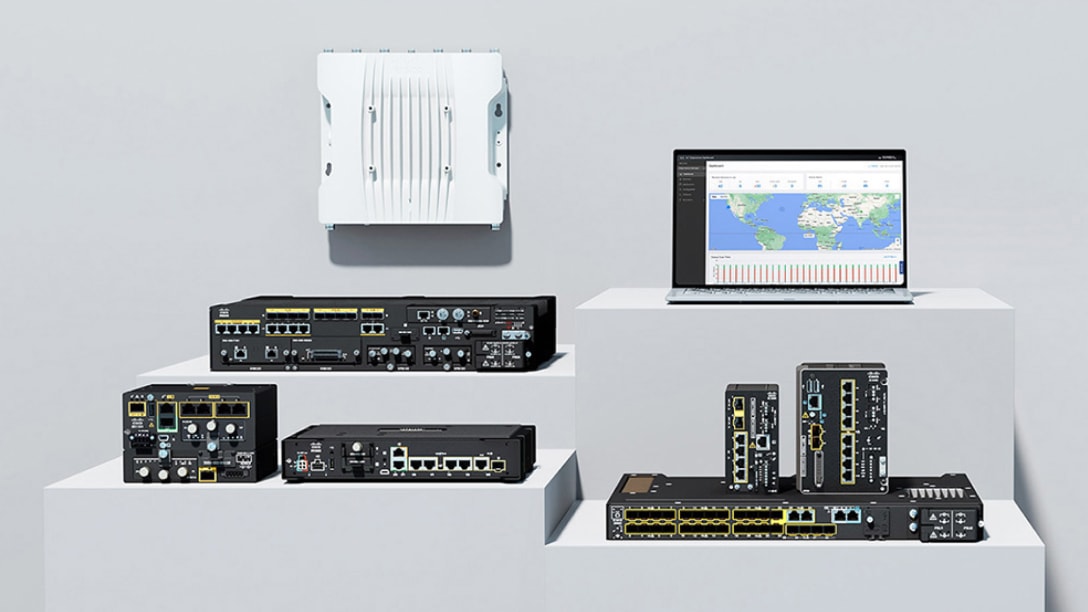
Figure 1. Cisco Service Node SN-XA Series

• CPE provisioning: The service node provisioning engine provides automated configuration of CPE for simple and rapid deployment. When a new customer is created or a new service is added to a customer's account, the service node can make any updates on the network side as well as generate the network-side configuration required for CPE. Services for the customer site work immediately after the CPE downloads the configuration from the service node.
• CPE configuration backup and restore: The service node acts as a backup server where CPE can store a copy of the current configuration. If the CPE must be replaced for any reason (for example, a flood or a hardware failure), the existing configuration can be easily restored from the service node. As of Release R3.0 this feature is supported for Linksys One CPE only.
• Call routing: The service node call-routing function uses Session Initiation Protocol (SIP) proxy architecture. No per-user voice feature call processing is performed on the service node. A core SIP proxy handles SIP signaling and call routing from CPE to the public switched telephone network (PSTN), the PSTN to CPE, and CPE to CPE. Therefore, the service node provides a single point for passing calls between the managed CPE environment and the Internet telephony service provider (ITSP) providing PSTN connectivity. The service node uses IETF standards to define aspects of voice sessions, including ENUM for addressing, BIND Domain Name System 9 (BIND9) for service location, and SIP for call routing. The service node call-routing function is an optional component that is used in deployment models only where PSTN calls are transported as voice-over-IP (VoIP) calls across a customer's broadband Internet connection.
• Branding services: The hierarchical architecture of the service node supports a variety of flexible business models. Each service node can support multiple secure, discreet partitions that you can use to host a variety of brands. Support for multiple brands can help you take advantage of market opportunities with targeted offers, building on brand equity. Brands can also be other hosted providers, allowing the service node operator to support a wholesale service model. An agent level is also supported, allowing multiple agents per brand. Agents have a secure, brand-specific view of their own customers for provisioning and monitoring. Agents receive their own login point and can add and modify customer configurations without support from the MSP or brand. By taking advantage of a channel model where the agent takes responsibility for sales and first level support the MSPs can reduce their costs.
• GUI: The service node includes GUIs for managing resources and customers at the node, brand, agent, and consumer levels. The GUI functions provided at each level reflect the roles and responsibilities of the person operating at that level.
• Database services: The service node includes a PostgreSQL database that is used as the repository for all node, brand, agent, and consumer data.
• CPE firmware services: The service node provides the tools required to manage the firmware level used by the CPE and centrally distribute new firmware when required.
• Cisco Service Node API: The application programming interface (API) allows service providers to integrate the service node with their back-end operations support system (OSS) and business support system (BSS).
• CPE and service node monitoring: The service node provides tools for monitoring the service node itself and its associated CPE.
• CPE security services: To protect against fraud and denial-of-service (DoS) attacks on the services, the service node provides a VPN function to the Linksys One CPE. The CPE at each customer site maintains an IPsec tunnel back to the service node. Any SIP signaling that leaves the customer site is tunneled across the IPsec tunnel back to the service node. Both the CPE and the service node are designed to accept only SIP packets that arrive through the tunnel, effectively preventing any unintentional SIP traffic from being processed.
• Service node security services: When used with Cisco 7301 Routers, the service node is designed to be connected directly to the Internet. The Cisco IOS® Software firewall and security features of the Cisco 7301 protect against DoS and other attacks.
• Call details records (CDRs): When using integrated call routing, the service node generates CDRs for PSTN calls and for calls between customers managed by the Cisco Service Node. Intracustomer calls - that is, calls between two phones at the same site - do not generate a CDR.
Hardware Architecture Overview
• The Cisco Service Node XA Series hardware is made up of base and expansion servers, as well as management and monitoring products for provisioning, database, call routing, application, and software services on this series.
• Additional network hardware is required for successful service node deployments.
Cisco Service Node Xa Series Base Servers
• Two dual-core 3-GHz processors
• 4-GB DRAM
• Eight 146-GB hard drives
• Three Gigabit Ethernet interfaces
• Dual, hot-swap redundant power supplies (AC or DC)
• Remote management
Cisco Service Node Xa Series Expansion Servers
• Two dual-core 3-GHz processors
• 4-GB DRAM
• Three 146-GB hard drives
• Two Gigabit Ethernet interfaces
• Dual hot-swap redundant power supplies (AC or DC)
• Remote management
Cisco Service Node Xa Series Management And Monitoring Products
• One 17-inch rack-mounted keyboard and monitor (RKM) unit
• One 8-port Keyboard, Video, Mouse (KVM) switch for connecting RKM and servers
Cisco Service Node Xa Series Network Products
• Required Cisco Catalyst 4948 Switches connect the service node servers, monitoring and management equipment, and (optionally) VPN routers.
• Optional Cisco 7301 Routers with an Advanced Encryption Standard (AES) wide-key cryptography card (part number SA-VAM2+) and Cisco IOS Software IP/FW/IDS IPSEC 3DES image (part number S731CHK9-12408) provide IP connectivity between the service node and the Internet, allowing the service node to encrypt up to 280-Mbps Triple Data Encryption Standard (3DES) IPsec traffic and support up to 4000 simultaneous sites -- and provide a firewall to protect service node components and customers from external and internally sourced attacks. As of Release 3.0 the Cisco 7301 VPN head-end routers are used with Linksys One CPE only.
Table 1. Cisco Service Node XA Series Hardware Layout Specifications
Network Management
Node-Level Network Management
• Node-level GUI: Node operators can use the GUI to manage resources for the entire service node, including brands, CPE firmware releases, and ITSPs with associated phone numbers.
• Berkeley Software Distribution (BSD) shell: Node operators can access the OS using the Secure Shell (SSH) Protocol, which is intended primarily for troubleshooting. Day-to-day operation and administration is performed through the node-level GUI.
• Simple Network Management Protocol (SNMP): You can monitor the Cisco Service Node XA Series with an external network management station through SNMP. Cisco routers running Cisco IOS Software support a vast number of MIBs. Consult the Cisco IOS Software documentation for a detailed list. Service node servers running FreeBSD also support SNMP. The following MIBs are supported:
– SNMPv2-MIB
– IF-MIB
– RFC1213-MIB
– IP-MIB
– TCP-MIB
– UDP-MIB
– SNMPv2-MIB
– HOST-RESOURCES-MIB
– IPV6-MIB
– UCD-SNMP-MIB
– UCD-DLMOD-MIB
– NET-SNMP-AGENT-MIB
– SNMPv2-MIB
– SNMP-FRAMEWORK-MIB
– SNMP-MPD-MIB
– SNMP-TARGET-MIB
Brand-Level Network Management
• Brand-level GUI: This interface allows brand administrators to manage resources, agents, and customers that belong to that brand.
• Service node API: This API provides a machine-to-machine interface by which a back-end OSS or BSS system can perform a subset of the functions available through the brand-level GUI. The functions that can be performed relate to provisioning customers and closely resemble the functions available through the agent-level GUI.
• Agent-level GUI: This interface is the only tool available to the agent. Agents can use it to add, modify, delete, and view customers. Agents can view or change data only for their own customers. As an option, a MSP can use the service node API to build a custom agent portal to replace the one that comes with the service node.
Software
• FreeBSD: This OS is the open-source operating system that runs on all Cisco Service Node XA Series servers. FreeBSD provides a mechanism that allows multiple virtual instances of the OS to be spawned and run on the same server, with each virtual OS completely isolated from all other instances. This partitioning mechanism is the one used to implement the brand-level services.
• PostgreSQL: This open-source package provides database services on the service nodes.
• OpenSER: This open-source package is used as the service node SIP proxy.
• BIND: This open-source package is used for Domain Name System (DNS) services. The Cisco Service Node XA Series runs its own DNS servers. DNS is used for several functions on the service nodes, including ENUM-based call routing of SIP calls and branding (each brand is known to the outside world as a separate DNS domain name).
• BIND DLZ: This open-source package allows BIND to use the PostgreSQL database to store its zone information. Dynamically loadable zones (DLZs) allow DNS updates to be reflected immediately when a change is made to zone data in the database. This feature is important because CPE that uses Dynamic Host Configuration Protocol (DHCP) can change its IP address at any time. When this happens, DNS must be updated immediately for the ENUM-based call routing to be able to successfully route calls to the CPE.
• NET-SNMP: This open-source SNMP package runs as an agent on the servers and implements several MIBs.
Table 2. Cisco IOS Software Versions Used by Service Node
|
Product |
Cisco IOS Software Version |
Feature Set |
|
Cisco 7301 |
Release 12.4(11)T2 |
Advanced Security |
|
Cisco Catalyst 4948 |
Release 12.2(31)SGA |
Power Specifications
Table 3. Power Specifications
|
Product |
Power |
Redundant Power |
|
Base server |
3.6A |
Yes |
|
Expansion server |
3.6A |
Yes |
|
17-inch RKM |
<30W |
No |
|
KVM switch |
0.5 to 0.25A |
No |
|
Cisco Catalyst 4948 |
4A AC or 8A DC |
Yes |
|
Cisco 7301 |
2A AC or 3A DC |
Yes |
Physical Specifications
Table 4. Physical Specifications
Ordering
Table 5. Ordering Information
Cisco Service Node Xa Series Network Equipment Required
Table 6. Required Cisco Network Equipment: Cisco Service Node XA Series - AC Power Configurations
Table 7. Required Cisco Network Equipment: Cisco Service Node XA Series - DC Power Configurations
Cisco Service Node Xa Series Network Equipment Options
Table 8. Optional Cisco Network Equipment - Cisco Service Node XA Series - AC Power Configuration
Table 9. Optional Cisco Network Equipment - Cisco Service Node XA Series - DC Power Configuration
For More Information