

Guest

Cisco ASR 1000 Series Aggregation Services Routers

Cisco Unified Border Element (SP Edition) for Cisco ASR 1000 Series

Product Overview

The Cisco® Unified Border Element (SP Edition) is a high-scale, carrier-grade session border controller (SBC), which is integrated into Cisco routing platforms and can use a huge number of router functions to provide a very feature-rich and intelligent SBC application. Formerly known only as Session Border Controller, Cisco Unified Border Element (SP Edition) provides a network-to-network demarcation interface for signaling interworking, media interworking, address and port translations, billing, security, quality of service, call admission control, and bandwidth management.
Cisco Unified Border Element (SP Edition) allows service providers and large enterprises to connect isolated voice, video, and unified communications networks directly over IP-IP interconnections, avoiding public switched telephone networks (PSTNs). End-to-end IP enables services such as Session Initiation Protocol (SIP) trunking, service provide voice-over-IP (VoIP) peering, residential triple play and business-to-business Cisco TelePresence™ and provides new revenue opportunities, enhances quality, increases scalability, lowers costs, and reduces network complexities.
Cisco Unified Border Element (SP Edition) is a key element of the Cisco Service Exchange Framework (SEF) for service provider next-generation networks and large enterprise unified communications networks. As part of the Cisco SEF, it supports IP Multimedia Subsystem (IMS) and non-IMS services.
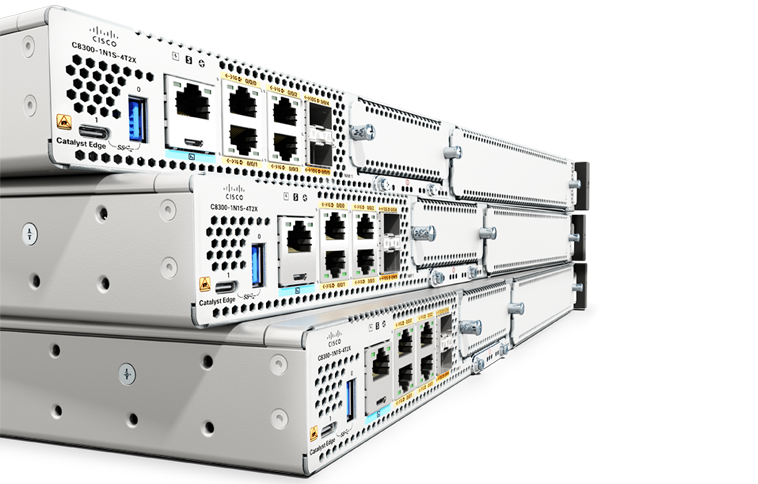
Cisco Unified Border Element (SP Edition) on the Cisco® ASR 1000 Series builds on the continuous operation and service aggregation provided by the powerful and flexible Cisco ASR 1000 Series Aggregation Services Routers. With media-forwarding performed on an Cisco ASR 1000 Series Embedded Services Processor (ESP) and control functions on a Cisco ASR 1000 Series Route Processor (RP), the Cisco ASR 1000 Series delivers an extensible pay-as-you-grow SBC solution through modular ESPs and RPs. Cisco Unified Border Element (SP Edition) on the Cisco ASR 1000 Series completely integrates the SBC with other Layer 2 and Layer 3 Cisco IOS® XE Software services without requiring additional application-specific hardware (service blades). Here are some benefits of Cisco Unified Border Element (SP Edition) integration on the Cisco ASR 1000 Series:

• Total cost of ownership:

– CAPEX/OPEX savings by eliminating overlay networks, additional interfaces on routers, environmental benefits with lower power and cooling requirements

• Video and Cisco TelePresence:

– Scalable video and Cisco TelePresence support; allows business-to-business Cisco TelePresence support

• Pay-as-you-grow model:

– Choice of 2RU/4RU/6RU chassis

– Performance of 5G, 10G, or 20G: upgrade as scalability needs grow

– T1/E1 to 10GE modular interfaces

• Rich IP-layer intelligence:

– Bidirectional Forwarding Detection (BFD), Unicast Reverse Path Forwarding (URPF), quality of service (QoS), routing, and other router features

– Redundancy with stateful switchover, nonstop forwarding, and In-Service Software Upgrade (ISSU)

• Advanced services and support

Applications

Cisco Unified Border Element (SP Edition) supports applications such as SIP trunking, VoIP peering, residential telephony, and business-to-business Cisco TelePresence by supporting a number of service provider and large enterprise deployments. (See Figure 1.)

Figure 1. Where SBCs Are Deployed in VoIP Networks

Service provider to service provider. Interconnecting IP networks enhances the quality of VoIP and other real-time IP multimedia services and reduces the cost and complexity of legacy time-division multiplexing (TDM) interconnections. In addition, direct IP-IP interconnection enables new services (converged voice and data, or voice and video, for example) that are not possible with TDM-based interconnections.

Service provider to enterprise, or residential access. Deploy Cisco Unified Border Element (SP Edition) at the edge of the service provider network to interact with, manage, and control the incoming VoIP or video traffic from enterprise or residential customers. This incoming traffic might need to be modified to handle any Network Address Translation/firewall devices in between and might need to be policed or modified to handle any interprotocol communication from IP private branch exchanges (PBXs) or end-user devices.

Enterprise edge. SBCs are deployed at the enterprise premises to provide interprotocol communication and management of VoIP and video traffic to and from the enterprise toward the service provider or other enterprises.

The Cisco Unified Border Element (SP Edition) gives a choice of a unified or distributed SBC deployment model (Figure 2). In the unified SBC deployment model, the Cisco Unified Border Element (SP Edition) hosts both media- and signaling-related functions (for example, SIP). In the distributed deployment model, the Cisco Unified Border Element (SP Edition) hosts the media-related functions and communicates with an external signaling element (for example, softswitch) using the industry-standard H.248 Protocol. The Cisco Unified Border Element (SP Edition) design allows for either deployment model using the same hardware and software.

Figure 2. SBC Deployment Models

In Figure 2, DBE refers to the data-border element that handles media, and SBE refers to the signaling-border element that handles signaling.

Features and Benefits

Table 1 lists the features of the Cisco Unified Border Element (SP Edition) on the Cisco ASR 1000 Series.

Table 1. Features and Benefits

Feature

Benefit

Deployment models

• Unified signaling model
• Distributed signaling model

High availability

• Hardware (RP, ESP) and software redundancy
• Stateful switchover to preserve active sessions
• In-Service Software Upgrade (ISSU)

Network hiding

• Network Address Port Translation (NAPT)
• IP network privacy and topology hiding

Media support

• Dual-tone multi-frequency (DTMF) interworking between any of these methods: RFC2833, SIP-info, and SIP-notify
• Voice and video codecs
• Fax/modem passthrough

Call Admission Control (CAC) and QoS

• Bandwidth management; per-session policing
• Per-session differentiated services code point (DSCP) remarking
• CAC mechanisms, including CAC bypass for emergency calls

Security

• Bandwidth (theft) protection
• Denial-of-service protection
• H.248 interim authentication header
• SIP authentication
• TLS, DTLS
• SRTP
• VPN awareness with Multi-VRF
• Black/white listing

Protocols

• SIP-to-SIP interworking, including DOßàEO
• SIP header manipulation, supplementary services, registration forwarding
• H.248 (TISPAN Ia interface)

Billing

• Multiple RADIUS server support
• 24-hr CDR buffering

Voice-quality statistics

• Packet loss, jitter, and round-trip time

Range of hardware options to fit various size, scale, and performance needs

• Range of interfaces: FE/GE/10GE, T1/E1, T3/E3, OC-3/OC-12 POS
• Range of sizes: ASR1002 or ASR1002-F (2RU), ASR1004 (4RU), ASR1006 (6RU)
• Range of RPs: ASR1000-RP1, ASR100-RP2
• Range of ESPs: ASR1000-ESP5, ASR1000-ESP10, ASR1000-ESP20

Ordering Information

Ordering the Cisco Unified Border Element (SP Edition) for Cisco ASR 1000 Series involves three steps:

1. Select a router from the Cisco ASR 1000 Series Routers with the required route-processor and ESP modules.

2. Select a Cisco IOS XE Software image with Cisco Unified Border Element (SP Edition) support.

3. Select the appropriate feature licenses.

To place an order, visit the Cisco Ordering homepage.

Table 2. Feature Licenses

Product Name

Part Number

CUBE(SP) 250 Calls Perpetual Lic for ASR 1000 Series

FLASR1-CUBES-250P

CUBE(SP) 2K Calls Perpetual Lic for ASR 1000 Series

FLASR1-CUBES-2KP

CUBE(SP) 4K Calls Perpetual Lic for ASR 1000 Series

FLASR1-CUBES-4KP

CUBE(SP) 16KCalls Perpetual Lic for ASR 1000 Series

FLASR1-CUBES-16KP

CUBE(SP) 32K Calls Perpetual Lic for ASR 1000 Series

FLASR1-CUBES-32KP

CUBE(SP) Perpetual Lic for ASR 1000 Series in B2BTP Exchange

FLASR1-CUBES-TPEX

Cisco Unified Border Element (SP Edition) licenses authorize the use of both distributed and unified SBC deployment models. These are session count-based licenses and available for either a one-year term use or perpetual use.
For the purpose of Session License ordering, an SBC session is a bi-directional media flow and associated signaling. A session represents a complete voice call through the SBC; 2 call-legs consisting of 2 media-legs for a bi-directional media flow and associated signaling on both call-legs. A videophone call uses 2 sessions; 1 session for a bi-directional media flow and an associated signaling (as in a voice call) and one more session for the second bi-directional media flow for video. An Instant messaging session consists of signaling between two end points through SBC, there is generally no associated media. One can combine multiple session licenses for the session count desired.

To Download the Software

To download software, visit the Cisco Software Center. Table 2 lists Cisco IOS XE Software images with support for the Cisco Unified Border Element (SP Edition).

Table 3. Cisco ASR 1000 Series Software Images with Cisco Unified Border Element (SP Edition) Support

Software Feature Set

Part Number

Cisco ASR 1000 Series RP1 ADVANCED IP SERVICES

SASR1R1-AISK9

Cisco ASR 1000 Series RP1 ADVANCED ENTERPRISE SERVICES

SASR1R1-AESK9

Cisco ASR 1000 Series RP1 ADVANCED IP SERVICES w/o CRYPTO

SASR1R1-AIS

Cisco ASR 1000 Series RP1 ADVANCED ENTERPRISE SERVICES w/o CRYPTO

SASR1R1-AES

Cisco ASR 1000 Series RP2 ADVANCED IP SERVICES

SASR1R2-AISK9

Cisco ASR 1000 Series RP2 ADVANCED ENTERPRISE SERVICES

SASR1R2-AESK9

Cisco ASR 1000 Series RP2 ADVANCED IP SERVICES w/o CRYPTO

SASR1R2-AIS

Cisco ASR 1000 Series RP2 ADVANCED ENTERPRISE SERVICES w/o CRYPTO

SASR1R2-AES

Cisco Services and Support

Cisco and its partners offer a broad portfolio of end-to-end services and accelerate customer success. These services are based on proven methodologies for deploying, operating, and optimizing IP communications solutions and successfully integrate Cisco® Unified Communications, Cisco TelePresence™, security, and mobility technologies with bandwidth to support video, collaboration, and growth in alignment with your business goals. Planning and design services align technology with business goals and can increase the accuracy, speed, and efficiency of deployment. Technical services help maintain operational health, strengthen software application functionality, solve performance issues, and lower expenses. Optimization services are designed to continually improve performance and help your team succeed with new technologies. For more information, visit http://www.cisco.com/go/services.

For More Information

For more information about the Cisco ASR 1000 Series or the Cisco ASR 1000 Series Embedded Services Processors, visit http://www.cisco.com/go/asr1000 or contact your local Cisco account representative.