The Cisco® ACE 4710 Application Control Engine represents the next generation of application switches for maximizing the availability, acceleration, and security of data center applications.
The Cisco ACE 4710 allows enterprises to accomplish four primary IT objectives for application delivery:
• Maximize application availability
• Accelerate application performance
• Secure data center and applications
• Facilitate data center consolidation through fewer servers, load balancers, and data center firewalls
The Cisco ACE 4710 achieves these goals through a broad set of intelligent Layer 4 load balancing and Layer 7 content switching technologies integrated with leading-edge acceleration and security capabilities. A primary design element of the Cisco ACE 4710 is its use of virtualized architecture and role-based administration to streamline and reduce the cost of operations involved in rolling out, scaling, accelerating, and protecting applications.
To maximize application availability, the Cisco ACE 4710 uses best-in-class application switching algorithms coupled with highly available system software and hardware.
The Cisco ACE 4710 provides best-in-industry scalability and throughput for managing application traffic, up to 4 Gbps in a one-rack-unit (1RU) form factor, upgradeable through software licenses, thus providing IT with long-term investment protection and scalability.
Additionally, through its innovative virtualization and role-based access control capabilities, the Cisco ACE 4710 enables IT to provision and deliver a broad range of multiple applications from a single Cisco ACE appliance, bringing increased scalability for application provisioning to the data center.
The Cisco ACE 4710 greatly improves server efficiency through highly flexible application traffic management and the offloading of CPU-intensive tasks such as Secure Sockets Layer (SSL) encryption and decryption processing, HTTP compression, and TCP session management.
The Cisco ACE platform is designed to serve as a last line of defense for servers and applications in data centers. The Cisco ACE appliance performs deep packet inspection and blocks malicious attacks. An integrated firewall enables IT professionals to comprehensively secure high-value applications in the data center and facilitates consolidation in the data center (Figure 1).
Figure 1. Cisco ACE Network Integration
By combining high application performance with a comprehensive set of state-of-the-art application delivery features, the Cisco ACE 4710 promotes greater IT efficiency and reduces the total cost of ownership (TCO).
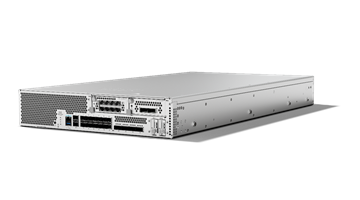
Figure 2 shows the Cisco ACE 4710 appliance.
Figure 2. Cisco ACE 4710 Appliance
Features and Benefits
Table 1 summarizes the features and benefits of the Cisco ACE 4710.
Table 1. Features and Benefits
Feature
Benefit
Availability
Application switching
The Cisco ACE 4710 represents the next generation of application switches, delivering tightly integrated, essential application service functions in a single powerful system.
It provides load-balancing and content switching functions with granular traffic control based on customizable Layer 4 through 7 rules.
• Intelligent device load balancing: Cisco ACE provides support for Domain Name System (DNS), cache, transparent caches, firewalls, intrusion detection system (IDS), intrusion prevention system (IPS), VPNs, and SSL VPN.
• Generic protocol parsing (GPP): Cisco ACE has native understanding of the following protocols: HTTP, FTP, DNS, Internet Control Message Protocol (ICMP), Session Initiation Protocol (SIP), Real-Time Streaming Protocol (RTSP), Extended RTSP, RADIUS, and Microsoft Remote Desktop Protocol (RDP).
• The Cisco ACE GPP feature enables you to configure application switching and persistence policies based on any information in the traffic payload for custom and packaged applications without requiring any programming.
• The Cisco ACE performs payload parsing through hardware using a powerful regular expression (regexp) engine to obtain maximum performance, unlike other software-based solutions.
• HTTP header manipulation: Cisco ACE supports the capability to modify, insert, or delete HTTP headers in both client requests and server responses.
• Partial server farm failover: Cisco ACE provides the capability to determine which server farm (primary or backup) receives new traffic based on the number of available real servers (rservers).
• TCP dump: Cisco ACE can capture real-time packet information for the network traffic that passes through the Cisco ACE for enhanced troubleshooting.
• Source network address translation (NAT) for virtual IP: Source NAT for virtual IP allows user to include a virtual IP address in the NAT pool for dynamic NAT and port address translation (PAT), with the result that real-world IP addresses are saved on the client-side network.
• Source NAT for server farm: Source NAT can be provided on a backup server farm multiple hops away during the failure of a primary server farm, resulting in continuous application availability.
• Flexible network deployment: Cisco ACE can be configured in the following modes:
• Routed mode: Cisco ACE can be configured to route the traffic when the client-side and server-side VLANs are on different subnets.
• Bridge mode: Cisco ACE can be configured to bridge traffic when the client-side and server-side VLANs are on the same subnets.
• Asymmetric server normalization (ASN): Cisco ACE can load balance an initial request from the client to a real server; however, the server directly responds to the client, bypassing Cisco ACE.
Predictors
Cisco ACE performs a series of checks and calculations to determine the server that can best service each client request according to the load-balancing algorithm or predictor. Cisco ACE uses the following predictors to select the best server to satisfy a client request:
• Adaptive response
• Least loaded
• Least bandwidth
• Least connections
• Round-robin
• Hash address
• Hash cookie
• Hash header
• Hash URL
Persistence and stickiness
Cisco ACE provides stickiness that allows the same client to maintain multiple simultaneous or subsequent TCP or IP connections with the same real server for the duration of a session. Cisco ACE supports the following sticky methods:
• Source or destination IP address
• Cookie
• HTTP header, and Generic Protocol Parsing for session level persistence such as SSL session ID
Redundancy
• Provides system and session redundancy, with the capability to switch over automatically to a redundant Cisco ACE upon system or network failure; failover happens automatically, with no human intervention
• Provides stateful failover capabilities to help ensure resilient network protection for enterprise network environments
• Supports active-standby and active-active redundancy topologies with configuration synchronization
• Enables businesses to perform software maintenance release upgrades on Cisco ACE and servers without affecting network uptime or connections
• Allows stateful redundancy to be enabled on a per-virtual-device basis, isolating a failure to its specific virtual device; a failover event in one virtual device does not affect operation of other virtual devices
• Integrates with the Cisco Global Site Selector (GSS) software to provide a multiple data center failover system
Server health monitoring
To instruct Cisco ACE to check the health of servers and server farms, user can configure health probes (sometimes referred to as keepalives). The following probes are supported:
• Dramatically improves the end user application experience by reducing latency and the number of roundtrips required for application access
• Eliminates unnecessary browser cache validation requests and provides automatic embedded object version management at the server, resulting in significantly improved application response times for application users
Caching
Caching directly offloads server requests for frequently requested static objects such as images and applets. This feature is fully configurable and enhances overall application performance and transaction throughput.
Cisco ACE delivers a high-performance caching architecture to enable several of its patent-pending optimizations, including delta optimization and FlashForward object acceleration.
Dynamic caching technology further accelerates enterprise application performance and improves server system scalability by enabling the Cisco ACE to fulfill requests for dynamic content. Using this feature, the offload capabilities begin to offload application servers and even core databases.
1.5 GB of RAM is available for caching. The memory ships standard with every appliance.
Delta encoding
Delta encoding significantly reduces the amount of data sent to the client by sending only what has changed in HTML content between successive page visits. Cisco ACE can determine exactly what has changed from page to page, to the level of detail of a single byte, and sends only the content that has changed.
Compression
Cisco ACE delivers powerful 2-Gbps hardware-accelerated data compression and provides faster application performance for application users. Both gzip and deflate compression are supported.
SSL acceleration
The Cisco ACE solution integrates SSL acceleration technology, which offloads the encryption and decryption of SSL traffic from external devices (servers, appliances, etc.), thereby allowing the Cisco ACE to look more deeply into encrypted data and apply security and application switching policies. This enables Cisco ACE to make more intelligent policy decisions and also helps ensure that your application-delivery platform complies with internal and external regulations.
With reencryption capabilities, Cisco ACE SSL acceleration offering helps ensure end-to-end encryption of sensitive data while providing the capability to apply intelligent policies. The following SSL features are supported: SSL termination and initiation, SSL Version 3.0, Transport Layer Security (TLS) Version 1.0, back-end SSL, exportable Rivest, Shamir, and Adelman (RSA) cipher suites, session ID stickiness, SSL URL rewrite (HTTP header rewrite), session ID reuse, client authentication, strong RSA cipher suites, and Advanced Encryption Standard (AES) cipher suites.
• SSL accelerated protocols: HTTPS, Secure IMAP (IMAPS), Secure Lightweight Directory Access Protocol (LDAPS), Secure Network News Transfer Protocol (NNTPS), Secure POP Version 3 (POP3S), and Secure Telnet (STELNET)
• Public key exchange algorithm: RSA 512-bit, 768-bit, 1024-bit, 1536-bit, and 2048-bit
Digital certificates: All major digital certificates from certificate authorities, including the following: VeriSign, Entrust, Netscape iPlanet, Windows 2000 Certificate Server, Thawte, Equifax, and Genuity
TCP offload
Cisco ACE directs website traffic in the most efficient manner by analyzing and directing incoming traffic at the request level. TCP offload breaks the dependency between application requests and the transport layer. It multiplexes and demultiplexes application level requests onto persistent connections set up to back-end servers. It keeps client and server TCP connections alive, independent of each other, and reuses TCP connections. These capabilities enable granular application layer policy and offload TCP processing from the web servers, saving CPU cycles.
Security
Data center security
The Cisco ACE is designed to serve as a last line of defense for servers and applications in data centers. The data center security protects against protocol and denial-of-service (DoS) attacks and encrypts mission-critical content. The Cisco ACE data center security capabilities protect the data center and critical applications from malicious traffic with the following features:
• HTTP deep packet inspection: HTTP header, URL, and payload
• Bidirectional NAT and PAT
• Support for static, dynamic, and policy-based NAT and PAT.
• Access control lists (ACLs) to selectively allow traffic between ports
• TCP connection state tracking
• Virtual connection state for UDP
• Sequence number randomization
• TCP header validation
• TCP window size checking
• Unicast Reverse Path Forwarding (URPF) checking at session establishment
• ACL object grouping
• TCP SYN cookies, providing distributed DoS (DDoS) protection.
• Rate limiting capabilities that can be applied to a set of real servers, virtual servers, or both
Application security
Multicore CPU-accelerated protocol control offers efficient inspection, filtering, and fixing of popular data center protocols such as HTTP, RTSP, DNS, FTP, ICMP, SIP, Skinny Client Control Protocol (SCCP), and LDAP.
Cisco ACE provides deep protocol inspection capabilities, which enables IT professionals to comprehensively secure high-value applications in the data center. It secures mission-critical applications and protects against identity theft, data theft, application disruption, and fraud and defends web-based applications and transactions against targeted attacks by professional hackers.
Virtualized Services
Virtual devices
Virtual devices provide a means for creating resource segmentation and isolation, allowing the Cisco ACE appliance to act as if were several individual virtual appliances within a single physical appliance. Virtual devices enable organizations to provide defined levels of service to up to 20 business organizations, applications, or customers and partners from a single Cisco ACE appliance.
Complete separation of the following:
• Configuration files
• Management interfaces
• Application rule sets
Customized, guaranteed resources per application for the following:
• Throughput
• Connections per second
Capability to limit and manage the allocation of the following Cisco ACE resources:
• ACL memory
• Buffers for syslog messages and TCP out-of-order (OOO) segments
• Concurrent connections (traffic through the Cisco ACE)
• Management connections (traffic to the Cisco ACE)
• Proxy connections
• Setting of resource limit as a rate (number per second)
• Regexp memory
• SSL connections
• Sticky entries
• Static or dynamic network address translations (xlates)
Role-based administration (RBA)
RBA (Figure 3) allows organizations to specify administrative roles and restrict administrators to specific functions within the appliance or virtual devices. Because multiple administrators within an organization may want to interact with the Cisco ACE appliance at different levels (application administration, server administration, network administration, security administration, etc.), it is important to be able to define these administrator roles, allowing each administrator group to freely perform its tasks while not affecting the other groups. Cisco ACE provides the following predefined roles that cannot be deleted or modified:
• Admin: This role gives a user complete access to and control over all the objects in virtual devices. A context administrator can create, configure, and modify any object in that context, including policies, roles, domains, server farms, and real servers.
• Network Admin: This role provides complete access to and control over the following features: interfaces, routing, connection parameters, NAT, virtual IP copy configurations, and the change to command.
• Network-Monitor: This role provides access only to all show commands and the change to command. If you do not explicitly assign a role to a user with the username command, this is the default role.
• Security-Admin: This role has complete access to and control over the following security-related features within a context: ACLs; application inspection; connection parameters; interfaces; authentication, authorization, and accounting (AAA); NAT; copy configurations; and the change to command.
• Server-Appln-Maintenance: This role has complete access to and control over the following features: real servers, server farms, load balancing, copy configurations, and the change to command.
• Server-Maintenance: This role has access to real-server maintenance, monitoring, and debugging:
• Real servers: Modify permission
• Server farms: Debug permission
• Virtual IPs: Debug permission
• Probes: Debug permission
• Load balancing: Debug permission
• Change to command: Create permission
• SLB-Admin: This role has complete access to and control over the following Cisco ACE features within a context: real servers, server farms, virtual IPs, probes, load balancing (Layers 3, 4, and 7), NAT, interfaces, copy configurations, and the change to command.
• SSL-Admin: This role is the administrator for all SSL features:
• SSL: Create permission
• Public key infrastructure (PKI): Create permission
• Interfaces: Modify permission
• Copy configurations: Create permission
• Change to command: Create permission
In addition to the preceding default roles, new roles can be created to adapt to different organization structures.
Deployment and Management
Function consolidation
By consolidating the functions of application switching, SSL acceleration, data center security, and more on one device, the Cisco ACE derives significant multipliers from bits per second (bps) to packets per second (pps), while reducing application latency. With consolidation of functions, a TCP flow is terminated only once instead of at four or more places across the network, saving time, processing power, and memory.
The encryption and decryption, load-balancing decision, security check, and business policy assignments and validations are all performed at a single point in the network to achieve better application performance, with fewer devices, simpler network designs, and easier management.
Investment protection
By default, the Cisco ACE 4710 supports virtualization with one administrator device and five user devices, 1-Gbps bandwidth, 1000 SSL transactions per second (TPS), and 100 Mbps of compression. The solution can be expanded without the need for new equipment, through the following software license upgrades:
• Throughput: The default throughput of 1 Gbps can be increased to 2 or 4 Gbps.
• Virtual devices: The number of virtual devices can be increased from 5 to 20 virtual devices.
• SSL TPS: The SSL TPS value can be increased from 1000 to 5000 or 7500 TPS.
• Compression: Compression can be increased to 500 Mbps or 1 or 2 Gbps of throughput.
• Application acceleration: Application acceleration is a licensable option.
Cisco Application Networking Manager (ANM)
Cisco ANM supports the management of virtual devices and hierarchical management domains across multiple Cisco ACE appliances. This server-based management suite discovers, provisions, monitors, and reports across many virtual devices on multiple Cisco ACE appliances, making deployment transparent. Template-based configuration and auditing complement service activation and suspension capabilities to enable quick implementation of applications. Configurable RBA delegation of tasks with a matching service API allows concurrent operation by multiple administrator groups across many Cisco ACE appliances and virtual devices.
Figure 3. Cisco ACE Virtual Devices and RBA
Product Specifications
Table 2 presents the performance specifications for the Cisco ACE 4710.
Table 2. Product Performance Specifications
Feature
Maximum Performance or Configuration
Global Parameters
Throughput
1, 2, or 4 Gbps
Compression
1 or 2 Gbps (using GZIP or Deflate)
Syslogs per second
120,000
ACL items
Up to 40,000
NAT entries
Up to 64,000 NAT translate, 1,000,000 PAT
Virtual devices
5 virtual devices included in base price; upgradeable to 20 virtual devices
Total VLANs
1024
Probes
4000 instances of up to 1000 uniquely defined probes - ICMP, TCP, UDP, Echo, Finger, DNS, Telnet, FTP, HTTP, HTTPS, SMTP, POP3, IMAP, RADIUS, SIP, RTSP, SNMP, KAL-AP, and scripted
SSL Performance
SSL throughput
1 Gbps
SSL TPS
1000 TPS included in base price; upgradeable to 5000 TPS and 7500 SSL TPS
Application Switching Performance
Maximum connections per second
120,000 complete transactions sustained rate
Concurrent connections
1,000,000
Application Switching Configuration
Virtual servers
1024
Server farms
1000
Real servers
4000
Sticky table entries
800,000
Web Application Acceleration Performance
Maximum concurrent connections
10,000
Advanced application acceleration features
• FlashForward: Enables effective use of web browser cache to reduce number of HTTP 304 responses necessary to view a web page
• Delta optimization: Optimizes the delivery of dynamic web content by serving only differences between visits to a web page
• Entity Tag (ETag): Enables effective use of the web browser cache to reduce the number of HTTP 200 responses necessary to view a web page
• Dynamic Cache: Optimizes the delivery of dynamic web content by serving only dynamic data from the memory cache
• AppScope Reporting: Enables monitoring of HTTP transaction response times with reporting on the Cisco AVS 3180 Management Station
Table 3 presents the product specifications for the Cisco ACE 4710.
Table 3. Product Specifications
Item
Specification
Chassis
• 1RU appliance
• W x D x H: 16.9 x 20 x 1.67 in. (42.4 x 430 x 509 mm)
Network ports
4 10/100/1000 Ethernet ports
Management
Embedded browser-based GUI and SNMP
Power
354 watts (W)
Flash memory
1 GB
Ambient temperature
104°F (40°C)
Relative humidity
80%
Acoustics
< 68 dBA
Certifications
• FCC
• CE
• VCCI
• BSMI BMC
• C-tick
• BSMI RPC
• UL and cUL
• CCC
• MIC
• BSMI Safety Report and BSMI RPC Certificate
Ordering Information
Table 4 presents part numbers for ordering, and Table 5 presents product IDs.