Guest

Cisco CWDM GBIC/SFP

Cisco WDM Series Passive Optical System Installation Note

Table Of Contents

Cisco CWDM Passive Optical System Installation Note

Contents

Overview

CWDM 2-Slot Chassis

CWDM OADMs

8-Channel Multiplexer/Demultiplexer (CWDM-MUX-8A=)

4-Channel OADM (CWDM-OADM4-1= and CWDM-OADM4-2=)

Dual Single-Channel OADMs (CWDM-OADM1-xxxx)

WDM Splitter Cable (WDM-1300-1550-S=)

CWDM GBIC and CWDM SFP Transceivers

Safety Overview

Statement 1071—Warning Definition

Installing the CWDM Passive Optical System

Required Tools

Installing the 2-Slot Chassis (CWDM-CHASSIS-2=)

Installing the CWDM OADM Modules

Removing the CWDM OADM Module

Installing and Removing CWDM GBIC and CWDM SFP Transceivers

Connecting the CWDM Passive Optical System to Your System

Connecting Cables to the Dual Single-Channel OADM Module

Connecting Cables to the CWDM 4-Channel OADM Module

Connecting Cables to the CWDM 8-Channel Multiplexer/Demultiplexer Module

Specifications

Translated Safety Warnings

Statement 1030—Equipment Installation

Statement 1040—Product Disposal

Statement 1053—Class 1M Laser Radiation

Statement 1055—Class I and Class 1M Laser

Statement 1056—Unterminated Fiber Cable

Statement 1057—Hazardous Radiation Exposure

Obtaining Documentation

Cisco.com

Documentation DVD

Ordering Documentation

Documentation Feedback

Cisco Product Security Overview

Reporting Security Problems in Cisco Products

Obtaining Technical Assistance

Cisco Technical Support Website

Submitting a Service Request

Definitions of Service Request Severity

Obtaining Additional Publications and Information


Cisco CWDM Passive Optical System Installation Note


This document provides installation instructions for the Cisco Coarse Wave Division Multiplexer (CWDM) passive optical system. The CWDM passive optical system product numbers are listed in Table 1.

Table 1 CWDM Passive Optical System Product Numbers

Product Number
Description

CWDM-CHASSIS-2=

2-slot chassis, 1 RU

CWDM-MUX8A=

8-channel MUX/DEMUX module

CWDM-OADM4-1=

4-channel OADM module (1470, 1490, 1510, and 1530 nm)

CWDM-OADM4-2=

4-channel OADM module (1550, 1570, 1590, and 1610 nm)

CWDM-OADM1-1470=

Dual single-channel OADM module, 1470 nm

CWDM-OADM1-1490=

Dual single-channel OADM module, 1490 nm

CWDM-OADM1-1510=

Dual single-channel OADM module, 1510 nm

CWDM-OADM1-1530=

Dual single-channel OADM module, 1530 nm

CWDM-OADM1-1550=

Dual single-channel OADM module, 1550 nm

CWDM-OADM1-1570=

Dual single-channel OADM module, 1570 nm

CWDM-OADM1-1590=

Dual single-channel OADM module, 1590 nm

CWDM-OADM1-1610=

Dual single-channel OADM module, 1610 nm

WDM-1300-1550-S=

1300 nm/1550 nm splitter cable

CAB-SM-LCSC-1M=

LC to SC connector cable, 1 m

CAB-SM-LCSC-5M=

LC to SC connector cable, 5 m


Contents

This installation note contains the following sections:

Overview

Safety Overview

Installing the CWDM Passive Optical System

Connecting the CWDM Passive Optical System to Your System

Specifications

Translated Safety Warnings

Obtaining Documentation

Documentation Feedback

Cisco Product Security Overview

Obtaining Technical Assistance

Obtaining Additional Publications and Information

Overview

The Cisco CWDM passive optical system provides optical networking support for high-speed data communication for metropolitan area networks (MANs) over a grid of eight CWDM optical wavelengths in both ring configurations or point-to-point configurations.

The Cisco CWDM passive optical system includes these components:

2-slot chassis for Cisco Optical Add/Drop Multiplexers (OADMs)

CWDM OADMs

8-channel multiplexer/demultiplexer

Two 4-channel OADMs

Eight dual single-channel OADMs

1300 nm/1550 nm WDM splitter cable

CWDM GBIC and CWDM SFP transceivers

CWDM 2-Slot Chassis

The CWDM 2-slot chassis (CWDM-CHASSIS-2) is a standard 19-inch chassis that is one rack unit (RU) in height. Each CWDM 2-slot chassis can hold two CWDM OADM modules. You can install the CWDM 2-slot chassis in the same equipment rack as your system or in an adjacent rack so that you can connect the OADMs to the CWDM GBIC transceivers or the CWDM SFP transceivers.

CWDM OADMs

The CWDM OADMs are passive devices that can multiplex/demultiplex or add/drop wavelengths from multiple fibers onto one optical fiber. The OADM connectors are interfaced to the color-matching CWDM GBIC or CWDM SFP transceivers on the equipment side. All OADMs are the same size. Two OADM modules can be installed in a CWDM 2-slot chassis (CWDM-CHASSIS-2). There are three different types of CWDM OADM modules

8-Channel Multiplexer/Demultiplexer (CWDM-MUX-8A=)

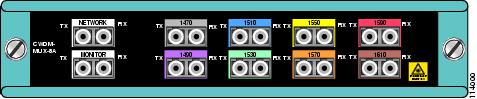
The 8-Channel Multiplexer/Demultiplexer (CWDM-MUX-8A=) allows you to multiplex/demultiplex eight separate channels into one pair of fiber. Dual fiber is used for both the network connection and the CWDM GBIC or CWDM SFP transceiver connections. The eight available wavelengths are 1470-nm, 1490-nm, 1510-nm, 1530-nm, 1550-nm, 1570-nm, 1590-nm, and 1610-nm. The multiplexer/demultiplexer, shown in Figure 1, is equipped with a monitor port that allows you to attach a power meter or an optical spectrum analyzer to assist you in monitoring and troubleshooting the network.

Figure 1 8-Channel Multiplexer/Demultiplexer (CWDM-MUX8) Front Panel
4-Channel OADM (CWDM-OADM4-1= and CWDM-OADM4-2=)

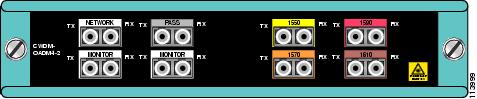
The 4-Channel OADM (CWDM-OADM4-1= and CWDM-OADM4-2=) allows you to add/drop four channels (with different wavelengths) into one direction of an optical ring. The other wavelengths are passed through the OADM. The 4-channel OADMs are transparent to the 1300-nm wavelength and includes a 1300-nm/1500-nm filter to mix legacy SONET/SDH/ATM ring installations with CWDM installations on the same optical fiber. Dual fiber is used for both the network and the GBIC or SFP connections. The two 4-channel OADMs, shown in Figure 2 and Figure 3, support the following wavelengths:

CWDM-OADM4-1—1470-nm, 1490-nm, 1510-nm, and 1530-nm.

CWDM-OADM4-2—1550-nm, 1570-nm, 1590-nm, and 1610-nm.

The 4-channel OADM modules are equipped with a monitor port that allows you to attach a power meter or an optical spectrum analyzer to assist you in monitoring and troubleshooting the network.

Figure 2 4-Channel OADM (CWDM-OADM4-1) Front Panel
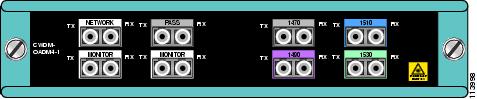
Figure 3 4-Channel OADM (CWDM-OADM4-2) Front Panel
Dual Single-Channel OADMs (CWDM-OADM1-xxxx)

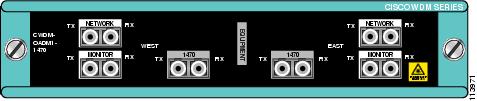
The Dual Single-Channel OADMs (CWDM-OADM1-xxxx) allows you to add/drop two channels of the same wavelength into the two directions of an optical ring. The other wavelengths are passed through the OADM. The dual single-channel OADMs are transparent to the 1300-nm wavelength and includes a 1300-nm/1500-nm filter to mix legacy SONET/SDH/ATM ring installations with CWDM installations on the same optical fiber. Dual fiber is used for both the network and the CWDM GBIC and CWDM SFP connections. Eight versions of this OADM are available, one for each wavelength of light. (See Table 2.) The dual single-channel OADMs, shown in Figures 4 through 11, are color coded and match the color coding of the CWDM GBIC and CWDM SFP transceivers. The dual single-channel OADM modules are equipped with a monitor port that allows you to attach a power meter or an optical spectrum analyzer to assist you in monitoring and troubleshooting the network.

Table 2 Dual Single-Channel OADMs 

Product Number
Description
Connector Color Code

CWDM-OADM1-1470=

Dual single-channel OADM (1470 nm)

Gray

CWDM-OADM1-1490=

Dual single-channel OADM (1490 nm)

Violet

CWDM-OADM1-1510=

Dual single-channel OADM (1510 nm)

Blue

CWDM-OADM1-1530=

Dual single-channel OADM (1530 nm)

Green

CWDM-OADM1-1550=

Dual single-channel OADM (1550 nm)

Yellow

CWDM-OADM1-1570=

Dual single-channel OADM (1570 nm)

Orange

CWDM-OADM1-1590=

Dual single-channel OADM (1590 nm)

Red

CWDM-OADM1-1610=

Dual single-channel OADM (1610 nm)

Brown


Table 3 provides a comparison of the CWDM passive device types.

Table 3 CWDM Passive Device Type Comparison

Product Number
Device Type
Number of Fiber Strands to the Network
Number of Gigabit Ethernet Links (Maximum)
Network Architecture Options

CWDM-OADM1-xxxx=

OADM (dual add/drop)

2

2

Ring (point-to-point possible)

CWDM-OADM4-1=

CWDM-OADM4-2=

OADM

2

4

Ring, point-to-point

CWDM-MUX8=

Mux/Demux

2

8

Ring, point-to-point


The OADM module ports are color coded to help with installation. Each color indicates the wavelength of the port. For more information about the color codes, see the "Connecting the CWDM Passive Optical System to Your System" section.

Figure 4 Dual Single-Channel OADM Front Panel (1610 nm)
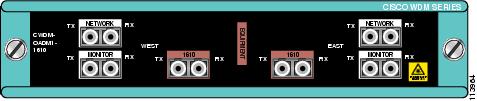
Figure 5 Dual Single-Channel OADM Front Panel (1590 nm)
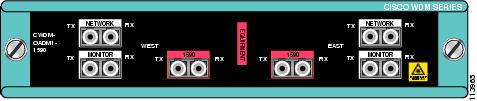
Figure 6 Dual Single-Channel OADM Front Panel (1570 nm)
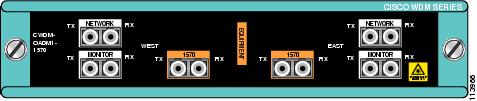
Figure 7 Dual Single-Channel OADM Front Panel (1550 nm)
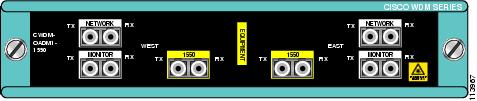
Figure 8 Dual Single-Channel OADM Front Panel (1530 nm)
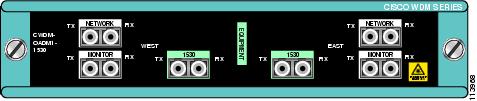
Figure 9 Dual Single-Channel OADM Front Panel (1510 nm)
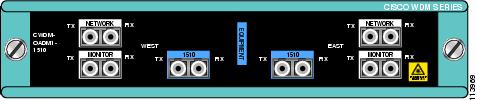
Figure 10 Dual Single-Channel OADM Front Panel (1490 nm)
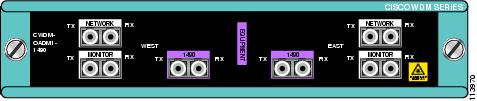
Figure 11 Dual Single-Channel OADM Front Panel (1470 nm)
WDM Splitter Cable (WDM-1300-1550-S=)

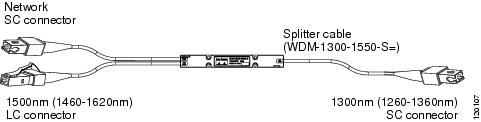
The WDM splitter cable provides bidirectional, multiplexing/demultiplexing for 1310-nm and 1550-nm signals. The WDM splitter cable is a Y cable (see Figure 12) with a 1310-nm branch terminating in an SC connector and a 1550-nm branch terminating in an LC connector. The common trunk branch of the Y cable is terminated in an SC connector. The WDM splitter cable is 1 meter in length.

Figure 12 WDM Splitter Cable
CWDM GBIC and CWDM SFP Transceivers

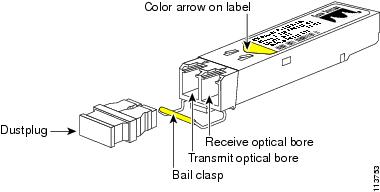
The CWDM GBIC and CWDM SFP transceivers are hot-swappable input/output devices that link your switching module to the CWDM passive optical system using a pair of single-mode fiber-optic cables. The two transceiver types have different form factors and use different fiber-optic cable connectors. Figure 13 shows a CWDM GBIC transceiver which uses an SC connector, and Figure 14 shows a CWDM SFP transceiver which uses an LC connector.

Figure 13 CWDM GBIC
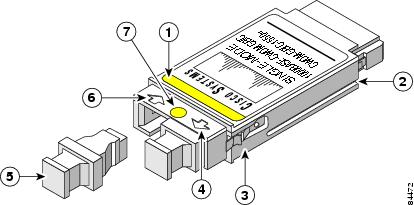
1

Color label identifying laser wavelength

5

Optical bore dust plug

2

Alignment groove

6

Receive optical bore

3

Spring clip

7

Color dot identifying laser wavelength

4

Transmit optical bore


Warning Use of controls, adjustments, or performing procedures other than those specified may result in hazardous radiation exposure. Statement 1057


Figure 14 CWDM SFP

The CWDM GBIC and CWDM SFP transceivers are available in eight wavelengths. (See Table 4.) Each CWDM GBIC and CWDM SFP transceiver is color coded to match the connector colors on the OADM modules.

Table 4 CWDM GBIC and SFP Transceiver Color Codes 

GBIC Transceiver Product Number
SFP Transceiver Product Number
Description
Connector Color Code

CWDM-GBIC-1470=

CWDM-SFP-1470=

1000BASE-CWDM, 1470 nm

Gray

CWDM-GBIC-1490=

CWDM-SFP-1490=

1000BASE-CWDM, 1490 nm

Violet

CWDM-GBIC-1510=

CWDM-SFP-1510=

1000BASE-CWDM, 1510 nm

Blue

CWDM-GBIC-1530=

CWDM-SFP-1530=

1000BASE-CWDM, 1530 nm

Green

CWDM-GBIC-1550=

CWDM-SFP-1550=

1000BASE-CWDM, 1550 nm

Yellow

CWDM-GBIC-1570=

CWDM-SFP-1570=

1000BASE-CWDM, 1570 nm

Orange

CWDM-GBIC-1590=

CWDM-SFP-1590=

1000BASE-CWDM, 1590 nm

Red

CWDM-GBIC-1610=

CWDM-SFP-1610=

1000BASE-CWDM, 1610 nm

Brown


For information on installing, removing, and maintaining the CWDM GBIC and SFP transceivers, refer to the Cisco CWDM GBIC and CWDM SFP Installation Note that accompanies the CWDM GBIC and CWDM SFP transceivers.

Safety Overview

Throughout this publication, safety warnings appear in procedures that, if performed incorrectly, can harm you. A warning symbol precedes each warning statement.

Statement 1071—Warning Definition

Warning


IMPORTANT SAFETY INSTRUCTIONS

This warning symbol means danger. You are in a situation that could cause bodily injury. Before you work on any equipment, be aware of the hazards involved with electrical circuitry and be familiar with standard practices for preventing accidents. Use the statement number provided at the end of each warning to locate its translation in the translated safety warnings that accompanied this device.

SAVE THESE INSTRUCTIONS

Waarschuwing

BELANGRIJKE VEILIGHEIDSINSTRUCTIES

Dit waarschuwingssymbool betekent gevaar. U verkeert in een situatie die lichamelijk letsel kan veroorzaken. Voordat u aan enige apparatuur gaat werken, dient u zich bewust te zijn van de bij elektrische schakelingen betrokken risico's en dient u op de hoogte te zijn van de standaard praktijken om ongelukken te voorkomen. Gebruik het nummer van de verklaring onderaan de waarschuwing als u een vertaling van de waarschuwing die bij het apparaat wordt geleverd, wilt raadplegen.

BEWAAR DEZE INSTRUCTIES

Varoitus

TÄRKEITÄ TURVALLISUUSOHJEITA

Tämä varoitusmerkki merkitsee vaaraa. Tilanne voi aiheuttaa ruumiillisia vammoja. Ennen kuin käsittelet laitteistoa, huomioi sähköpiirien käsittelemiseen liittyvät riskit ja tutustu onnettomuuksien yleisiin ehkäisytapoihin. Turvallisuusvaroitusten käännökset löytyvät laitteen mukana toimitettujen käännettyjen turvallisuusvaroitusten joukosta varoitusten lopussa näkyvien lausuntonumeroiden avulla.

SÄILYTÄ NÄMÄ OHJEET

Attention

IMPORTANTES INFORMATIONS DE SÉCURITÉ

Ce symbole d'avertissement indique un danger. Vous vous trouvez dans une situation pouvant entraîner des blessures ou des dommages corporels. Avant de travailler sur un équipement, soyez conscient des dangers liés aux circuits électriques et familiarisez-vous avec les procédures couramment utilisées pour éviter les accidents. Pour prendre connaissance des traductions des avertissements figurant dans les consignes de sécurité traduites qui accompagnent cet appareil, référez-vous au numéro de l'instruction situé à la fin de chaque avertissement.

CONSERVEZ CES INFORMATIONS

Warnung

WICHTIGE SICHERHEITSHINWEISE

Dieses Warnsymbol bedeutet Gefahr. Sie befinden sich in einer Situation, die zu Verletzungen führen kann. Machen Sie sich vor der Arbeit mit Geräten mit den Gefahren elektrischer Schaltungen und den üblichen Verfahren zur Vorbeugung vor Unfällen vertraut. Suchen Sie mit der am Ende jeder Warnung angegebenen Anweisungsnummer nach der jeweiligen Übersetzung in den übersetzten Sicherheitshinweisen, die zusammen mit diesem Gerät ausgeliefert wurden.

BEWAHREN SIE DIESE HINWEISE GUT AUF.

Avvertenza

IMPORTANTI ISTRUZIONI SULLA SICUREZZA

Questo simbolo di avvertenza indica un pericolo. La situazione potrebbe causare infortuni alle persone. Prima di intervenire su qualsiasi apparecchiatura, occorre essere al corrente dei pericoli relativi ai circuiti elettrici e conoscere le procedure standard per la prevenzione di incidenti. Utilizzare il numero di istruzione presente alla fine di ciascuna avvertenza per individuare le traduzioni delle avvertenze riportate in questo documento.

CONSERVARE QUESTE ISTRUZIONI

Advarsel

VIKTIGE SIKKERHETSINSTRUKSJONER

Dette advarselssymbolet betyr fare. Du er i en situasjon som kan føre til skade på person. Før du begynner å arbeide med noe av utstyret, må du være oppmerksom på farene forbundet med elektriske kretser, og kjenne til standardprosedyrer for å forhindre ulykker. Bruk nummeret i slutten av hver advarsel for å finne oversettelsen i de oversatte sikkerhetsadvarslene som fulgte med denne enheten.

TA VARE PÅ DISSE INSTRUKSJONENE

Aviso

INSTRUÇÕES IMPORTANTES DE SEGURANÇA

Este símbolo de aviso significa perigo. Você está em uma situação que poderá ser causadora de lesões corporais. Antes de iniciar a utilização de qualquer equipamento, tenha conhecimento dos perigos envolvidos no manuseio de circuitos elétricos e familiarize-se com as práticas habituais de prevenção de acidentes. Utilize o número da instrução fornecido ao final de cada aviso para localizar sua tradução nos avisos de segurança traduzidos que acompanham este dispositivo.

GUARDE ESTAS INSTRUÇÕES

¡Advertencia!

INSTRUCCIONES IMPORTANTES DE SEGURIDAD

Este símbolo de aviso indica peligro. Existe riesgo para su integridad física. Antes de manipular cualquier equipo, considere los riesgos de la corriente eléctrica y familiarícese con los procedimientos estándar de prevención de accidentes. Al final de cada advertencia encontrará el número que le ayudará a encontrar el texto traducido en el apartado de traducciones que acompaña a este dispositivo.

GUARDE ESTAS INSTRUCCIONES

Varning!

VIKTIGA SÄKERHETSANVISNINGAR

Denna varningssignal signalerar fara. Du befinner dig i en situation som kan leda till personskada. Innan du utför arbete på någon utrustning måste du vara medveten om farorna med elkretsar och känna till vanliga förfaranden för att förebygga olyckor. Använd det nummer som finns i slutet av varje varning för att hitta dess översättning i de översatta säkerhetsvarningar som medföljer denna anordning.

SPARA DESSA ANVISNINGAR

Aviso

INSTRUÇÕES IMPORTANTES DE SEGURANÇA

Este símbolo de aviso significa perigo. Você se encontra em uma situação em que há risco de lesões corporais. Antes de trabalhar com qualquer equipamento, esteja ciente dos riscos que envolvem os circuitos elétricos e familiarize-se com as práticas padrão de prevenção de acidentes. Use o número da declaração fornecido ao final de cada aviso para localizar sua tradução nos avisos de segurança traduzidos que acompanham o dispositivo.

GUARDE ESTAS INSTRUÇÕES

Advarsel

VIGTIGE SIKKERHEDSANVISNINGER

Dette advarselssymbol betyder fare. Du befinder dig i en situation med risiko for legemesbeskadigelse. Før du begynder arbejde på udstyr, skal du være opmærksom på de involverede risici, der er ved elektriske kredsløb, og du skal sætte dig ind i standardprocedurer til undgåelse af ulykker. Brug erklæringsnummeret efter hver advarsel for at finde oversættelsen i de oversatte advarsler, der fulgte med denne enhed.

GEM DISSE ANVISNINGER


Warning Only trained and qualified personnel should be allowed to install, replace, or service this equipment. Statement 1030


Warning Ultimate disposal of this product should be handled according to all national laws and regulations. Statement 1040


Warning Class I (CDRH) and Class 1M (IEC) laser products. Statement 1055


Warning Use of controls, adjustments, or performing procedures other than those specified may result in hazardous radiation exposure. Statement 1057


Note The maximum output is less than 10 mW when measured through a 3.5-mm apeture located at a distance of 100 mm and the wavelength is 1470-nm to 1610-nm from the multichannel MUX or OADM module output connectors. Other fiber-optic ports have been tested and comply with the Class 1 limits of IEC 60825-1 and Class 1 limits of 21 CFR 1040.10 (with considerations pursuant to FDA Laser Notice 50, dated July 26, 2001).


Installing the CWDM Passive Optical System

The following sections provide installation procedures for the CWDM passive optical system components:

Required Tools

Installing the 2-Slot Chassis (CWDM-CHASSIS-2=)

Installing the CWDM OADM Modules

Removing the CWDM OADM Module

Installing and Removing CWDM GBIC and CWDM SFP Transceivers

Required Tools

You will need these tools to install the CWDM passive optical system:

Number 2 Phillips screwdriver for the 10-32 or the 12-24 chassis installation screws.

Wrist strap or other personal grounding device to prevent ESD occurences.

Antistatic mat or antistatic foam to set the equipment on.

Fiber-optic end-face cleaning tools and inspection equipment. For complete information on inspecting and cleaning fiber-optic connections, refer to the white-paper document at this URL:

http://www.cisco.com/en/US/tech/tk482/tk607/technologies_white_paper09186a0080254eba.shtml

Level (optional)

Tape measure (optional)

Installing the 2-Slot Chassis (CWDM-CHASSIS-2=)


Note Ensure that you install the 2-slot chassis in the same rack or an adjacent rack to your system so that you can connect all the cables between your CWDM OADM modules and the CWDM GBIC and CWDM SFP transceivers in your system.


Caution When performing the following procedures, wear a grounding strap to avoid ESD damage to the OADM module. Some platforms have an ESD connector for attaching the wrist strap.

To mount the 2-slot chassis in an equipment rack, follow these steps:


Step 1 Remove the 2-slot chassis from the shipping packaging.

Step 2 Position the 2-slot chassis in the rack where you are going to install it. Align the mounting holes in the chassis L brackets with the mounting holes in the equipment rack to ensure that the 2-slot chassis is mounted straight and level. Use a level or tape measure to verify that the chassis is positioned level in the rack.

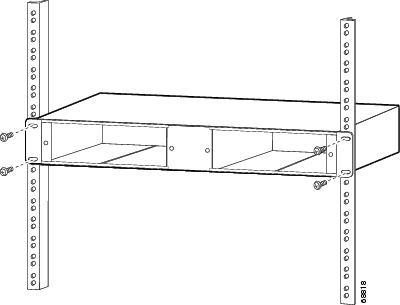
Step 3 Secure the 2-slot chassis using four (two per side) 12-24 x 3/4-inch screws or four 10-32 x 3/4-inch screws. Thread the screws through the elongated holes in the L bracket and into the threaded holes in the mounting post. (See Figure 15.)

Figure 15 Mounting the 2-Slot Chassis in the Rack

Installing the CWDM OADM Modules


Caution When performing the following procedures, wear a grounding strap to avoid ESD damage to the OADM module. Make sure the other end of the ground strap is securely attached to a grounded point.

To install the CWDM OADM modules, follow these steps:


Step 1 Align the CWDM OADM module with the slot on the 2-slot chassis. (See Figure 16.)

Figure 16 Installing a CWDM OADM Module
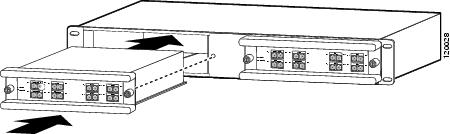
Step 2 Gently push the OADM module into the 2-slot chassis. Ensure that you line up the captive screws on the OADM module with the screw holes on the 2-slot chassis.

Step 3 Tighten the two captive screws with the Number 2 Phillips screwdriver. Do not overtighten.

Step 4 Do not remove the optical bore dust plugs at this time.


Removing the CWDM OADM Module


Caution When performing the following procedures, wear a grounding strap to avoid ESD damage to the OADM module.

To remove the OADM module or the multiplexer/demultiplexer module, follow these steps:


Step 1 Disconnect all network interface cables from the OADM module and immediately install dust plugs in the network interface cable connectors and the OADM connectors.

Step 2 Loosen the captive screw on each side of the OADM module or the multiplexer/demultiplexer module using a Phillips screwdriver.

Step 3 Gently pull on both captive screws to release the OADM module or the multiplexer/demultiplexer module from the 2-slot chassis.

Step 4 Pull the OADM module or the multiplexer/demultiplexer module out of the 2-slot chassis, and place it on an antistatic mat or antistatic foam pad.


Installing and Removing CWDM GBIC and CWDM SFP Transceivers

For information on installing, removing, and maintaining the CWDM GBIC transceivers and CWDM SFP transceivers, refer to the Cisco CWDM GBIC and CWDM SFP Installation Note that accompanies the CWDM GBIC and CWDM SFP transceivers.


Caution CWDM SFP and CWDM GBIC transceivers are static-sensitive devices. Always use an ESD wrist strap or similar individual grounding device when handling or coming in contact with CWDM SFP and CWDM GBIC transceivers.


Note To prevent contamination, do not remove the optical bore dust plugs from the CWDM SFP and CWDM GBIC transceivers until directed to do so.


Connecting the CWDM Passive Optical System to Your System

This section is divided into the following topics:

Connecting Cables to the Dual Single-Channel OADM Module

Connecting Cables to the CWDM 4-Channel OADM Module

Connecting Cables to the CWDM 8-Channel Multiplexer/Demultiplexer Module


Note Use the CWDM passive optical system connector color codes shown in Table 2 to help you connect the CWDM passive optical system to your system.


See Figure 2 through Figure 13 for the OADM and multiplexer/demultiplexer module front panels.


Warning Class 1M laser radiation when open. Do not view directly with optical instruments. Statement 1053


Connecting Cables to the Dual Single-Channel OADM Module


Note Make sure that the CWDM GBIC or CWDM SFP transceiver color code matches the color of the OADM port to which it is connected.


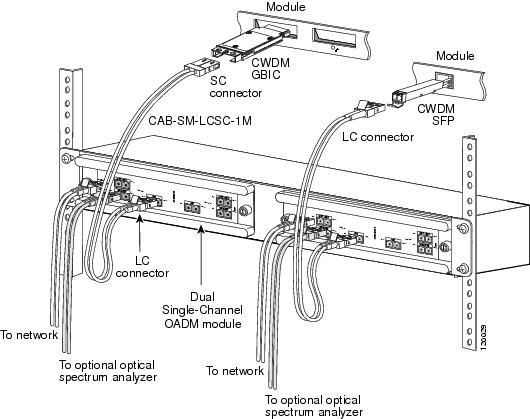
To connect the cables to the dual single-channel OADM module, follow these steps (see Figure 17):


Step 1 Insert the CWDM GBIC or CWDM SFP transceivers into the appropriate modules on your switch or router system if you have not already done so. For more information on CWDM SFP and CWDM GBIC GBIC transceivers, refer to the Cisco CWDM GBIC and CWDM SFP Installation Note that accompanied your transceivers.


Note Always use single-mode fiber-optic patch cables to connect dual single-channel OADM ports to the CWDM GBIC or the CWDM SFP transceivers.


Note CWDM GBIC transceivers are equipped with SC connectors. To make connections to the LC connectors on the OADM modules, you must use an LC to SC patch cable (Cisco part number CAB-SM-LCSC-1M= [1 meter cable], CAB-SM-=LCSC-5M= [5 meter cable], or an equivalent patch cable).


Warning Invisible laser radiation may be emitted from the end of the unterminated fiber cable or connector. Do not view directly with optical instruments. Viewing the laser output with certain optical instruments (for example, eye loupes, magnifiers, and microscopes) within a distance of 100 mm may pose an eye hazard. Statement 1056


Figure 17 Cabling a CWDM Dual Single-Channel OADM Module

Note Before removing the dust plugs and making any optical connections, observe the following guidelines:

Always keep the protective dust plugs on the unplugged fiber-optic cable connectors and the transceiver optical bores until you are ready to make a connection.

Always inspect and clean the SC connector end-faces just before making any connections. Refer to the Tip on this page for a pointer to a fiber-optic inspection and cleaning white paper.

Always grasp the SC connector housing to plug or unplug a fiber-optic cable.


Step 2 Remove the dust plugs from the network interface cable connector and the transceiver optical bore. Save the dust plugs for future use.

Step 3 Inspect and clean the connector's fiber-optic end-faces. Refer to the Tip below for a pointer to the fiber-optic inspection and cleaning white paper.


Tip For complete information on inspecting and cleaning fiber-optic connections, refer to the whitepaper at this URL:

http://www.cisco.com/en/US/tech/tk482/tk607/technologies_white_paper09186a0080254eba.shtml


Step 4 Connect the single-mode fiber-optic patch cable from the CWDM GBIC or CWDM SFP transceiver to the OADM module EQUIPMENT connector. Connect the Tx ports to the Rx ports and the Rx ports to the Tx ports to ensure that the system operates correctly.

a. If you are using CWDM SFP transceivers, use an LC-to-LC patch cable.

b. If you are using CWDM GBIC transceivers, you must use an SC-to-LC patch cable (CAB-SM-LCSC-1M= or CAB-SM-LCSC-5M=).


Note CWDM GBIC transceivers are equipped with SC connectors. To make connections to the LC connectors on the OADM modules, you must use an LC to SC patch cable (Cisco part number CAB-SM-LCSC-1M= [1 meter cable], CAB-SM-=LCSC-5M= [5 meter cable], or an equivalent patch cable).


Step 5 If you use both channels of the module, repeat Step 4 for the second channel.

Step 6 Connect the network west backbone single-mode fiber-optic cable to the NETWORK WEST connector on the OADM module, and connect the east backbone single-mode fiber-optic cable to the NETWORK EAST connector on the OADM module.

Step 7 If you are planning to monitor your network with an optical power meter or an optical spectrum analyzer, connect your meter or analyzer to the MONITOR port on the OADM.


Connecting Cables to the CWDM 4-Channel OADM Module


Note Make sure that the CWDM GBIC or CWDM SFP transceiver color code matches the color of the OADM port to which it is connected.


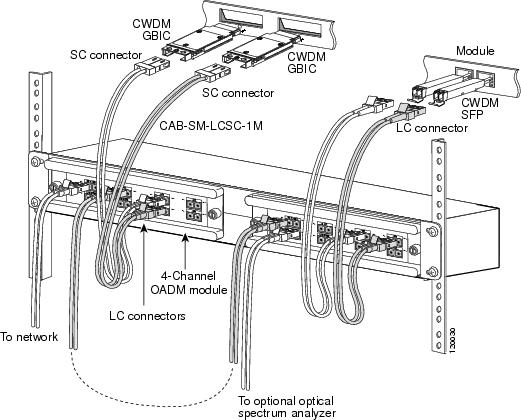
To connect the cables to the CWDM 4-channel OADM module, follow these steps (see Figure 18):


Step 1 Insert the CWDM GBIC transceivers or CWDM SFP transceivers into the appropriate modules on your switch or router system if you have not already done so. For more information on installing CWDM GBIC or CWDM SFP transceivers, refer to the Cisco CWDM GBIC and CWDM SFP Installation Note.


Note Always use single-mode fiber-optic patch cables to connect the CWDM OADM ports to the CWDM GBIC transceivers or CWDM SFP transceivers.


Note CWDM GBIC transceivers are equipped with SC connectors. To make connections to the LC connectors on the OADM modules, you must use an LC to SC patch cable (Cisco part number CAB-SM-LCSC-1M= [1 meter cable], CAB-SM-=LCSC-5M= [5 meter cable], or an equivalent patch cable).


Warning Invisible laser radiation may be emitted from the end of the unterminated fiber cable or connector. Do not view directly with optical instruments. Viewing the laser output with certain optical instruments (for example, eye loupes, magnifiers, and microscopes) within a distance of 100 mm may pose an eye hazard. Statement 1056


Figure 18 Cabling a 4-Channel OADM Module

Note Before removing the dust plugs and making any optical connections, observe the following guidelines:

Always keep the protective dust plugs on the unplugged fiber-optic cable connectors and the transceiver optical bores until you are ready to make a connection.

Always inspect and clean the SC connector end-faces just before making any connections. Refer to the Tip on this page for a pointer to a fiber-optic inspection and cleaning white paper.

Always grasp the SC connector housing to plug or unplug a fiber-optic cable.


Step 2 Remove the dust plugs from the network interface cable connector and the transceiver optical bore. Save the dust plugs for future use.

Step 3 Inspect and clean the connecor's fiber-optic end-faces. Refer to the Tip below for a pointer to the fiber-optic inspection and cleaning white paper.


Tip For complete information on inspecting and cleaning fiber-optic connections, refer to the whitepaper at this URL:

http://www.cisco.com/en/US/tech/tk482/tk607/technologies_white_paper09186a0080254eba.shtml


Step 4 Connect the single-mode fiber-optic cables from the CWDM GBICs (Tx/Rx; up to four channels) to the 4-channel module equipment connectors (Tx/Rx; up to four wavelengths, 1470-nm, 1490-nm, 1510-nm, 1530-nm) for OADM4-1 or 1550-nm, 1570-nm, 1590-nm, and 1610-nm for OADM4-2.


Note Connect the Tx ports to the Rx ports and the Rx ports to the Tx ports to ensure that the system operates correctly.


Step 5 Connect the one backbone single-mode fiber-optic cable to the NETWORK connector on the OADM module, and connect the other backbone single-mode fiber-optic cable to the PASS connector on the OADM module.

Step 6 If you are planning to monitor your network with an optical power meter or an optical spectrum analyzer, connect your meter or analyzer to the MONITOR port on the OADM.


Connecting Cables to the CWDM 8-Channel Multiplexer/Demultiplexer Module

Note Make sure that the CWDM GBIC transceiver color code or CWDM SFP transceiver color code matches the color code of the OADM port to which it is connected.


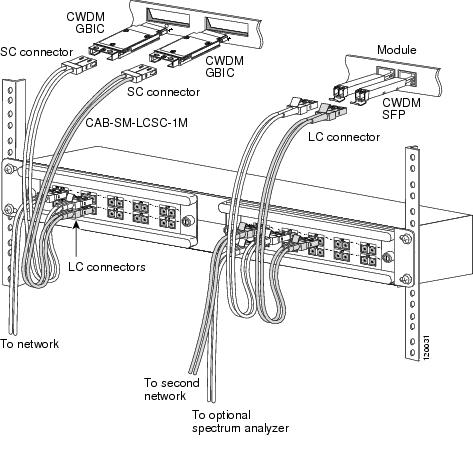
To connect cables to a CWDM 8-channel multiplexer/demultiplexer module, follow these steps (see Figure 19):


Step 1 Insert the CWDM GBIC or CWDM SFP transceivers into the appropriate modules on your switch or router system if you have not already done so. For more information on installing CWDM GBIC transceivers and SFP transceivers, refer to the Cisco CWDM GBIC and CWDM SFP Installation Note.


Note Clean all fiber-optic plugs on the cables before inserting the plugs into the fiber-optic connectors.


Note Always use single-mode fiber-optic patch cables to connect the 8-channel multiplexer/demultiplexer ports to the CWDM GBIC transceivers and CWDM SFP transceivers.


Warning Invisible laser radiation may be emitted from the end of the unterminated fiber cable or connector. Do not view directly with optical instruments. Viewing the laser output with certain optical instruments (for example, eye loupes, magnifiers, and microscopes) within a distance of 100 mm may pose an eye hazard. Statement 1056


Figure 19 Cabling a CWDM 8-Channel Multiplexer/Demultiplexer Module


Note Before removing the dust plugs and making any optical connections, observe the following guidelines:

Always keep the protective dust plugs on the unplugged fiber-optic cable connectors and the transceiver optical bores until you are ready to make a connection.

Always inspect and clean the SC connector end-faces just before making any connections. Refer to the Tip on this page for a pointer to a fiber-optic inspection and cleaning white paper.

Always grasp the SC connector housing to plug or unplug a fiber-optic cable.


Step 2 Remove the dust plugs from the network interface cable connector and the transceiver optical bore. Save the dust plugs for future use.

Step 3 Inspect and clean the connecor's fiber-optic end-faces. Refer to the Tip below for a pointer to the fiber-optic inspection and cleaning white paper.


Tip For complete information on inspecting and cleaning fiber-optic connections, refer to the white-paper document at this URL:

http://www.cisco.com/en/US/tech/tk482/tk607/technologies_white_paper09186a0080254eba.shtml


Step 4 Connect the single pair fiber-optic cables from the CWDM GBIC transceivers or CWDM SFP transceivers (Tx/Rx; up to eight channels) to the 8-channel multiplexer/demultiplexer module equipment connectors (Tx/Rx; up to eight wavelengths).


Note CWDM GBIC transceivers are equipped with SC connectors. To make connections to the LC connectors on the multiplexer/demultiplexer device, you must use an LC to SC patch cable (Cisco part number CAB-SM-LCSC-1M= [1 meter cable], CAB-SM-LCSC-5M= [5 meter cable], or an equivalent patch cable).


Note Connect the Tx ports to the Rx ports and the Rx ports to the Tx ports to ensure that the system operates correctly.


Step 5 Connect the network backbone single pair fiber-optic cable to the multiplexer/demultiplexer NETWORK connector on the OADM module.

Step 6 If you are planning to monitor your network with an optical power meter or an optical spectrum analyzer, connect your meter or analyzer to the MONITOR port on the OADM.


Specifications

Table 5 lists the environmental specifications for the CWDM OADM and multiplexer/demultiplexer modules. Table 6 lists the optical specifications for the CWDM OADM and multiplexer/demultiplexer modules.

Table 5 CWDM Passives Physical and Environmental Specifications 

Item
Specification
Physical Characteristics
 

Dimensions

8.35 x 1.75 x 8.7 in. (212 x 44 x 221 mm)

Weight

1.5 lbs. (0.68 kg)

Environmental
 

Operating temperature

32 to 140 ºF (0 to 60ºC)

Storage temperature

-40 to 185ºF (-40 to 85ºC)


Table 6 CWDM OADM and Multiplexer/Demultiplexer Module Optical Specifications 

Device
Path
Value
CWDM-MUX8A
   

Filter Passband Width

Add/Drop

± 6.0 nm (minimum)

Channel Insertion Loss

Add/Drop

2.2 dB (maximum)

Monitor Insertion Loss

Network Tx/Rx

Monitor Tx/Rx

23 dB (maximum

CWDM-OADM4-x
   

Filter Passband Width

Add/Drop

±6.0 nm (minimum)

CWDM Channel Insertion Loss

Add/Drop

1.8 dB (maximum)

Pass 1550-nm Insertion Loss

NETWORK Rx/Tx—PASS Tx/Rx

2.1 dB (maximum)

Pass 1310-nm Insertion Loss

NETWORK Rx/Tx—PASS Tx/Rx

2.1 dB (maximum)

Monitor Insertion Loss

NETWORK Rx/Tx—MONITOR Tx/Rx

PASS Rx/Tx—MONITOR Tx/Rx

23 dB (maximum)

CWDM-OADM1-xxxx
   

Filter Passband Width

Add/Drop

±6.0-nm (minimum)

CWDM Channel Insertion Loss

Add/Drop

1.5 dB (maximum)

Pass 1550-nm Insertion Loss

NETWORK Rx WEST/EAST—
NETWORK Tx EAST/WEST

1.5 dB (maximum)

Pass 1310-nm Insertion Loss

NETWORK Rx WEST/EAST—
NETWORK Tx EAST/WEST

1.7 dB (maximum)

Monitor Insertion Loss

NETWORK Tx/Rx WEST/EAST—
TAP Tx/Rx WEST/EAST

23 dB (maximum)

WDM-1300-1550-S
   

Pass 1310-nm Insertion Loss

Add/Drop

1.2 dB (maximum)

Pass 1550-nm Insertion Loss

Add/Drop

0.8 dB (maximum)


Translated Safety Warnings

This section contains the translations to the warnings that appear in this publication.

Statement 1030—Equipment Installation

Warning


Only trained and qualified personnel should be allowed to install, replace, or service this equipment.

Waarschuwing

Deze apparatuur mag alleen worden geïnstalleerd, vervangen of hersteld door bevoegd geschoold personeel.

Varoitus

Tämän laitteen saa asentaa, vaihtaa tai huoltaa ainoastaan koulutettu ja laitteen tunteva henkilökunta.

Attention

Il est vivement recommandé de confier l'installation, le remplacement et la maintenance de ces équipements à des personnels qualifiés et expérimentés.

Warnung

Das Installieren, Ersetzen oder Bedienen dieser Ausrüstung sollte nur geschultem, qualifiziertem Personal gestattet werden.

Avvertenza

Questo apparato può essere installato, sostituito o mantenuto unicamente da un personale competente.

Advarsel

Bare opplært og kvalifisert personell skal foreta installasjoner, utskiftninger eller service på dette utstyret.

Aviso

Apenas pessoal treinado e qualificado deve ser autorizado a instalar, substituir ou fazer a revisão deste equipamento.

¡Advertencia!

Solamente el personal calificado debe instalar, reemplazar o utilizar este equipo.

Varning!

Endast utbildad och kvalificerad personal bör få tillåtelse att installera, byta ut eller reparera denna utrustning.

Aviso

Somente uma equipe treinada e qualificada tem permissão para instalar, substituir ou dar manutenção a este equipamento.

Advarsel

Kun uddannede personer må installere, udskifte komponenter i eller servicere dette udstyr.


Statement 1040—Product Disposal

Warning


Ultimate disposal of this product should be handled according to all national laws and regulations.

Waarschuwing

Het uiteindelijke wegruimen van dit product dient te geschieden in overeenstemming met alle nationale wetten en reglementen.

Varoitus

Tämä tuote on hävitettävä kansallisten lakien ja määräysten mukaisesti.

Attention

La mise au rebut ou le recyclage de ce produit sont généralement soumis à des lois et/ou directives de respect de l'environnement. Renseignez-vous auprès de l'organisme compétent.

Warnung

Die Entsorgung dieses Produkts sollte gemäß allen Bestimmungen und Gesetzen des Landes erfolgen.

Avvertenza

Lo smaltimento di questo prodotto deve essere eseguito secondo le leggi e regolazioni locali.

Advarsel

Endelig kassering av dette produktet skal være i henhold til alle relevante nasjonale lover og bestemmelser.

Aviso

Deitar fora este produto em conformidade com todas as leis e regulamentos nacionais.

¡Advertencia!

Al deshacerse por completo de este producto debe seguir todas las leyes y reglamentos nacionales.

Varning!

Vid deponering hanteras produkten enligt gällande lagar och bestämmelser.

Aviso

O descarte definitivo deste produto deve estar de acordo com todas as leis e regulamentações nacionais.

Advarsel

Endelig bortskaffelse af dette produkt skal ske i henhold til gældende love og regler.


Statement 1053—Class 1M Laser Radiation

Warning Class 1M laser radiation when open. Do not view directly with optical instruments.

Waarschuwing

Klasse-1M laserstraling indien toegangspaneel open is. Niet rechtstreeks bekijken met optische instrumenten.

Varoitus

Säteilee luokan 1M lasersätelyä avattuna. Älä katso säteeseen optisilla laitteilla.

Attention

Radiation laser de classe 1M en cas d'ouverture. Ne pas observer directement avec des instruments optiques.

Warnung

Laserstrahlung der Klasse 1 M, wenn geöffnet. Nicht mit optischen Instrumenten direkt hineinsehen.

Avvertenza

Radiazioni laser Classe 1 quando aperto. Non osservare in maniera diretta con strumenti ottici.

Advarsel

Laserstråling i klasse 1M i åpen stilling. Skal ikke ses direkte med optiske instrumenter.

Aviso

Radiação laser classe 1M quando aberto. Não olhar diretamente com instrumentos ópticos.

¡Advertencia!

Los productos láser Clase 1M emiten radiación una vez abiertos. No los mire directamente con instrumentos ópticos.

Varning!

Klass 1M laser utstrålning när öppen. Betrakta ej direkt med optiska instrument.


Statement 1055—Class I and Class 1M Laser

Warning


Class I (CDRH) and Class 1M (IEC) laser products.

Waarschuwing

Laserproducten van Klasse I (CDRH) en Klasse 1M (IEC).

Varoitus

Luokan I (CDRH) ja luokan 1M (IEC) lasertuotteita.

Attention

Produits laser catégorie I (CDRH) et catégorie 1M (IEC).

Warnung

Laserprodukte der Klasse I (CDRH) und Klasse 1M (IEC).

Avvertenza

Prodotti laser di Classe I (CDRH) e Classe 1M (IEC).

Advarsel

Klasse I (CDRH) og klasse 1M (IEC) laserprodukter.

Aviso

Produtos laser Classe I (CDRH) e Classe 1M (IEC).

¡Advertencia!

Productos láser de Clase I (CDRH) y Clase 1M (IEC).

Varning!  

Laserprodukter av Klass I (CDRH) och Klass 1M (IEC).


Statement 1056—Unterminated Fiber Cable

Warning


Invisible laser radiation may be emitted from the end of the unterminated fiber cable or connector. Do not view directly with optical instruments. Viewing the laser output with certain optical instruments (for example, eye loupes, magnifiers, and microscopes) within a distance of 100 mm may pose an eye hazard.

Waarschuwing

Er kunnen onzichtbare laserstralen worden uitgezonden vanuit het uiteinde van de onafgebroken vezelkabel of connector. Niet in de straal kijken of deze rechtstreeks bekijken met optische instrumenten. Als u de laseruitvoer met bepaalde optische instrumenten bekijkt (zoals bijv. een oogloep, vergrootgras of microscoop) binnen een afstand van 100 mm kan dit gevaar voor uw ogen opleveren.

Varoitus

Päättämättömän kuitukaapelin tai -liittimen päästä voi tulla näkymätöntä lasersäteilyä. Älä tuijota sädettä tai katso sitä suoraan optisilla välineillä. Lasersäteen katsominen tietyillä optisilla välineillä (esim. suurennuslasilla tai mikroskoopilla) 10 cm:n päästä tai sitä lähempää voi olla vaarallista silmille.

Attention

Des émissions de radiations laser invisibles peuvent se produire à l'extrémité d'un câble en fibre ou d'un raccord sans terminaison. Ne pas fixer du regard le rayon ou l'observer directement avec des instruments optiques. L'observation du laser à l'aide certains instruments optiques (loupes et microscopes) à une distance inférieure à 100 mm peut poser des risques pour les yeux.

Warnung

Eine unsichtbare Laserstrahlung kann vom Ende des nicht angeschlossenen Glasfaserkabels oder Steckers ausgestrahlt werden. Nicht in den Laserstrahl schauen oder diesen mit einem optischen Instrument direkt ansehen. Ein Betrachten des Laserstrahls mit bestimmten optischen Instrumenten, wie z.B. Augenlupen, Vergrößerungsgläsern und Mikroskopen innerhalb eines Abstands von 100 mm kann für das Auge gefährlich sein.

Avvertenza

L'estremità del connettore o del cavo ottico senza terminazione può emettere radiazioni laser invisibili. Non fissare il raggio od osservarlo in modo diretto con strumenti ottici. L'osservazione del fascio laser con determinati strumenti ottici (come lupette, lenti di ingrandimento o microscopi) entro una distanza di 100 mm può provocare danni agli occhi.

Advarsel

Usynlig laserstråling kan emittere fra enden av den ikke-terminerte fiberkabelen eller koblingen. Ikke se inn i strålen og se heller ikke direkte på strålen med optiske instrumenter. Observering av laserutgang med visse optiske instrumenter (for eksempel øyelupe, forstørrelsesglass eller mikroskoper) innenfor en avstand på 100 mm kan være farlig for øynene.

Aviso

Radiação laser invisível pode ser emitida pela ponta de um conector ou cabo de fibra não terminado. Não olhe fixa ou diretamente para o feixe ou com instrumentos ópticos. Visualizar a emissão do laser com certos instrumentos ópticos (por exemplo, lupas, lentes de aumento ou microscópios) a uma distância de 100 mm pode causar riscos à visão.

¡Advertencia!

El extremo de un cable o conector de fibra sin terminación puede emitir radiación láser invisible. No se acerque al radio de acción ni lo mire directamente con instrumentos ópticos. La exposición del ojo a una salida de láser con determinados instrumentos ópticos (por ejemplo, lupas y microscopios) a una distancia de 100 mm puede comportar lesiones oculares.

Varning!  

Osynlig laserstrålning kan komma från änden på en oavslutad fiberkabel eller -anslutning. Titta inte rakt in i strålen eller direkt på den med optiska instrument. Att titta på laserstrålen med vissa optiska instrument (t.ex. lupper, förstoringsglas och mikroskop) från ett avstånd på 100 mm kan skada ögonen.


Statement 1057—Hazardous Radiation Exposure

Warning


Use of controls, adjustments, or performing procedures other than those specified may result in hazardous radiation exposure.

Waarschuwing

Het gebruik van regelaars of bijstellingen of het uitvoeren van procedures anders dan opgegeven kan leiden tot blootstelling aan gevaarlijke straling.

Varoitus

Säätimien tai säätöjen käyttö ja toimenpiteiden suorittaminen ohjeista poikkeavalla tavalla voi altistaa vaaralliselle säteilylle.

Attention

L'utilisation de commandes, de réglages ou de procédures autres que ceux spécifiés peut entraîner une exposition dangereuse à des radiations.

Warnung

Die Verwendung von nicht spezifizierten Steuerelementen, Einstellungen oder Verfahrensweisen kann eine gefährliche Strahlenexposition zur Folge haben.

Avvertenza

L'adozione di controlli, regolazioni o procedure diverse da quelle specificate può comportare il pericolo di esposizione a radiazioni.

Advarsel

Bruk av kontroller eller justeringer eller utførelse av prosedyrer som ikke er spesifiserte, kan resultere i farlig strålingseksponering.

Aviso

O uso de controles, ajustes ou desempenho de procedimentos diferentes dos especificados pode resultar em exposição prejudicial de radiação.

¡Advertencia!

La aplicación de controles, ajustes y procedimientos distintos a los especificados puede comportar una exposición peligrosa a la radiación.

Varning!  

Om andra kontroller eller justeringar än de angivna används, eller om andra processer än de angivna genomförs, kan skadlig strålning avges.

Aviso

O uso de controles, ajustes ou procedimentos diferentes daqueles especificados pode resultar em exposição perigosa à radiação.

Advarsel

Brug af kontrolfunktioner, justeringer, eller udførelse af procedurer andre end de, der er angivet, kan resultere i udsættelse for farlig bestråling.


Obtaining Documentation

Cisco documentation and additional literature are available on Cisco.com. Cisco also provides several ways to obtain technical assistance and other technical resources. These sections explain how to obtain technical information from Cisco Systems.

Cisco.com

You can access the most current Cisco documentation at this URL:

http://www.cisco.com/univercd/home/home.htm

You can access the Cisco website at this URL:

http://www.cisco.com

You can access international Cisco websites at this URL:

http://www.cisco.com/public/countries_languages.shtml

Documentation DVD

Cisco documentation and additional literature are available in a Documentation DVD package, which may have shipped with your product. The Documentation DVD is updated regularly and may be more current than printed documentation. The Documentation DVD package is available as a single unit.

Registered Cisco.com users (Cisco direct customers) can order a Cisco Documentation DVD (product number DOC-DOCDVD=) from the Ordering tool or Cisco Marketplace.

Cisco Ordering tool:

http://www.cisco.com/en/US/partner/ordering/

Cisco Marketplace:

http://www.cisco.com/go/marketplace/

Ordering Documentation

You can find instructions for ordering documentation at this URL:

http://www.cisco.com/univercd/cc/td/doc/es_inpck/pdi.htm

You can order Cisco documentation in these ways:

Registered Cisco.com users (Cisco direct customers) can order Cisco product documentation from the Ordering tool:

http://www.cisco.com/en/US/partner/ordering/

Nonregistered Cisco.com users can order documentation through a local account representative by calling Cisco Systems Corporate Headquarters (California, USA) at 408 526-7208 or, elsewhere in North America, by calling 1 800 553-NETS (6387).

Documentation Feedback

You can send comments about technical documentation to bug-doc@cisco.com.

You can submit comments by using the response card (if present) behind the front cover of your document or by writing to the following address:

Cisco Systems
Attn: Customer Document Ordering
170 West Tasman Drive
San Jose, CA 95134-9883

We appreciate your comments.

Cisco Product Security Overview

Cisco provides a free online Security Vulnerability Policy portal at this URL:

http://www.cisco.com/en/US/products/products_security_vulnerability_policy.html

From this site, you can perform these tasks:

Report security vulnerabilities in Cisco products.

Obtain assistance with security incidents that involve Cisco products.

Register to receive security information from Cisco.

A current list of security advisories and notices for Cisco products is available at this URL:

http://www.cisco.com/go/psirt

If you prefer to see advisories and notices as they are updated in real time, you can access a Product Security Incident Response Team Really Simple Syndication (PSIRT RSS) feed from this URL:

http://www.cisco.com/en/US/products/products_psirt_rss_feed.html

Reporting Security Problems in Cisco Products

Cisco is committed to delivering secure products. We test our products internally before we release them, and we strive to correct all vulnerabilities quickly. If you think that you might have identified a vulnerability in a Cisco product, contact PSIRT:

Emergencies — security-alert@cisco.com

Nonemergencies — psirt@cisco.com


Tip We encourage you to use Pretty Good Privacy (PGP) or a compatible product to encrypt any sensitive information that you send to Cisco. PSIRT can work from encrypted information that is compatible with PGP versions 2.x through 8.x.

Never use a revoked or an expired encryption key. The correct public key to use in your correspondence with PSIRT is the one that has the most recent creation date in this public key server list:

http://pgp.mit.edu:11371/pks/lookup?search=psirt%40cisco.com&op=index&exact=on


In an emergency, you can also reach PSIRT by telephone:

1 877 228-7302

1 408 525-6532

Obtaining Technical Assistance

For all customers, partners, resellers, and distributors who hold valid Cisco service contracts, Cisco Technical Support provides 24-hour-a-day, award-winning technical assistance. The Cisco Technical Support Website on Cisco.com features extensive online support resources. In addition, Cisco Technical Assistance Center (TAC) engineers provide telephone support. If you do not hold a valid Cisco service contract, contact your reseller.

Cisco Technical Support Website

The Cisco Technical Support Website provides online documents and tools for troubleshooting and resolving technical issues with Cisco products and technologies. The website is available 24 hours a day, 365 days a year, at this URL:

http://www.cisco.com/techsupport

Access to all tools on the Cisco Technical Support Website requires a Cisco.com user ID and password. If you have a valid service contract but do not have a user ID or password, you can register at this URL:

http://tools.cisco.com/RPF/register/register.do


Note Use the Cisco Product Identification (CPI) tool to locate your product serial number before submitting a web or phone request for service. You can access the CPI tool from the Cisco Technical Support Website by clicking the Tools & Resources link under Documentation & Tools. Choose Cisco Product Identification Tool from the Alphabetical Index drop-down list, or click the Cisco Product Identification Tool link under Alerts & RMAs. The CPI tool offers three search options: by product ID or model name; by tree view; or for certain products, by copying and pasting show command output. Search results show an illustration of your product with the serial number label location highlighted. Locate the serial number label on your product and record the information before placing a service call.


Submitting a Service Request

Using the online TAC Service Request Tool is the fastest way to open S3 and S4 service requests. (S3 and S4 service requests are those in which your network is minimally impaired or for which you require product information.) After you describe your situation, the TAC Service Request Tool provides recommended solutions. If your issue is not resolved using the recommended resources, your service request is assigned to a Cisco TAC engineer. The TAC Service Request Tool is located at this URL:

http://www.cisco.com/techsupport/servicerequest

For S1 or S2 service requests or if you do not have Internet access, contact the Cisco TAC by telephone. (S1 or S2 service requests are those in which your production network is down or severely degraded.) Cisco TAC engineers are assigned immediately to S1 and S2 service requests to help keep your business operations running smoothly.

To open a service request by telephone, use one of the following numbers:

Asia-Pacific: +61 2 8446 7411 (Australia: 1 800 805 227)
EMEA: +32 2 704 55 55
USA: 1 800 553-2447

For a complete list of Cisco TAC contacts, go to this URL:

http://www.cisco.com/techsupport/contacts

Definitions of Service Request Severity

To ensure that all service requests are reported in a standard format, Cisco has established severity definitions.

Severity 1 (S1)—Your network is "down," or there is a critical impact to your business operations. You and Cisco will commit all necessary resources around the clock to resolve the situation.

Severity 2 (S2)—Operation of an existing network is severely degraded, or significant aspects of your business operation are negatively affected by inadequate performance of Cisco products. You and Cisco will commit full-time resources during normal business hours to resolve the situation.

Severity 3 (S3)—Operational performance of your network is impaired, but most business operations remain functional. You and Cisco will commit resources during normal business hours to restore service to satisfactory levels.

Severity 4 (S4)—You require information or assistance with Cisco product capabilities, installation, or configuration. There is little or no effect on your business operations.

Obtaining Additional Publications and Information

Information about Cisco products, technologies, and network solutions is available from various online and printed sources.

Cisco Marketplace provides a variety of Cisco books, reference guides, and logo merchandise. Visit Cisco Marketplace, the company store, at this URL:

http://www.cisco.com/go/marketplace/

Cisco Press publishes a wide range of general networking, training and certification titles. Both new and experienced users will benefit from these publications. For current Cisco Press titles and other information, go to Cisco Press at this URL:

http://www.ciscopress.com

Packet magazine is the Cisco Systems technical user magazine for maximizing Internet and networking investments. Each quarter, Packet delivers coverage of the latest industry trends, technology breakthroughs, and Cisco products and solutions, as well as network deployment and troubleshooting tips, configuration examples, customer case studies, certification and training information, and links to scores of in-depth online resources. You can access Packet magazine at this URL:

http://www.cisco.com/packet

iQ Magazine is the quarterly publication from Cisco Systems designed to help growing companies learn how they can use technology to increase revenue, streamline their business, and expand services. The publication identifies the challenges facing these companies and the technologies to help solve them, using real-world case studies and business strategies to help readers make sound technology investment decisions. You can access iQ Magazine at this URL:

http://www.cisco.com/go/iqmagazine

Internet Protocol Journal is a quarterly journal published by Cisco Systems for engineering professionals involved in designing, developing, and operating public and private internets and intranets. You can access the Internet Protocol Journal at this URL:

http://www.cisco.com/ipj

World-class networking training is available from Cisco. You can view current offerings at this URL:

http://www.cisco.com/en/US/learning/index.html