Cisco ASR 9000 Series Aggregation Services Routers
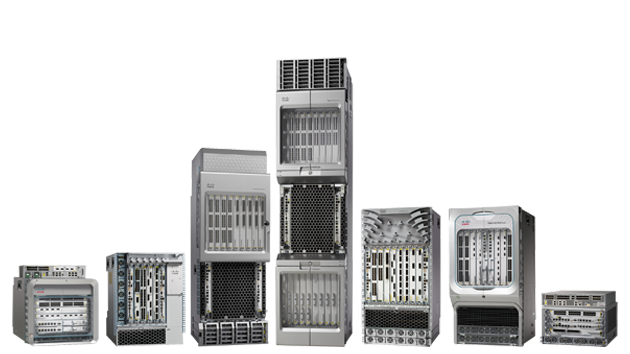
High performance routers built to serve demanding edge markets
Edge networks serve billions of devices with low-latency services. You need feature rich routers that economically scale with bandwidth demand. The ASR 9000 series is your edge routing device capable of supporting the application performance required to power 5G service needs.
Contact Cisco
-
-
Call Sales:
- 1-800-553-6387
- US/CAN | 5am-5pm PT
Built for today, ready for what’s next

Reloaded
- Enhanced port flexibility supporting 1G to 400G and new form factors.
- Support for coherent optics to drive the convergence of IP and optical layers.
- Committed to forward and backward compatibility.

Refactored
- With a simple, modern, and trustworthy network Operating System (IOS XR).
- Automation ready with open APIs, Native, YANG, and Open Config models.
- With real-time telemetry, segment routing, and Ethernet Virtual Private Networks (EVPNs).

Resilient
- Enhanced security including Secure Boot, Cisco Trust Anchor, and anti-counterfeit measures.
- With a Secure Development Lifecycle to ensure manufactured integrity.
- Investment protection for ASR 9000 with continued software and hardware innovations.

Sustainability
- Custom ASIC optimized to balance performance with a 100x capacity increase and a 96% power reduction per Gbps.
ASR 9000 Series Models
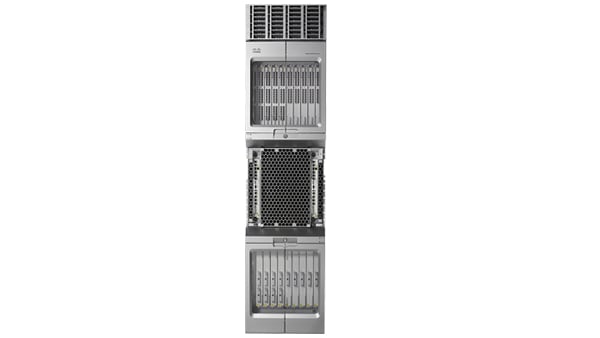
ASR 9922
- 44 RU
- Up to 160 Tbps
- 20 Line Cards, 2 RPs, 7 Fabric Cards
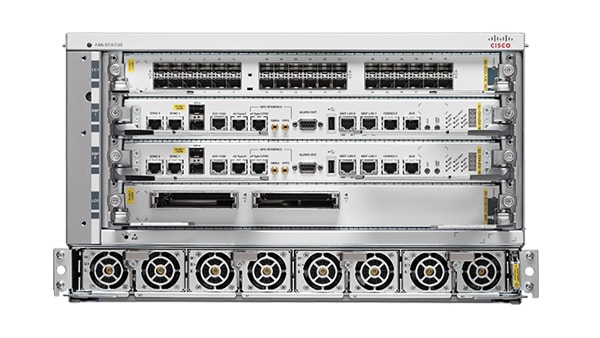
ASR 9904
- 6 RU
- Up to 16 Tbps
- 2 Line Cards, 2 RSPs
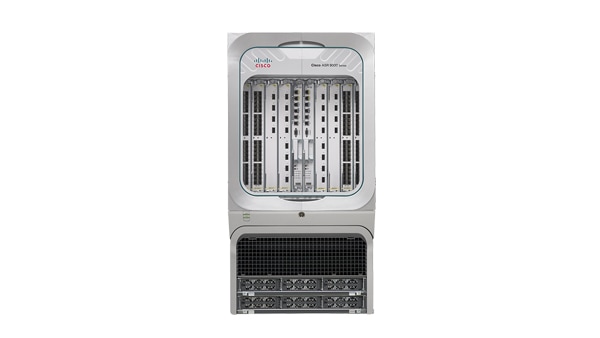
ASR 9010
- 21 RU
- Up to 32 Tbps
- 8 Line Cards, 2 RSPs
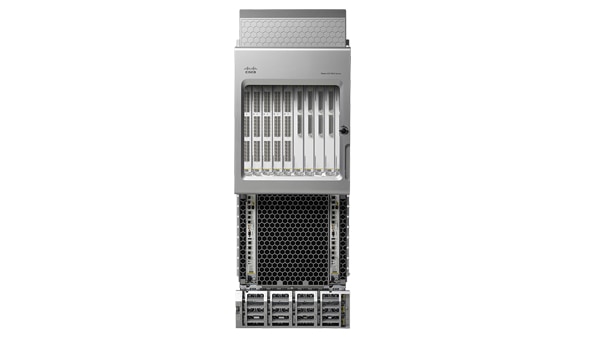
ASR 9912
- 30 RU
- Up to 80 Tbps
- 10 Line Cards, 2 RPs, 7 Fabric Cards
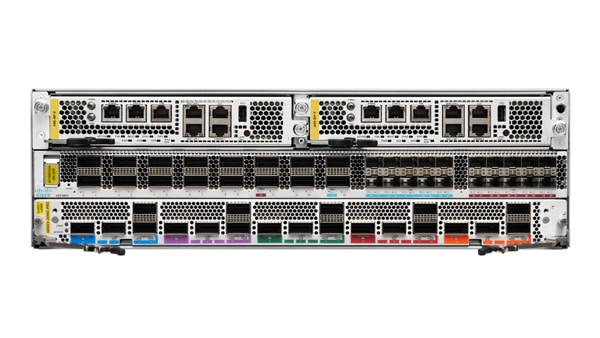
ASR 9903
- 3 RU
- Up to 7.2 Tbps
- 1 Port Expansion Card, 2 RPs
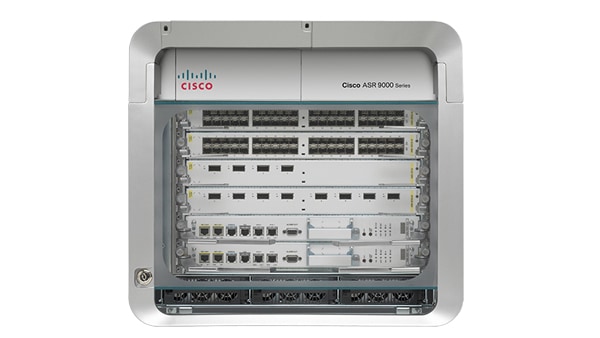
ASR 9006
- 10 RU
- Up to 16 Tbps
- 4 Line Cards, 2 RSPs
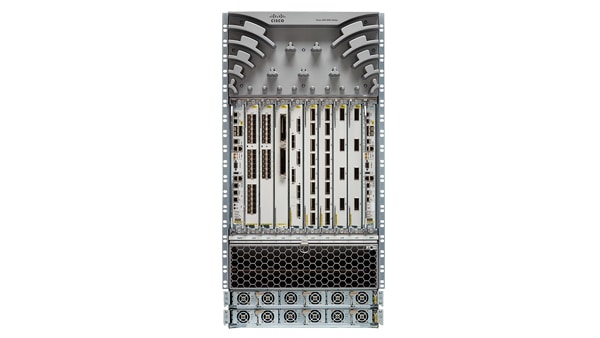
ASR 9910
- 21 RU
- Up to 64 Tbps
- 8 Line Cards, 2 RSPs, 5 Fabric Cards
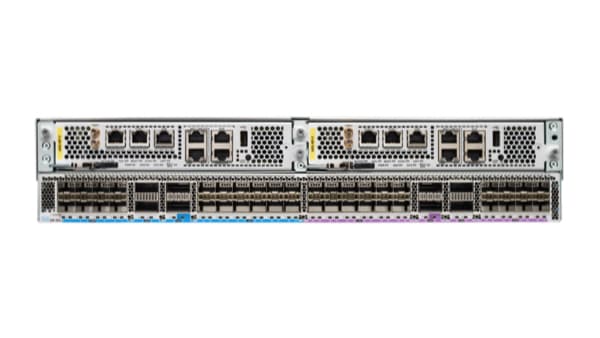
ASR 9902
- 2 RU
- Up to 1.6 Tbps
- 2 RPs and Integrated Ethernet Ports
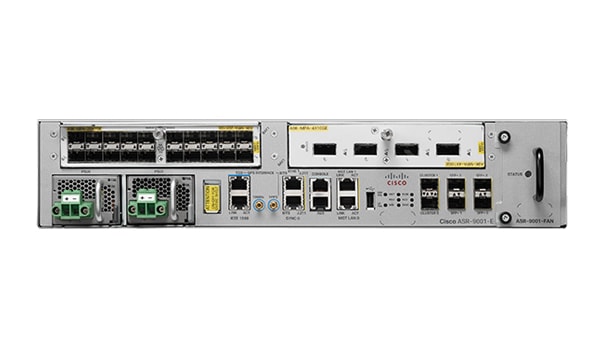
ASR 9001
- 2 RU
- Up to 240 Gbps
- Fixed 4x10GE
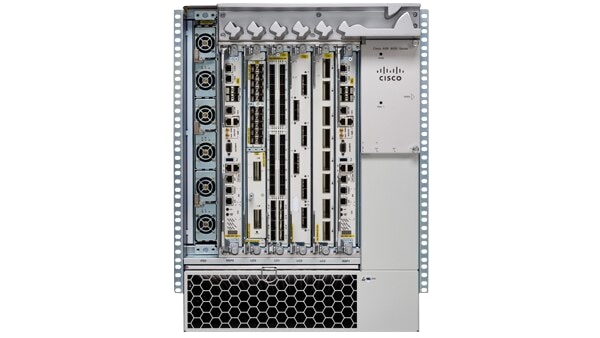
ASR 9906
- 14 RU
- Up to 32 Tbps
- 4 Line Cards, 2 RSPs, 5 Fabric Cards
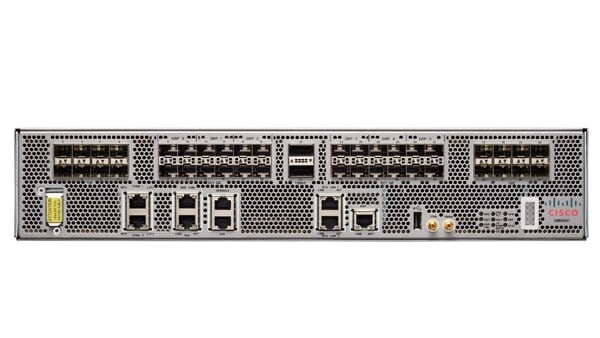
ASR 9901
- 2 RU
- Up to 912 Gbps
- Integrated RSP and Ethernet Ports
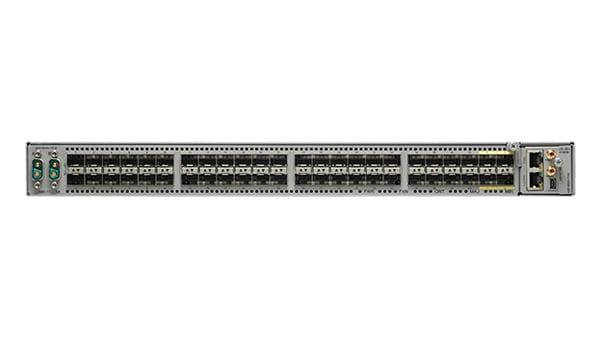
ASR 9000v-V2
- 1 RU
- Up to 168 Gbps
- Fixed 44 SFP ports
Benefits
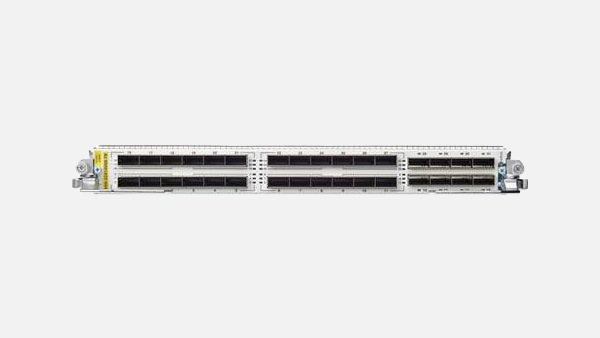
Meet the needs of mass-scale networks
The ASR 9000 is a high-density, high performance edge platform suitable for growing or high-demand markets. The ASR is capable of supporting connections from 1G up to 400G, providing operators with a long-term growth platform that scales ahead of demand.
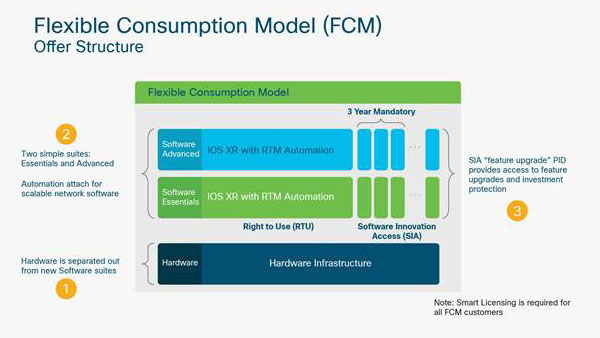
Protect and optimize your investments
Build your network today on a platform that is ready to scale for tomorrow. With flexible pay-as-you-grow options and dynamic license pooling, you can simplify capacity planning and scale to meet demand.
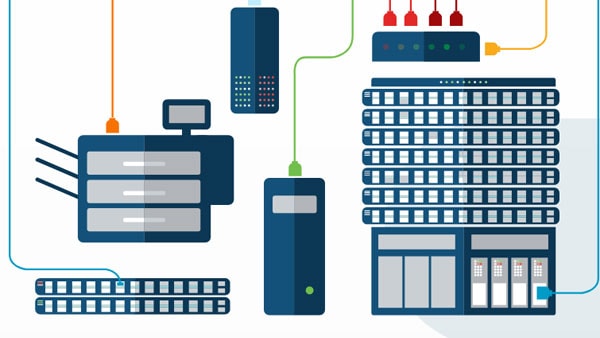
Accelerate service agility
Use Cisco IOS XR’s multi-dimensional programmability, open APIs, and advanced telemetry to provide unprecedented network visibility and closed-loop remediation driven by analytics and machine learning. As your network infrastructure grows, IOS XR and the Cisco automation tools give fine-grained control to your engineers so they can take quick action to provide the best client experience to your customers.


Protect your critical infrastructure from the inside-out
Verify the integrity of the ASR hardware and software operating in your network to facilitate protection at every layer of the networking stack. With those validations you can ensure your critical infrastructure is unaltered and then work to improve your security stance with automated software upgrades, keeping your network secure and up to date.
Flexible deployment and services

Cisco Smart Licensing
A flexible and secure licensing model that provides an easier and more consistent way to purchase and manage software.

Cisco Capital
Access the Cisco technology you need right now with innovative, flexible payment options.

Services
Solve problems faster, improve operational efficiency, and reduce your risk of downtime with Cisco customer experience (CX) services.
Invest in green initiatives

Network and the environment
Transform your network and join Cisco on the journey to a sustainable and inclusive future.

Cisco Refresh
Get certified Cisco remanufactured equipment at significant savings. Warrantied same as new.

Cisco Takeback and Reuse Program
Ready to return your end-of-use Cisco hardware? We’re ready to pick it up. Safe, secure, sustainable.
Resources
Recommended resources
More resources
Learn about the similarities and differences of the models within this product series.

Data Sheets and Literature
Support
Support
- All support information for Cisco ASR 9000 Series Aggregation Services Routers
- Support Documentation And Software
For partners
Are you a Cisco partner? Log in to see additional resources.
Looking for a solution from a Cisco partner? Connect with our partner ecosystem.