CW-ANT-T-O3-N Antenna Installation Guide

PDF

CW-ANT-T-O3-N Antenna Installation Guide

Antenna information

Want to summarize with AI?

Log in

Introduces the CW-ANT-T-O3-N antenna, detailing its technical specifications, azimuth and elevation radiation patterns, safety precautions for handling and installation, and physical dimensions including mounting brackets.


The CW-ANT-T-O3-N is an 8-port, triband, omnidirectional outdoor antenna designed for Wi-Fi 7 access points. It supports 2.4 GHz, 5 GHz, and 6 GHz frequency bands.

The antenna includes integrated self-identifying circuitry (SIA) and an accelerometer for orientation detection. It is IP67-rated and features an surface mount bracket for flexible deployment.
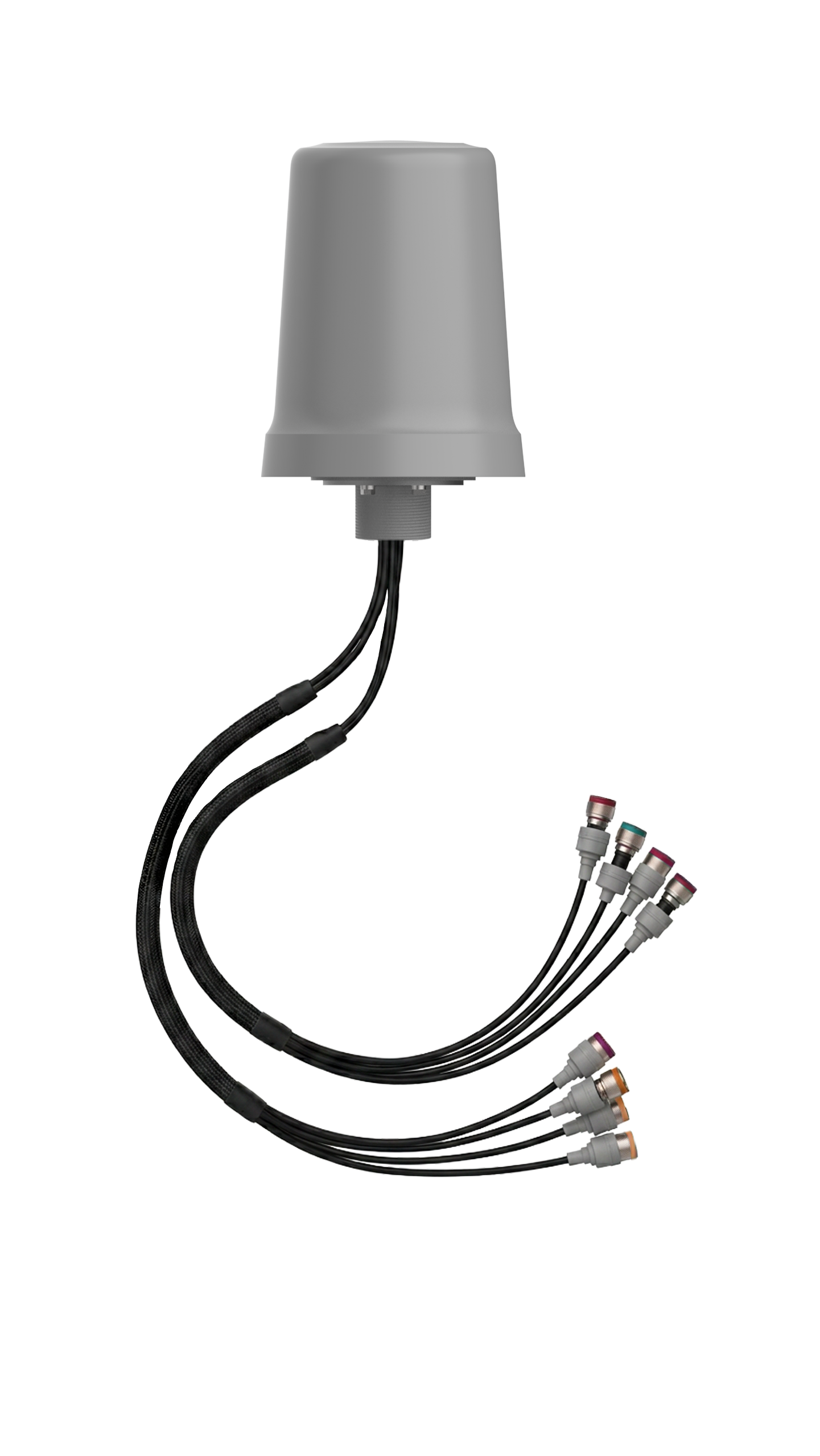
Figure 1. CW-ANT-T-O3-N antenna

Features

These are the features:

  • Versatile Deployment: Suitable for both indoor and outdoor use (IP67 rated).

  • Self-Identifying Antenna (SIA): Integrated with support for the SIA feature, allowing the access point to automatically recognize and configure the antenna.

  • Orientation Detection: Contains an integrated accelerometer to determine antenna orientation.

  • Flexible Mounting: Includes an articulating mount (pivots ±60° azimuth and +15° to -35° elevation) for wall or mast mounting, and an alternate flush-mount kit for suspended ceilings.

  • Connectorized Design: Includes eight N-Type male connectors with 3 ft (915 mm) LMR-200 (LSZH) cables.

  • Frequency Bands: Supports 2400–2500 MHz, 5150–5850 MHz, and 5925–7125 MHz.

  • Operating Temperature: Supports a wide operating temperature range from –40°C to 65°C (–40°F to 149°F).
Technical specifications

This antenna is designed for indoor and outdoor use with Wi-Fi 7 APs.

Table 1. Mechanical specifications

Parameters

Descriptions

Antenna type

8-port, omnidirectional

SIA Functionality

Yes

Nominal input impedance

50 Ohms

Polarization

Vertical and horizontal

Antenna Height

10.45 in (265.5 mm)

Antenna Diameter

8.21 in (208.5 mm)

Weight (without mount)

3.47 lb (1.57 kg)

Connector type

N-Male

Operating temperature range

-40ºC to 65ºC (-40°F to 149°F)

Environment rating

IP67

Environmental sensors

Integrated pressure vent

Table 2. Parameters and values
Parameters Values

Operating frequency range

2400–2500 MHz, 5150–5850 MHz, 5925–7125 MHz

Peak Gain (Avg)

3.2 – 4.8 dBi (varies by band/port)

VSWR

< 2:1

Azimuth Plane

Omnidirectional

Front-to-back ratio

> 20 dB


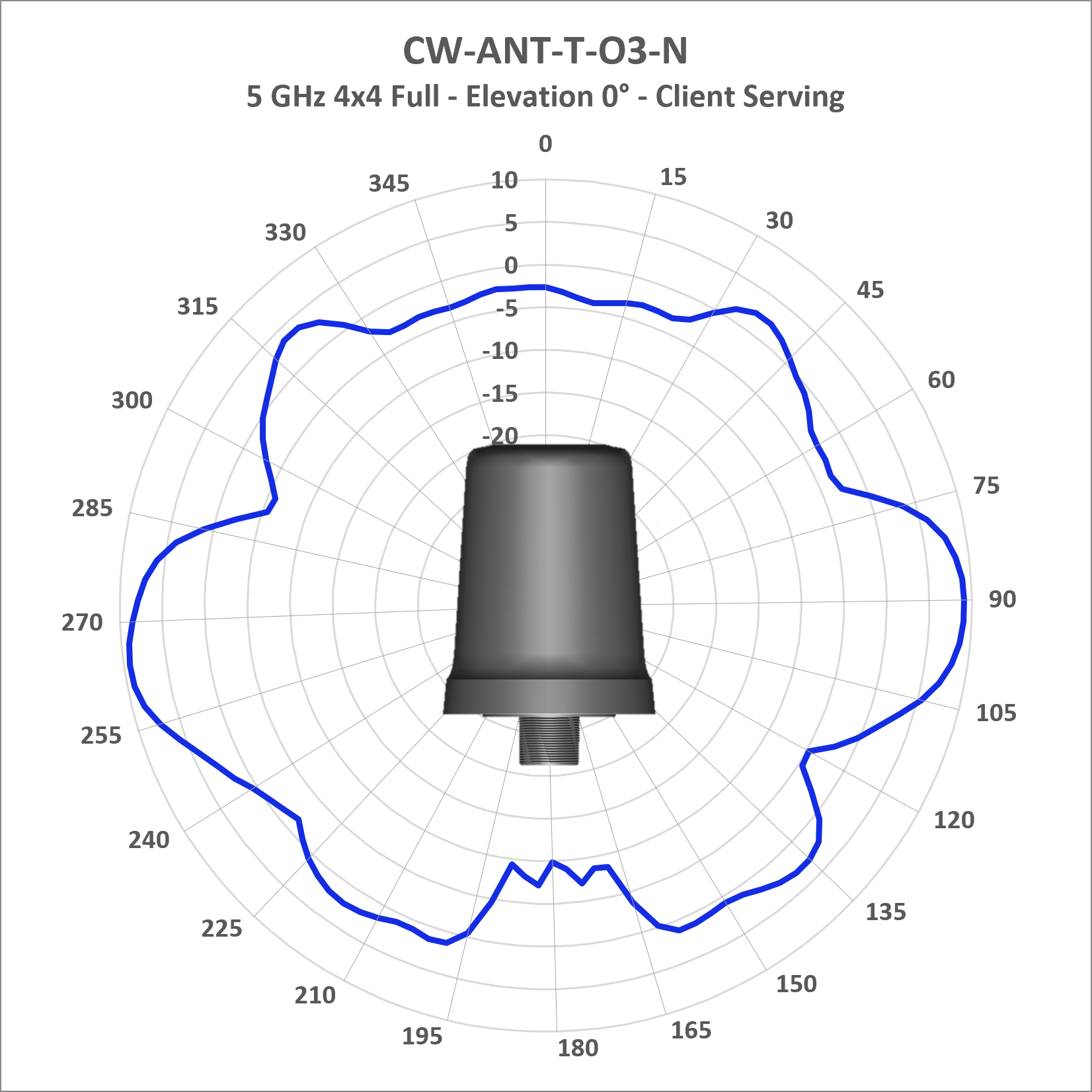
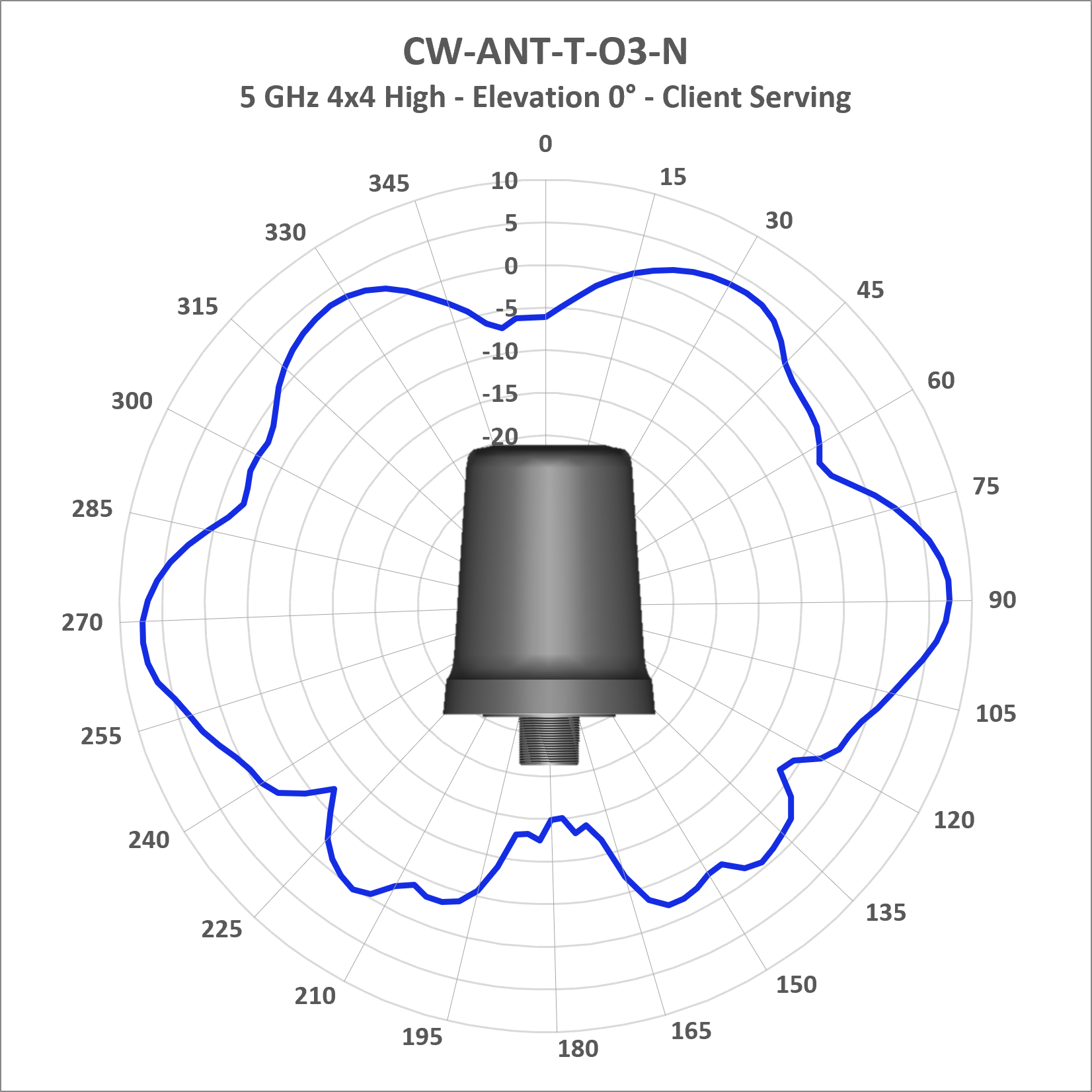
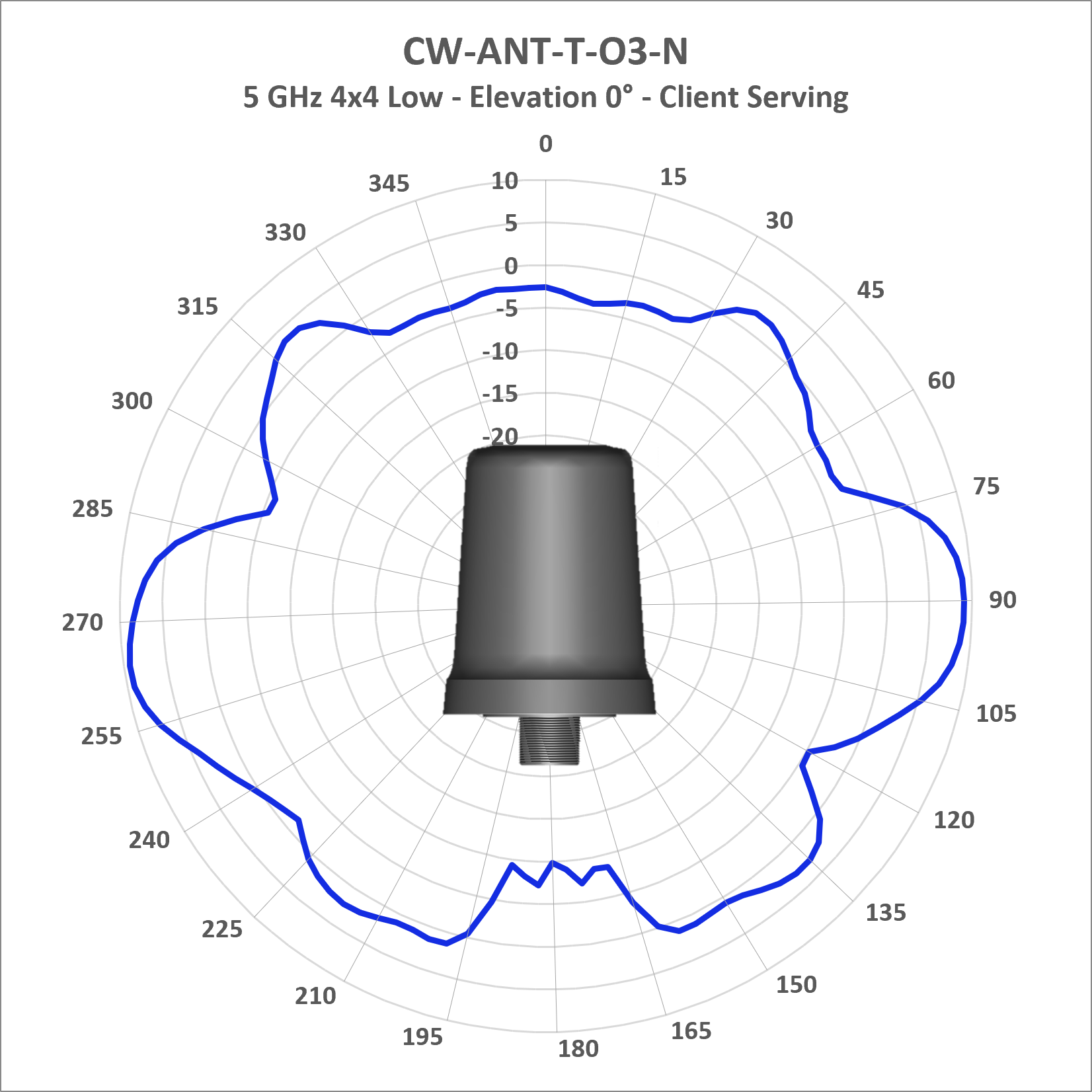
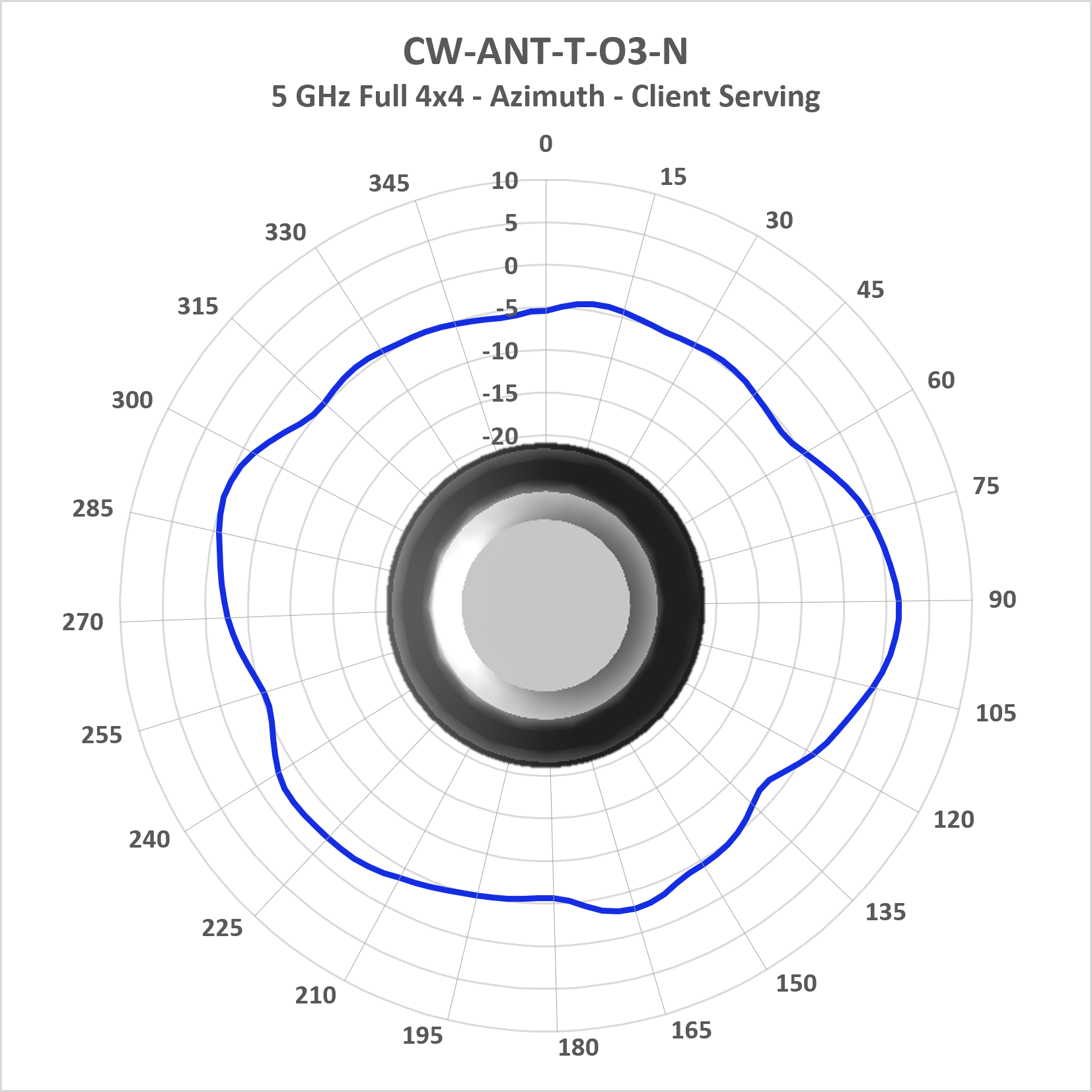
Azimuth and elevation radiation patterns

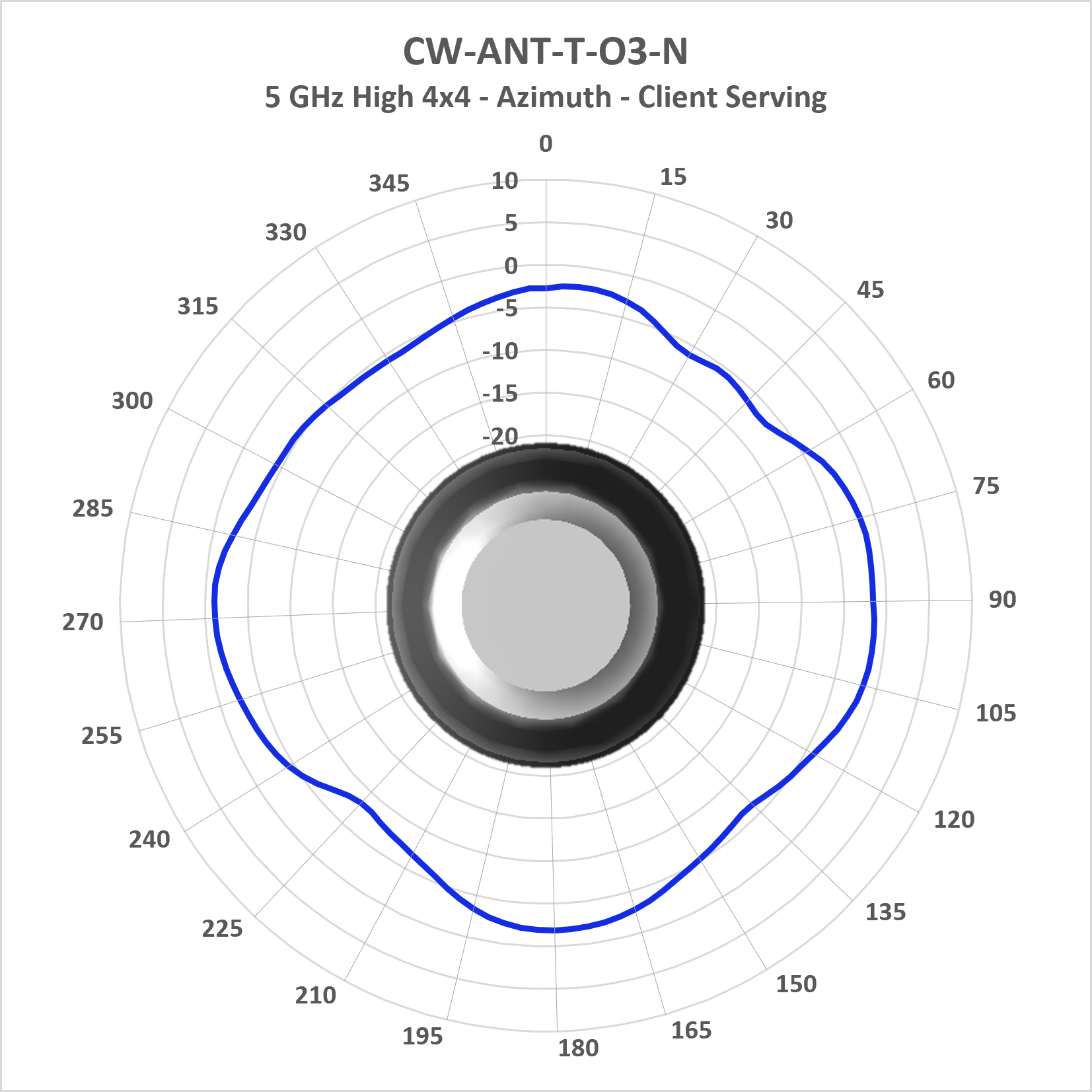
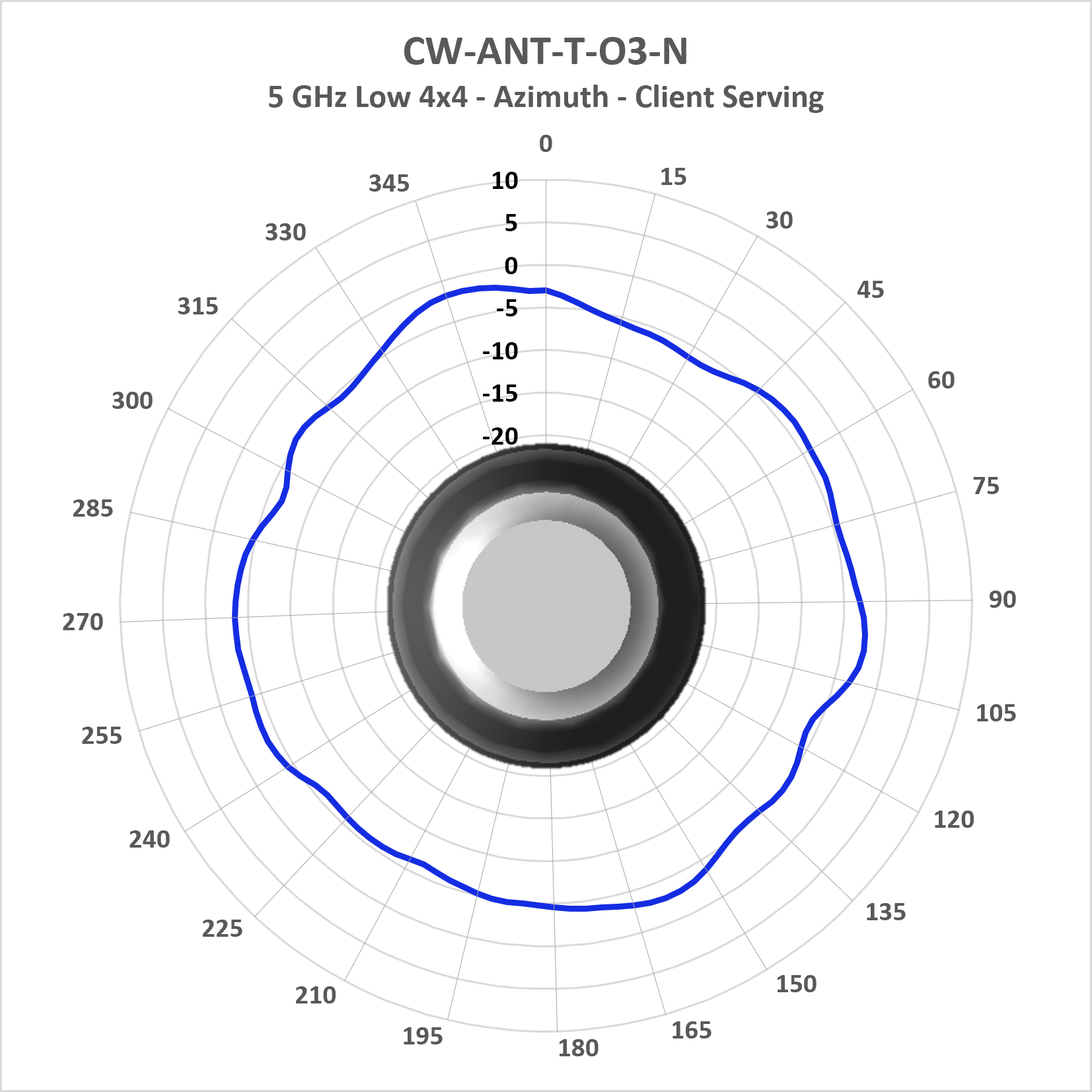
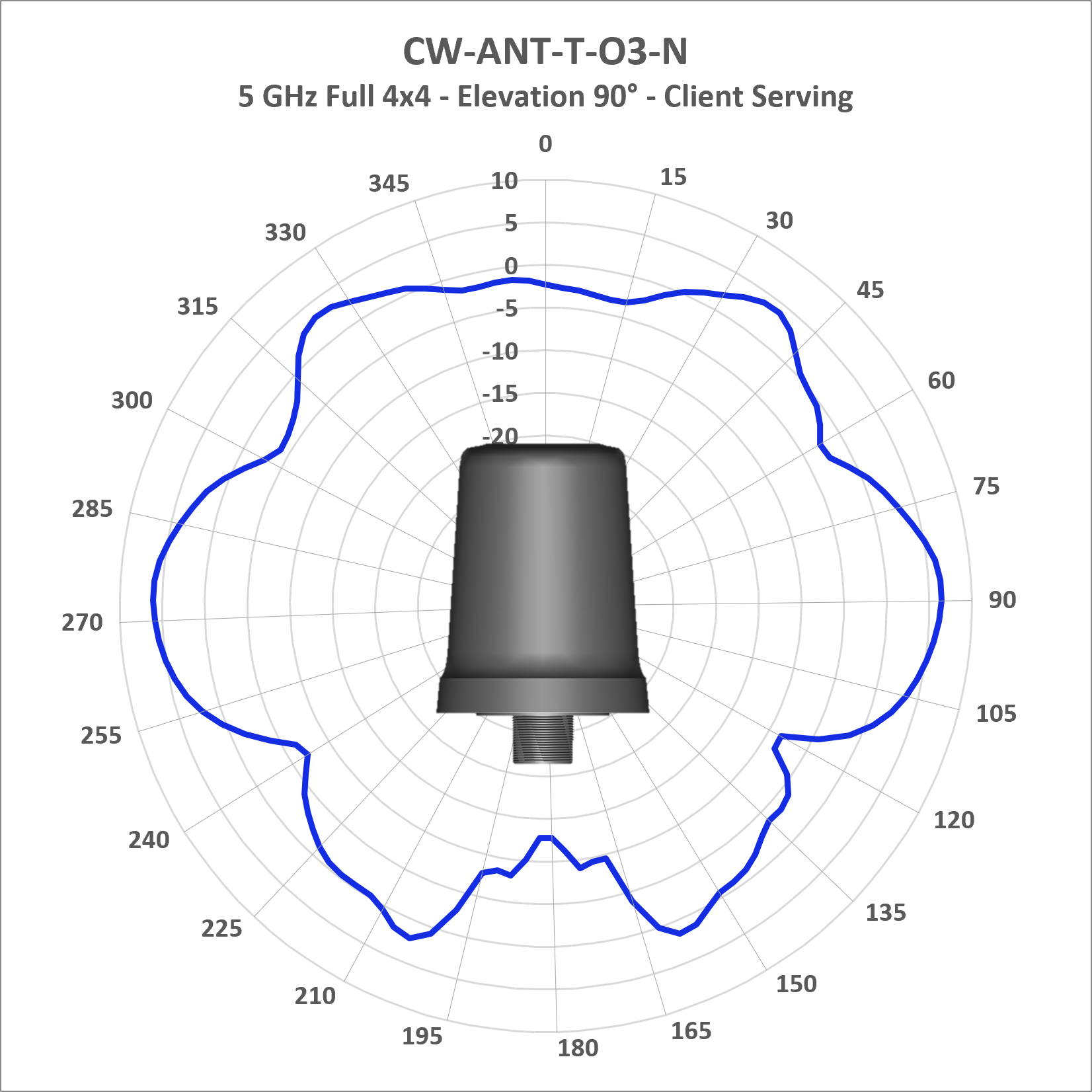
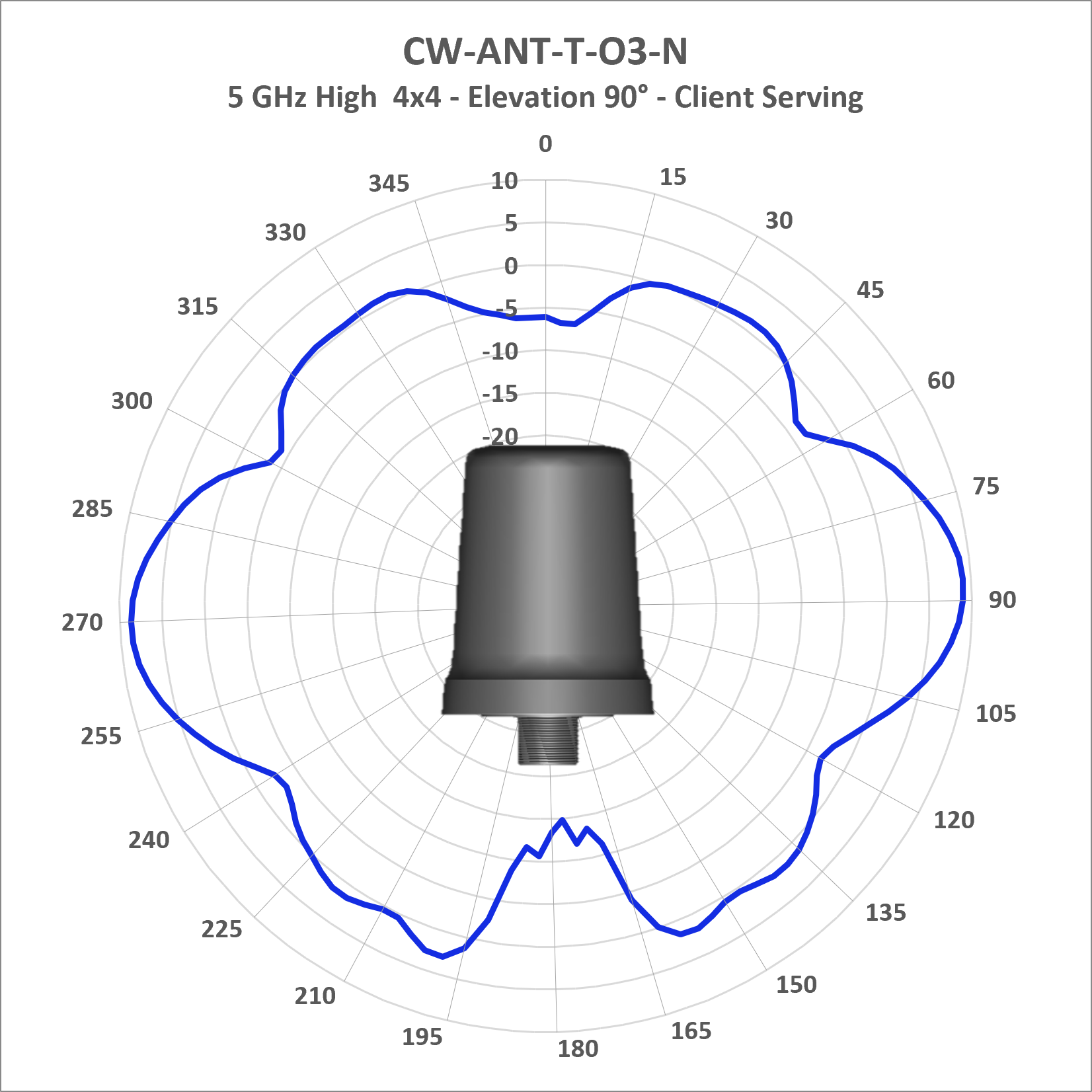
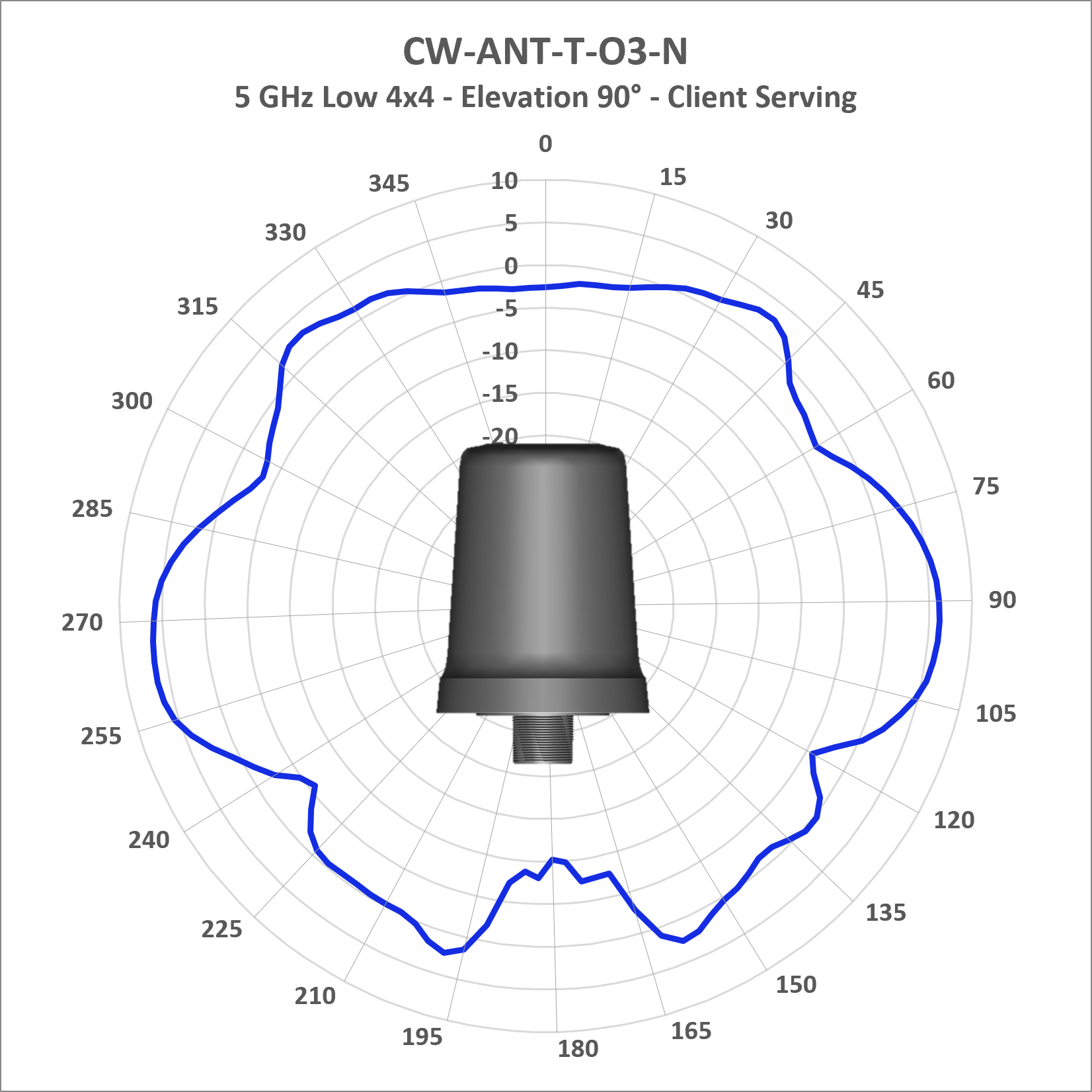
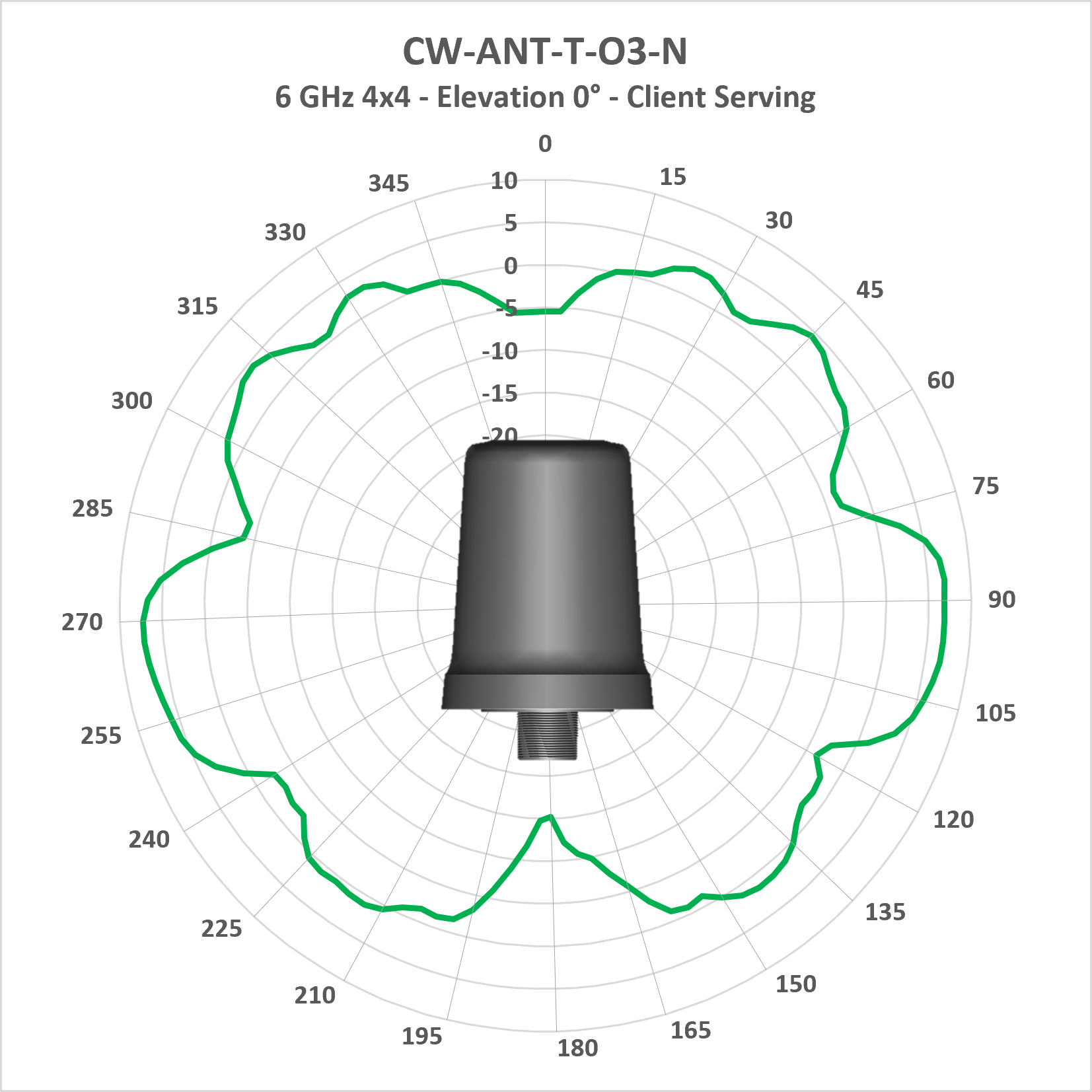
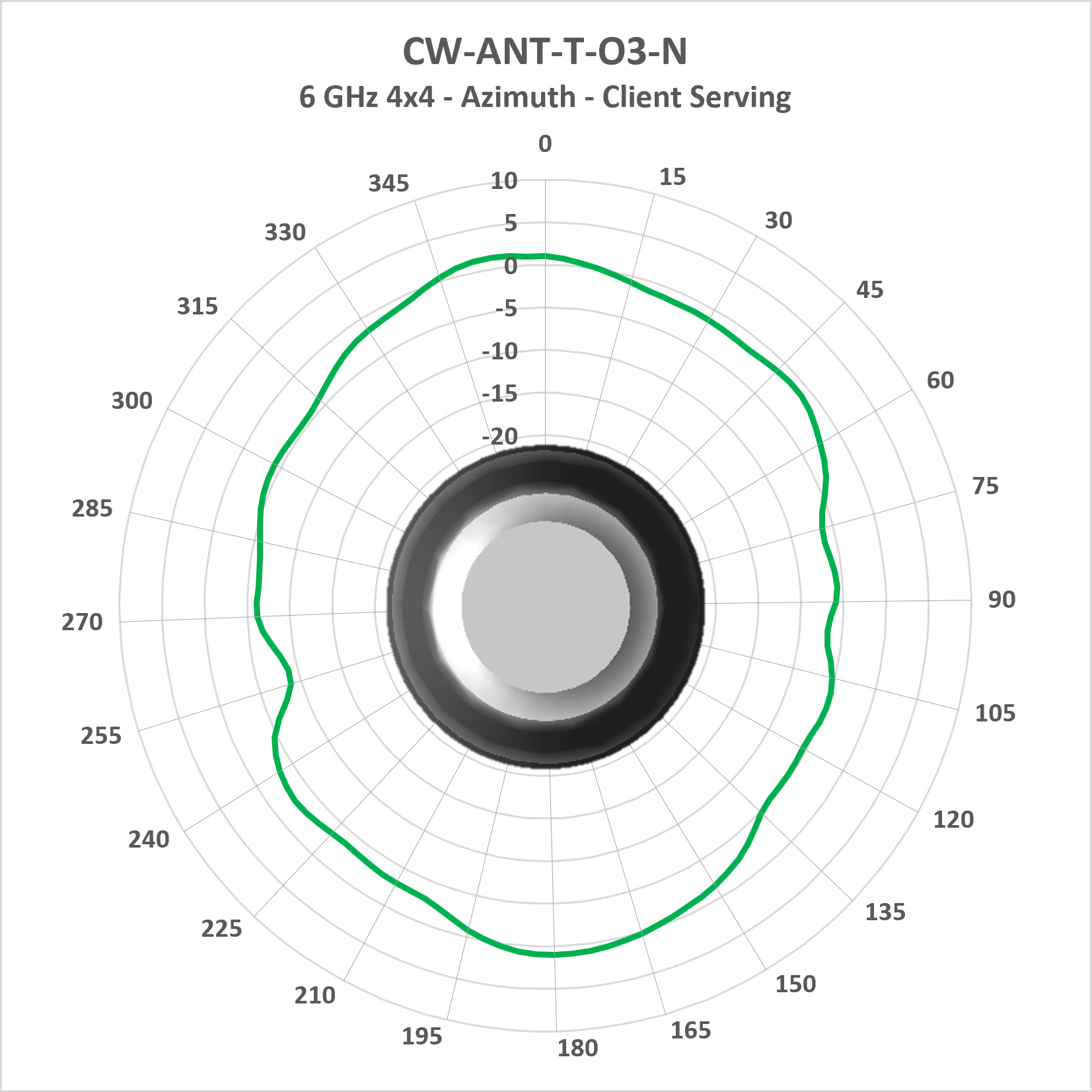
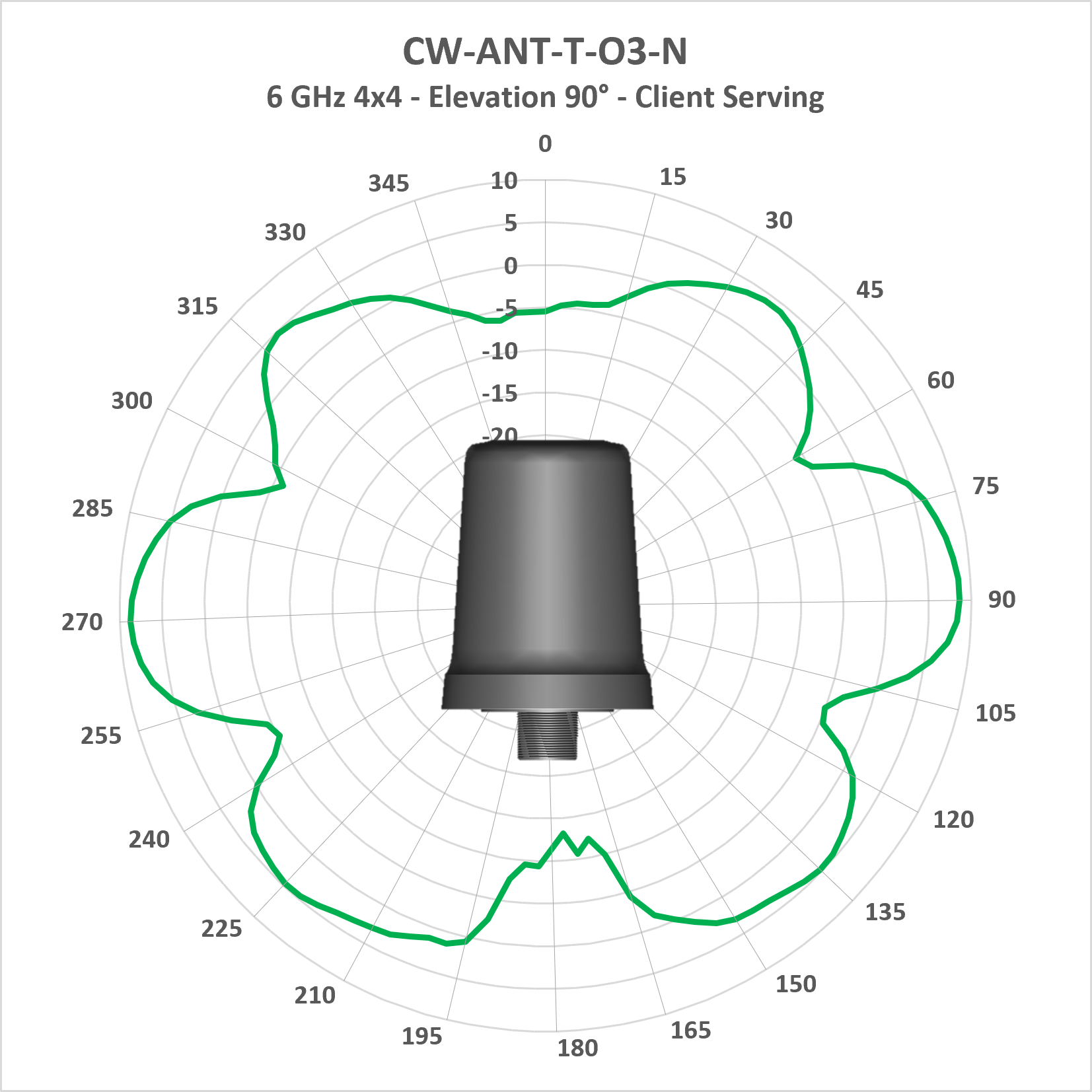
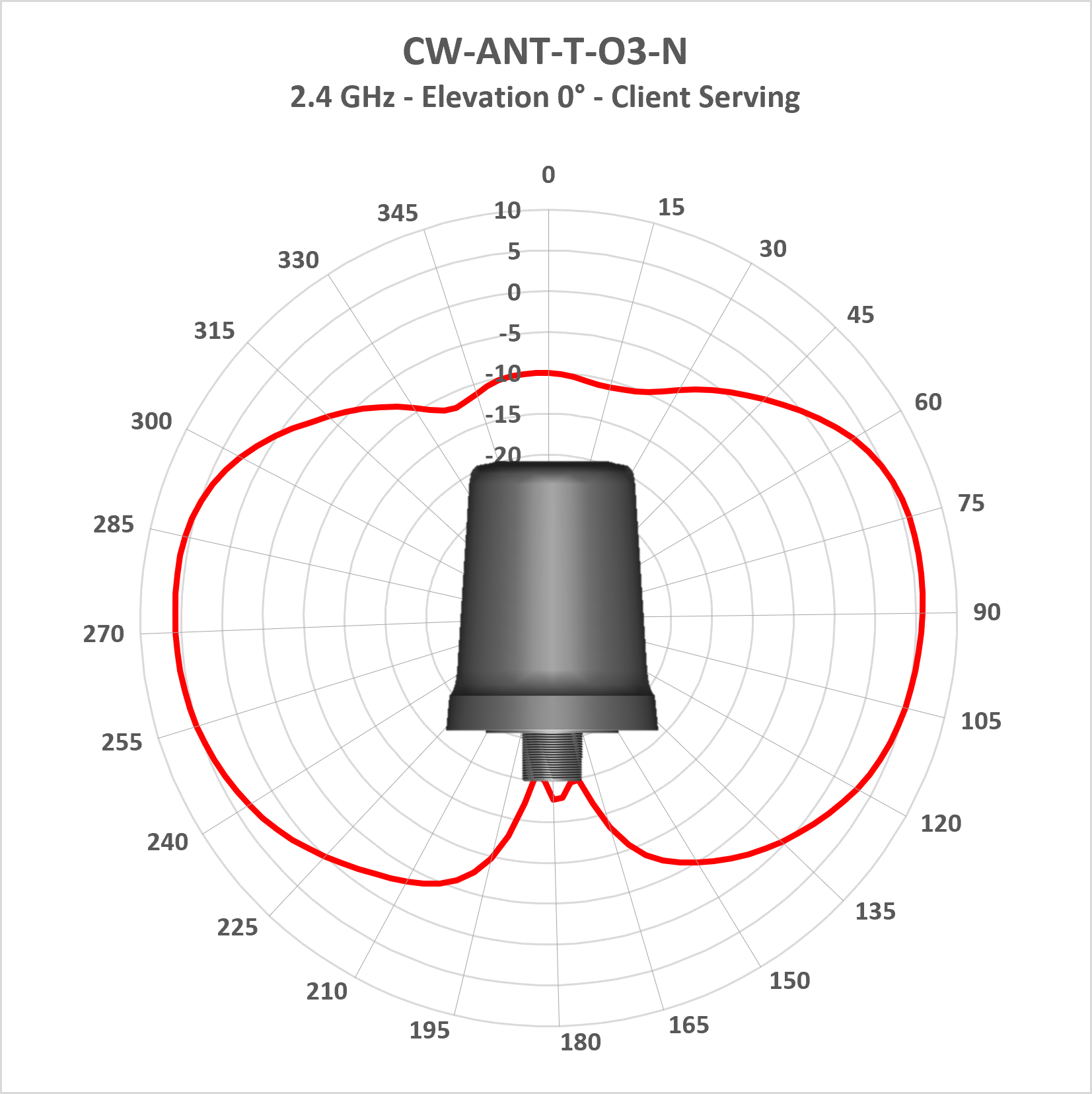
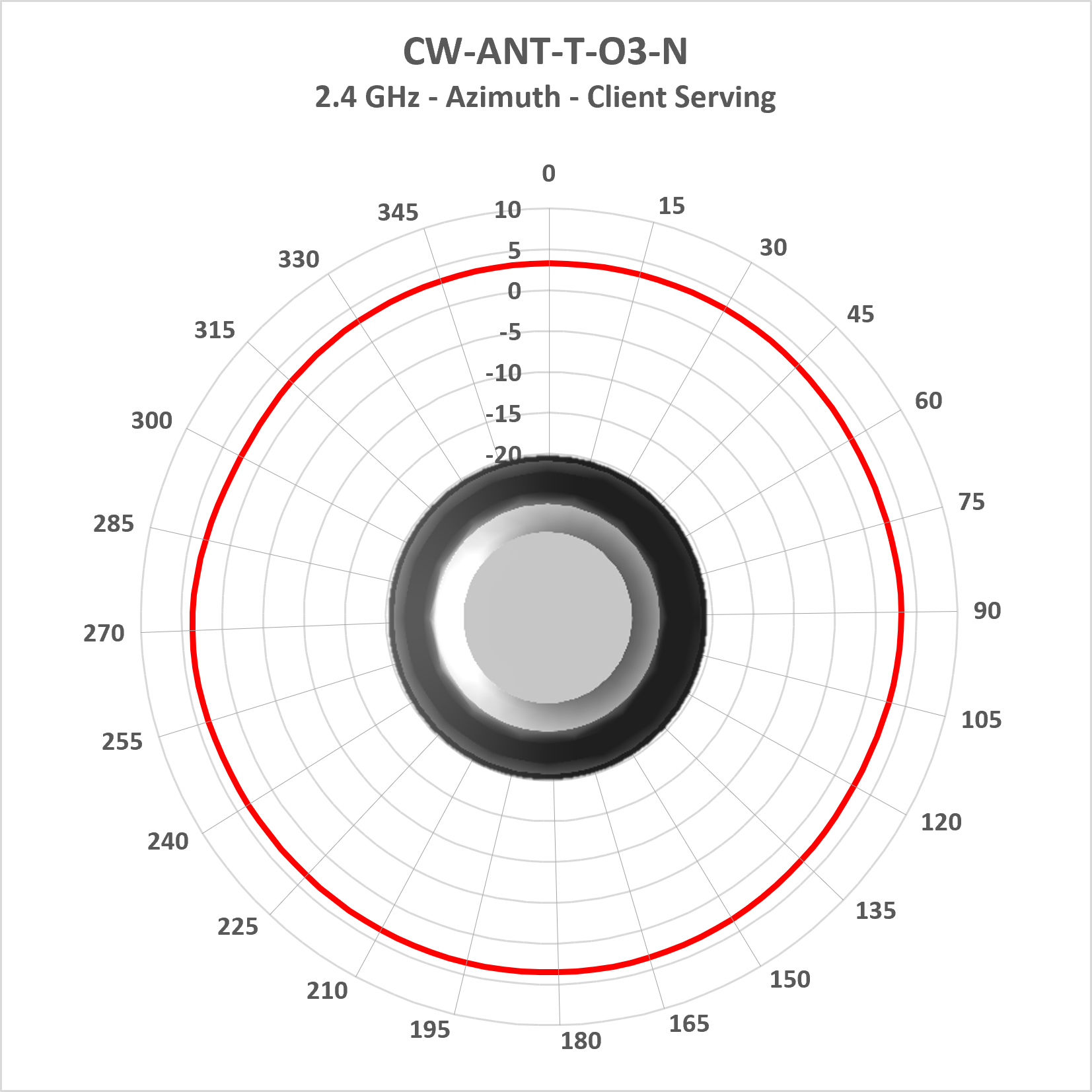
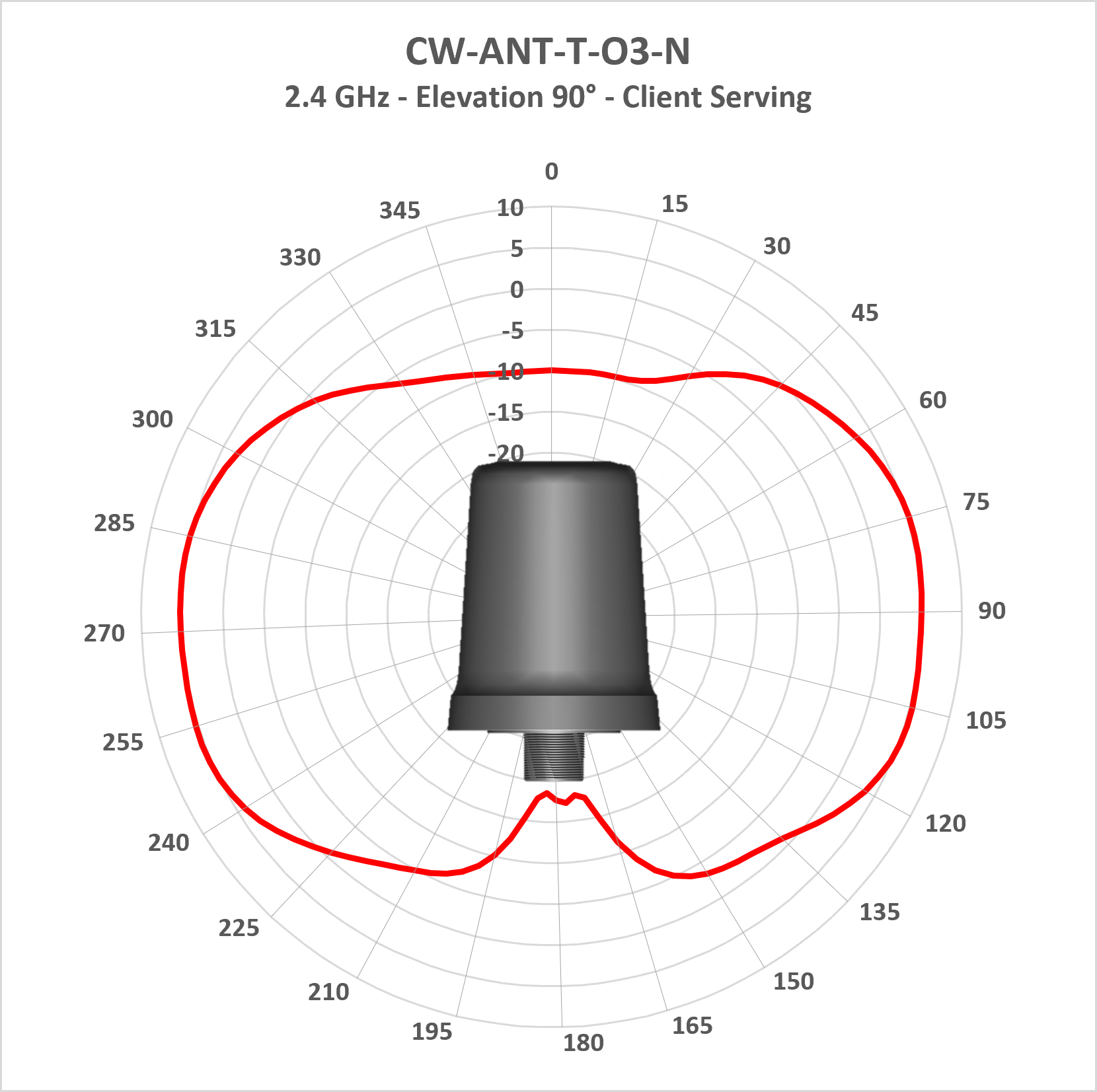
These illustrations show the CW-ANT-T-O3-N antenna radiation patterns:

Table 3. Radiation patterns for 2.4 GHz
Table 4. Radiation patterns for 5 GHz - elevation 0-degree
Table 5. Radiation patterns for 5 GHz - azimuth
Table 6. Radiation patterns for 5 GHz - elevation 90-degree
Table 7. Radiation patterns for 6 GHz

Safety precautions

Safety notes

Each year, hundreds of people are killed or injured when attempting to install an antenna. In many of these cases, the victim was aware of the danger of electrocution but did not take adequate steps to avoid the hazard.

For your safety and to help you achieve a sound installation, read and follow these safety precautions.

Before you install:

  • If you are installing an antenna for the first time, for your safety and that of others, seek professional assistance. Your Cisco sales representative can explain which mounting method to use for the size and type of antenna you are about to install.

  • Select your installation site with safety and performance in mind. Remember that electric power lines and phone lines look alike. For your safety, assume that any overhead line can kill you.

  • Call your electric power company. Tell them your plans and ask them to look at your proposed installation. While it may seem like a minor inconvenience, it could save your life.

  • Plan your installation carefully and thoroughly before you begin. Successful raising of a mast or tower is essentially a matter of coordination. Assign each person a specific task and know what to do and when to do it. One person should be in charge of the operation to issue instructions and watch for signs of trouble.

  • When installing your antenna, remember:

    • Do not use a metal ladder.

    • Do not work on a wet or windy day.

    • Do dress properly: shoes with rubber soles and heels, rubber gloves, long–sleeved shirt, or jacket.

  • If the assembly starts to drop, get away from it and let it fall. The antenna, mast, cable, and metal guy wires are all conductors of electrical current. The slightest touch of these parts to a power line completes an electrical path through the antenna and the installer.

  • If any part of the antenna system should contact a power line, do not touch it or remove it yourself. Instead, call your local power company. They would remove it safely.

  • If an accident occurs with the power lines, call for qualified emergency help immediately.

Safety warnings

Translated versions of the following safety warnings are provided in the Safety Warnings for Cisco Aironet Antennas, which is available at http://www.cisco.com.

Warning
  • Installation of the antenna near power lines is dangerous. For your safety, follow the installation directions.

  • In order to comply with international radio frequency (RF) exposure limits, dish antennas should be located at a minimum of 8.7 inches (22 cm) or more from the bodies of all persons. Other antennas should be located a minimum of 7.9 inches (20 cm) or more from the bodies of all persons.

  • Do not work on the system or connect or disconnect cables during periods of lightning activity.

  • This equipment must be grounded. Never defeat the ground conductor or operate the equipment in the absence of a suitably installed ground conductor. Contact the appropriate electrical inspection authority or an electrician if you are uncertain that suitable grounding is available.

  • Do not locate the antenna near overhead power lines or other electric light or power circuits, or where it can come into contact with such circuits. When installing the antenna, take extreme care not to come into contact with such circuits, as they may cause serious injury or death. For proper installation and grounding of the antenna, refer to national and local codes (for example, U.S.: NFPA 70, National Electrical Code, Article 810; in Canada: Canadian Electrical Code, Section 54).


Antenna dimensions

CW-ANT-T-O3-N is

  • Tri-Band

  • Articulate N-Male

  • Omnidirectional antenna.

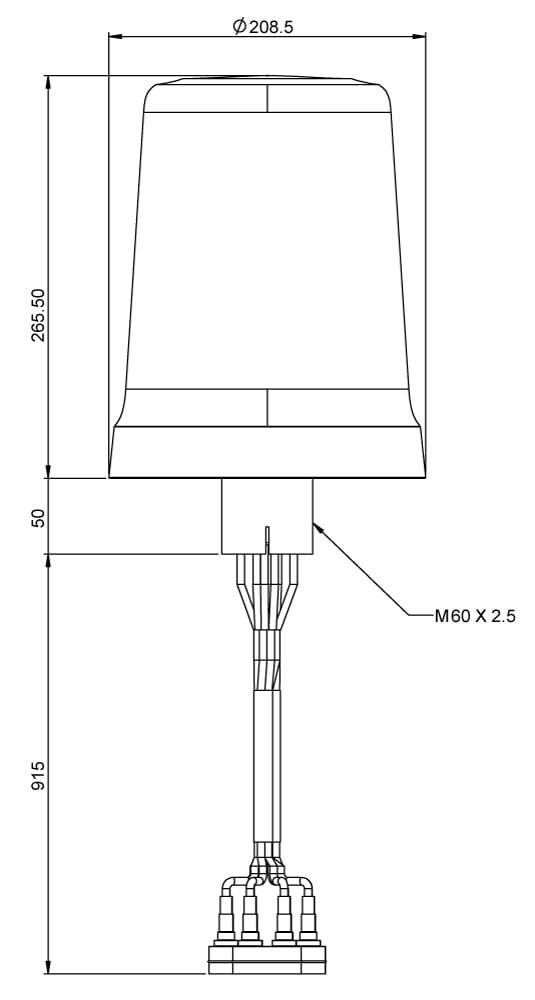
The dimensions noted in these illustrations are all in millimeters, unless noted otherwise.

  • Height: 10.45 in (265.5 mm)

  • Diameter: 8.21 in (208.5 mm)

  • Weight (without mount): 3.47 lb (1.57 kg)

Figure 2. Antenna dimensions