Columbia Association implements a converged data and voice network to expand services and accommodate future growth.
Columbia Association (CA) builds and operates a diverse range of recreational facilities and amenities for the private community of Columbia, Maryland, located midway between Washington, D.C. and Baltimore. A staff of 450 full-time employees and 1500 part-time seasonal employees manage over forty swimming and sports facilities, and year-around child care and summer camp programs. CA is a private nonprofit corporation supported by residential, commercial, and industrial property assessment taxes, and use and yearly membership fees.
When Nagaraj Reddi, Director of IT, joined Columbia Association in 2001, the organization was spending increasing amounts of money and time on manual processes and aging systems. Membership applications were processed on a twenty-year-old Prime Super Minicomputer accessed through dumb terminals. Home office groups had desktop PCs running Novell Netware, but there were no data connections between buildings or facilities. Information was distributed manually, resulting in hours of redundant effort, slow work processes, and lots of travel between offices and facilities. All communication was conducted over expensive phone lines; each facility used a different service provider and maintained a different outdated public branch exchange (PBX). Residents had to call separate facilities to register for classes or activities and experienced long wait times and frequent busy signals.
Faced with mounting maintenance and operation expenses and rising demands for better service from frustrated residents, CA desperately needed to improve operational efficiency and interconnect its remote offices and facilities.
"As a nonprofit and a municipality on a budget, we had to be very economical, yet build a scalable infrastructure that would support the complex needs of a wide range of indoor and outdoor services and settings, many with seasonal operation and fluctuating staff levels," explains Reddi. He approached Cisco Systems® because of its comprehensive product line, top quality equipment, and converged voice, video, and data network expertise.
NETWORK SOLUTION
Reddi and Jim Smith (retired) wanted an end-to-end solution because, with his small staff, he needed a consistent management interface and single point of contact when anything went wrong. Reddi also understood that the networking industry was heading toward voice and data convergence, and Cisco was an early proponent of voice over IP (VoIP) technology.
The Cisco account manager helped Reddi and his staff evaluate existing processes, analyze the organization's needs, and develop a detailed two-phase plan. The first step was to create a single voice and data network infrastructure and standardize software and hardware across all departments. Then CA would implement new productivity applications and expand services over the converged network.
Fortunately, Cisco is on the list of approved state government vendors. Reddi notes that organizations like his can use government contracts with approved vendors to take advantage of aggressive state pricing structures without having to issue a formal request for proposal-an opportunity he feels is not well understood by nonprofits. He reports, "Not only did we benefit from significantly discounted equipment and support prices by using state contracts, but we also avoided the long competitive bidding process."
"We have one-third the IT staff of organizations supporting the same number of users and customers, and we offer more many more services."
-Nagaraj Reddi, Director of IT, Columbia Association
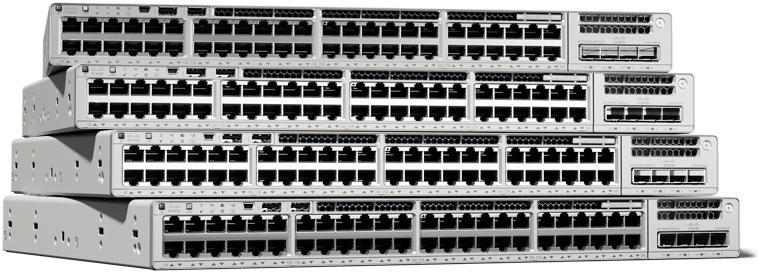
The organization's new converged IP network design uses redundant Cisco Catalyst® 6509 Series Switches, chosen for their high-performance voice, video, and data network architecture. Digital and analog phone and fax machines can interoperate over the IP network and take advantage of toll bypass. Switch Intrusion Detection System (IDS) modules and Cisco Security Agents embedded in network and Web servers protect the network from all outside attacks. System resiliency built into the core switches and routers help meet the 99.2 percent network uptime requirement.
Reddi and his IT staff furnished every full-time employee with a networked PC and Cisco IP phone, added networked file servers, and wrote an interface to connect the minicomputer. Now users can easily access data electronically and distribute reports and information. The Cisco Communications Media Module in the Catalyst switch also enables fax machines and analog devices to run over IP. He says Cisco's durable wired and wireless IP phones have withstood everything from the corrosive chlorine fumes and high humidity of pool environments to freezing ice rink temperatures and the grease and dirt of maintenance sheds.
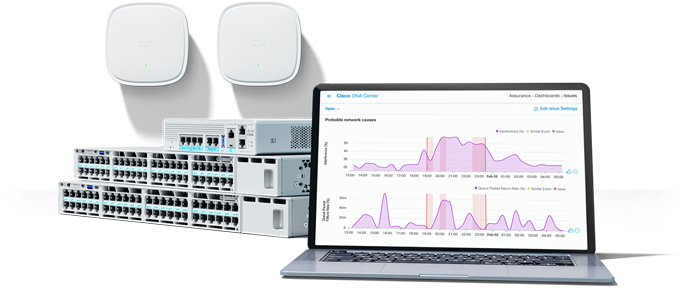
CA executive managers at home or on the road can access office resources from their secure laptops over encrypted virtual private network (VPN) channels. Cisco Aironet® access points support wireless networking in office conference rooms and reception areas. Responding to resident requests, a wireless access point has also been installed at the ice rink to provide free wireless Internet access for family members waiting through team practices.
Reddi deployed Cisco CallManager Attendant Console and Cisco IPCC call center services at several major facilities. The call center application automatically accepts inbound calls, queries for destination information, and routes them to the appropriate resource. The automated call answering system allows residents to call 24 hours a day for routine account information, further reducing call loads.
BUSINESS RESULTS
Columbia Association's converged voice and data network significantly cut operation expenses-delivering an impressive one-year return on investment- and transformed the way CA employees do their jobs.
• Reduced line costs 470 percent per month-By consolidating voice and data networks and replacing leased lines with fractional T1 lines, Reddi increased the data rate from 56 Kbps to 1.544 Mbps and drastically cut costs. IT can control daily bandwidth demands by routing traffic over underused circuits and release connections when seasonal facilities close. Reddi also replaced multiple service provider contracts with a single provider. Total line expenses have plunged from $10,000 to $1750 per month, for a savings of nearly $100K per year.
• Reduced cabling expenses US$20-35K per year-In-building wiring costs have dropped 35-50 percent per user since voice and data run over the same wire. IP phones automatically detect IP phones and supply in-line power, eliminating the need for power outlets, a welcome bonus for users working in older buildings; power surge protection in the switches shield the end devices.
• Improved customer service while saving $US15-20K per year in temporary employee wages-Call center and automatic call attendant services have cut call times and freed up recreation staff members to better serve customers at their facilities. System efficiencies also eliminated several temporary positions to cover peak call traffic periods. CA executives have been so impressed with the results, Reddi is consolidating call centers to gain more efficiencies and enable residents to register for classes or conduct business by calling one number.
• Improved administrative staff productivity-With one convenient inbox for e-mail, phone, and fax message access, users spend less time tracking down information and more time serving customers. Networked database access and Web-based automated application tools slash research and report development time, while e-mail eliminates time-consuming paper-based information distribution.
• Higher IT staff productivity-Reddi and his staff can handle the expanded voice and data network responsibilities because consolidated management software handles network administration at both local and remote sites. In addition, because all Cisco products use a consistent programming interface, software engineers can write code to interface with Cisco equipment more easily. "We have one-third the IT staff of organizations supporting the same number of users and customers, and we offer more many more services," he notes. Reddi estimates he saves $150K to $200K per year in IT headcount expenses.
NEXT STEPS
In four short years, CA has jumped from a fragmented collection of telephone systems and trailing-edge LANs to a cutting-edge consolidated, interconnected IP network, and Reddi credits Cisco with the transformation. Primed for the future, Reddi is looking into expanding wireless services, deploying video over IP for remote conferencing, and adding e-commerce capability for online registration through the CA Web site. He emphasizes, "Cisco has been a very good partner for us, helping us with our implementation strategy, training us on the new equipment, and educating us on new technologies and the most effective use of productivity services and applications."
FOR MORE INFORMATION
Cisco has helped municipalities improve the quality and scope of services to their residents while holding down operating costs. To learn more about how Cisco Network Foundation and Cisco Wireless and Mobility Solutions can help your organization or community, contact your local account representative or visit http://www.cisco.com.